Forestry Friday … It’s Take My Followers To Work Day!

Gallery

This gallery contains 26 photos.

It’s take my followers to work day at the Forester Artist. Come along on one of my typical days. Having said that, rarely are my “typical” days typical. Let’s start by out checking in at the Pole Plant to see … Continue reading

Where Have All the Flowers Gone

doe, deer, lupine, wildflowers, spring, photography, wildlife

Munched by young deer everyone! When will we ever learn.

lupine, wildflowers, spring, photography

Lovely Lupine

doe, deer, lupine, wildflowers, spring, photography, wildlife

Mmmm……nice bouquet!

Forestry Friday … Otter, Otter, Otter!

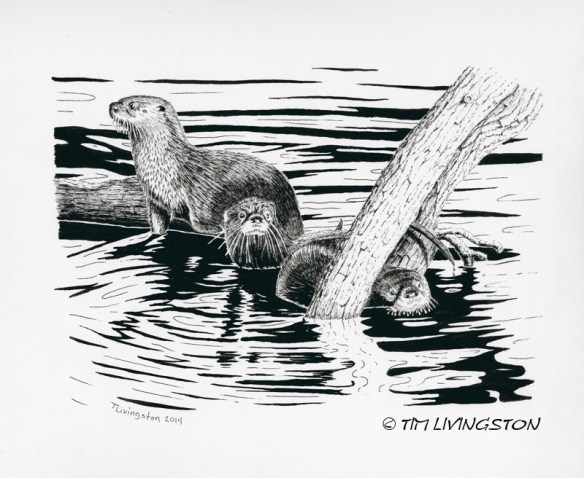
This week I’m going to lighten it up. Animals are always fun and what is more fun than a playful otter, except maybe three!

pen and ink, otter, wildlife, nature, ink, pen & ink, drawing, animals

Three otters resting on a log.

It’s been a while since I’ve posted some art. I hope you like it.


Otter, photography, wildlife, nature

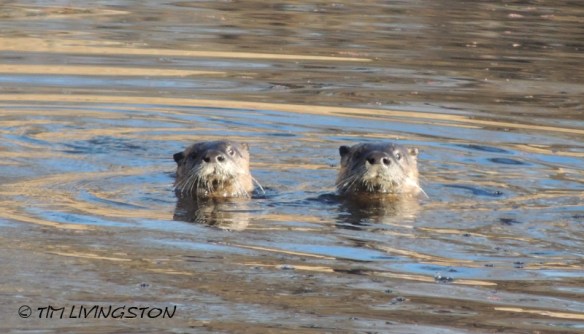
Bookends!

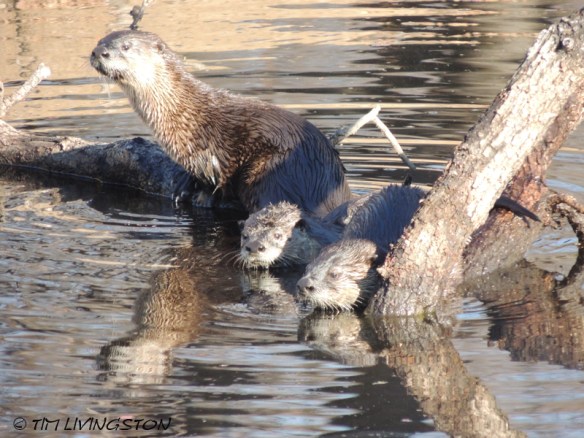
These are our otters that live at the mill. They travel around the mill site from pond, to river and to canals.  I never know where they are going to pop up next.

Otter, photography, wildlife, nature

Itchy!

Otter, photography, wildlife, nature

The three amigos.

In the forest setting, otters don’t ever become an issue during our harvest operations. They live in the water and riparian area.  Harvesting is minimal in the riparian zones.

Otter, photography, wildlife, natureOtter, photography, wildlife, nature

Blitz, golden retriever, dog, photography

Blitz says, “Can’t trust em’, they remind me of cats!”


Pipevine Time

Nothing says Spring has sprung like butterflies!  The Pipevine butterflies are out in force in Northern California and the Pipevine flowers are in bloom.  They even had a few friends show up.  Enjoy the show.  Click on the images to enlarge.

Romantic Osprey Triangle

He was waiting for a girl. It didn’t take long for her to show up either. He arrived on February 28th, which appeared in the post, Spring Wings. She returned March 3rd, but there was a surprise.

As I drove around the log deck, the nest tower came into view. I saw two birds on the nest tower. Upon closer inspection, it looked like a third bird in the nest. When I got to the office parking lot, I could see only see two birds. 

The two birds kept looking at each other, calling all the while. I thought, I may be here in time to catch the magic moment. The bird closest to the nest took off and did a flyby to the other bird. I knew we were getting close now. Then I saw wings flap in the nest. There WERE three birds!  I wasn’t witnessing the dance of love, but instead, two boys fighting over a girl.

Click on the pictures to enlarge the images. Watch the drama unfold!

Spring Wings!

Osprey, wildlife, sawmill, photography, nature

I first saw him last week, out back behind the mill.

I was pretty sure it was our male osprey on the snag behind the mill last week.  Then right on schedule our boy was back at the nest on Friday morning.  Last year he arrived on February 26th.  This year he showed February 28th.  Now he begins his vigil, as he waits for his mate to arrive.

Osprey, wildlife, sawmill, photography, nature

Back for a new year at the nest. He scans the horizon for his mate.

When the osprey arrive, I know that Spring is knocking on our door.  A few early flowers are blooming and the frogs are singing at night.  The little birds chase each other around the trees and buds are swelling.  We are finally getting some significant rain.  We may have a normal Spring after all.

Osprey, wildlife, sawmill, photography, nature

That fish is looking nasty!

You can see all about the nesting season 2013.

Forestry Friday … The Critical Period

Critical Period means the time of year when the special timber operations practices set forth in these regulations are required to minimize nesting disturbance to a species of special concern.

-California Forest Practice Rules

Forestry, Northern Goshawk, goshawk, protection

This Northern Goshawk fledgling was ready to take me on.

Species of Special Concern include Bald Eagle, Golden Eagle, Great Blue Heron, Great Egret, Northern Goshawk, Osprey, and Peregrine Falcon.  Species of Special Concern are not the same as Threatened and Endangered Species.  T and E species rise to a much higher standard of protection.  They are protected under rules originating from the Endangered Species Act.  

When a nest site of a Species of Special Concern is identified in a timber harvest plan area, a buffer zone is established around it.  The buffer zone sizes differ according to the species.  The critical period is based on the nesting season for that particular species of bird.  No timber harvesting is allowed within the buffer zone during the critical period.   After the critical period, harvesting can take place, but the nest trees are always retained.  There are limitations as to the type of harvesting that can take place in the buffer zone, such as no clearcutting is allowed.  The harvesting practices allowed in the buffer zones are tailored to each species. depending on their needs.

The Northern Goshawk fledgling in the picture was discovered after my crew and I stumbled onto a nest tree.  We were marking trees when one of the guys came and informed me he saw a “great big bird in a nest.”  When we went to investigate, I could see right away it was a Northern Goshawk fledgling, and there wasn’t one, there were two. 

The young birds were branching.  This is when they hop from branch to branch strengthening their wings before they have mastered flight.  We stopped marking and began moving away from the nest.  One of the Goshawk parents was nearby but moved away from us.  This was a relief because Goshawk parents are well known for attacking people that are too close to their nest.  This usually happens when the chicks are very young.  Apparently, they are less protective when the chicks are older.  We watched the young birds from what we thought was a safe distance, so as not to spook them.  Then, one of the youngsters glided out of the nest to a branch in a nearby tree.  Its sibling, not wanting to be left alone, followed.  Only this bird wasn’t as advanced in its flight training as the first.  It glided downhill and smacked straight into the trunk of a white fir tree and tumbled to the ground.  I told the crew, “Oh my God, I think we just killed it.”  Fortunately, it popped up on its feet, screeching all the while.  

I sent the crew to mark timber in a different area.  Then, with my camera in hand, I headed down the hill to check the condition of the young Goshawk.  It was mad as hell and ready to give me what for. Otherwise it was okay.  I took a few pictures and backed off to let it calm down.  I knew, at this age, it would be able to hop its way back up the trees to safety.   The parents weren’t far away and would tend to it.

For the Northern Goshawk the buffer zone is twenty acres and the critical period is from March 15 through August 15.  The forester who prepared the timber harvest plan knew the Goshawks were living in the plan area.  He protected their nest tree, by making it a no harvest area.  However, the uncooperative goshawks had decided to move out of a perfectly good nest and build a new one in the logging unit.  We were the first to discover the new nest.  As a result, a new twenty acre buffer zone was established around this nest and none of the trees we marked in the area were harvested. 

osprey, sawmill, forestry

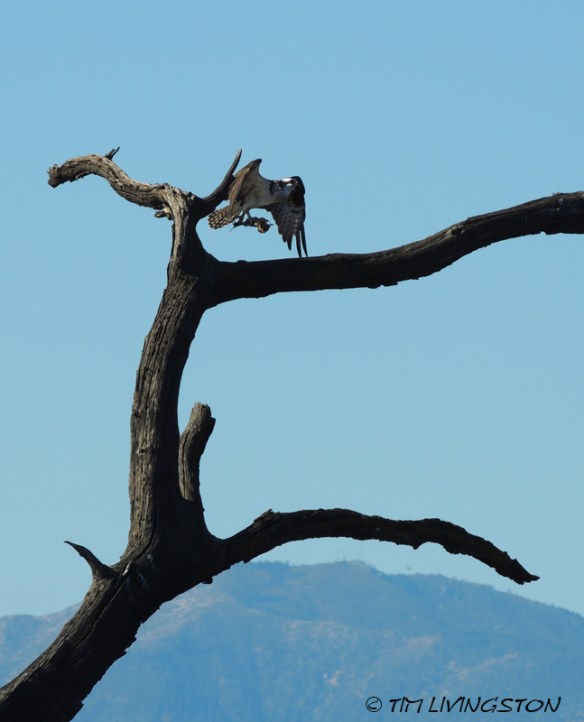
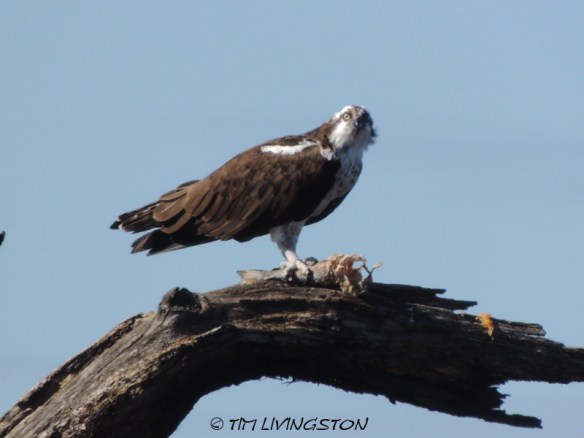
This Osprey was behind the sawmill last week. It might be our boy from the nest tower.

The buffer zone for the Osprey is 5 acres and the critical period is from March 15 through August 15. 

Bald Eagle

Bald Eagle

golden eagle, eagle, photography, nature, wildlife

Golden Eagle

If harvesting is done with a helicopter, they can operate no closer than one quarter mile of the nest tree.  This is true for Bald Eagle, Golden Eagle, Northern Goshawk and Osprey.  Peregrine Falcon get a one half mile buffer.

The Great Blue Heron, also known as "The Fly Up The Creek".

Great Blue Heron

The herons and egrets have a 300′ buffer around nest trees.  Their critical period goes from February 15 through July 1.

Golden retriever, Blitz, pheasants

Blitz says, her critical period is pheasant season.

Natural Born Retriever

watercolor, watercolour, pen and ink, golden retriever, pheasant, hunting

Blitz follows her nose to the prize.

Blitz took me pheasant hunting last week.  I think she would drive herself if she had thumbs.  Luckily, she needs a gunner tagging along.  It’s my joy to watch this girl living her bliss.  I captured this hunting moment in watercolor, and pen and ink.

Blitz, pheasants, hunting, pheasant hunting

Blitz with her bag.

Let’s Call It A Wrap

Buddy, The Wayward Wolverine, Buddy and the Magic Chicken Tree, watercolor, watercolour, wolverine

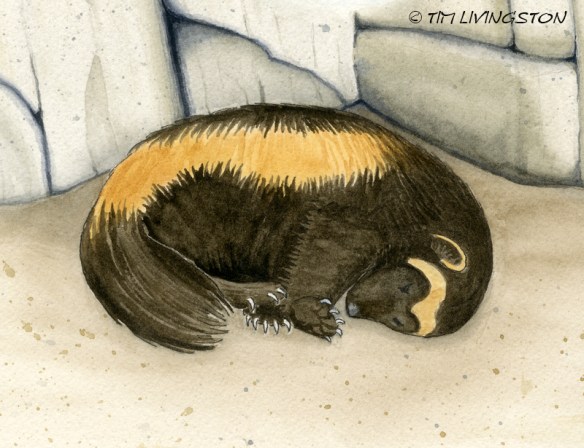
Illustrating Buddy wore me out, and Buddy too.

I’m done illustrating Buddy.  Now we wait for the official release.  I think I’m going to take a nap too.

Forestry Friday … The Real Buddy

Buddy and the Magic Chicken Tree is the second installment about Buddy the wolverine.  Here is a sample from the upcoming story.  It is written by author illustrator MaryA Livingston and wildlife biologist Amanda Shufelberger.  It is illustrated by me, Tim Livingston.

Buddy and the Magic Chicken Tree, Buddy the Wayward Wolverine, watercolor, watercolour, children's picture book, wolverine, gulo gulo

Buddy loves his chicken!  Image courtesy of Red Tail Publishing.

Buddy, the Wayward Wolverine, published by Red Tail Publishing in 2013, is a fantastical story of a real wolverine.

Buddy is the subject of Forestry Friday, because he was original discovered during forestry research projects.  One carnivore study run by wildlife biologist Amanda Shufelberger inventories carnivores on private forestland.  The data is used to ensure that proper forest management techniques are implemented to protect and enhance carnivore habitat.

Buddy presence was first discovered in 2008.  His DNA places his roots in the Sawtooth Mountains of Idaho.  We can only imagine how Buddy got to California – Buddy, the Wayward Wolverine.  These are some of the videos from the wildlife camera taken as part of the carnivore study.