We had a beautiful day to work in the yard. There was lots of clean up to be done and it was a burn day. We usually burn off the grass and cattail around our ponds every winter to enhance our view, improve dog training access, enhance wildlife habitat and reduce fire risk for the rest of the year. Left unchecked the cattail choke off the open water. Now, while fire is a useful tool, I don’t recommend this for everyone. It can be very tricky and you have to follow all the local rules before using it. That being said, I really like my flame thrower! Thank you Mary, of Sneaking Bliss for all the great pictures! Just click on the pictures to enlarge.
Tag Archives: Forester Artist
Forestry Friday … Of Trees and Dogs
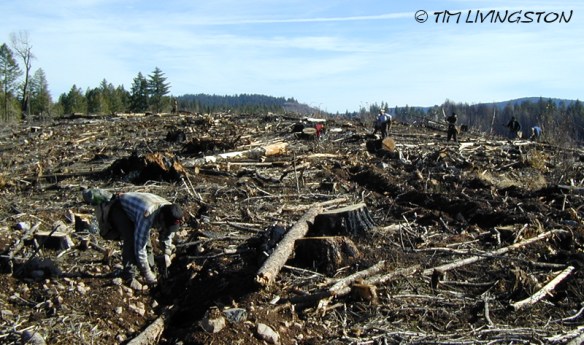
When I was a reforestation forester, the district I worked on had about 2,600 acres burn in the Gun II Fire. The fire burned over 60,000 acres in total. It was my responsibility to implement the reforestation on our 2,600 acres.

Planting trees in the Gun II Burn.
As an artist, I paint on a small canvas. As a forester, I paint on a big one. After a large wildfire, the landscape canvas can be huge. Reforestation on this scale is a lot of work. It’s very gratifying knowing I had a hand in starting this new forest. Each year when I return, the trees are a little bigger. I picked up and carried every box of trees, hundreds of thousands of trees.
Below are four photo point pictures showing how this canvas has changed over time. I had a few of my friends help demonstrate how big the trees have grown over the last 12 years. It’s a running joke around here, that you must have a dog if you’re a forester.

May 5, 2001 Immediately after planting. Hunter and Blaze pose for me.

February 19, 2006 That’s Hunter and Blaze peeking through the trees.

July 7, 2010 The trees have been thinned. Blitz and Hawk pose.

October 23, 2013 The trees are over twenty feet tall. Now it’s just Blitz.
A farmer grows his crop over the course of a year, but our crop takes decades. Counting each year that passes is an occupational reality of being a forester. Seeing my dogs in these pictures also reminds me of time marching on. Now, there are new generations of both dogs and trees. To me, their lives are intertwined with the forest. This forest is full of our stories.
Forestry Friday … Forestry Quiz Answer
Now this doesn’t replace your regularly scheduled Forestry Friday. However, it’s time to answer last weeks Forestry Quiz Question.

Ponderosa pine seedlings in a growth study.
The question was….
You nail a red tag on a Lodgepole pine tree at DBH. DBH stands for Diameter at Breast Height, which is 4 1/2 feet about the ground as measured on the high side of the base or the tree. The tree is growing in height at 2 1/2 feet per year. In 10 years how high will the tag be above the ground?
Answer, 4 1/2 feet. Trees grow from the top up. New shoots emerge at the ends of the twigs. On the other hand, grass does grow from the bottom up. Most of you got it right and a few brave souls who weren’t sure, guessed! No guts, no glory. Way to go everyone, I’m impressed. I’ll have to give you a harder question next time. Let’s see what Blitz thinks.

It seems Blitz is not impressed. 😦
Natural Born Retriever

Blitz follows her nose to the prize.
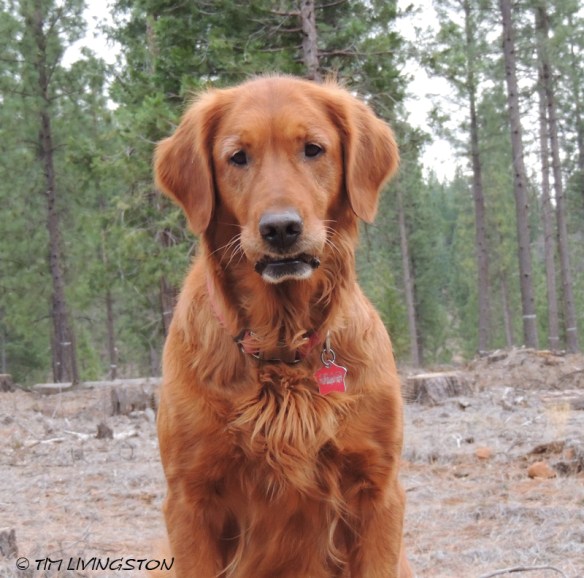
Blitz took me pheasant hunting last week. I think she would drive herself if she had thumbs. Luckily, she needs a gunner tagging along. It’s my joy to watch this girl living her bliss. I captured this hunting moment in watercolor, and pen and ink.

Blitz with her bag.
Forestry Friday … Forestry Quiz Question

A lodgepole pine reaches for the sunshine, as we all should.
This week, Forestry Friday is a forestry quiz question. The question is about tree growth. This question appeared on the California Professional Foresters Exam about thirty years ago. Any junior forester or forestry student who missed this question probably failed the test and was definitely teased for it. In California, foresters are required to pass this test in order to become a Registered Professional Forester (RPF). It is illegal to practice forestry in the State without a license. Now to test your forestry knowledge.
You nail a red tag on a Lodgepole pine tree at DBH. DBH stands for Diameter at Breast Height, which is 4 1/2 feet about the ground as measured on the high side of the base or the tree. The tree is growing in height at 2 1/2 feet per year. In 10 years how high will the tag be above the ground?
I look forward to reading your answers Junior Foresters. I will reveal the correct answer next week on the Forestry Friday post.

Blitz answers “who cares! How high to the first stick is the real question.”
Let’s Call It A Wrap

Illustrating Buddy wore me out, and Buddy too.
I’m done illustrating Buddy. Now we wait for the official release. I think I’m going to take a nap too.
Forestry Friday … Sierra Cascade Logging Conference
It’s time, once again for the Sierra Cascade Logging Conference here in Anderson, California. It is an opportunity loggers, foresters, equipment sales folks, school kids, teachers and the public to all come together. It’s like going to the county fair where you can bump into friends that you haven’t seen since last year.

Mary, of Sneaking Bliss, teacher the kids how an electrostatic precipitator cleans the smoke from a wood fired co-generation plant.
Today was the first day of the conference and also Education Day. Over 700 4th and 5th graders tour the exhibits and learn about forestry and the timber industry. Each year Mary teaches a science lesson related to one of our picture books and the kids love it.

There is a lot of big equipment like this feller buncher.

Plenty of little equipment too.

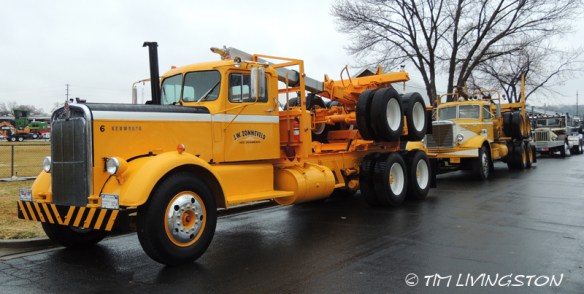
There was even quite a bit of old equipment all shined up.

Who doesn’t love a chainsaw carved bear?

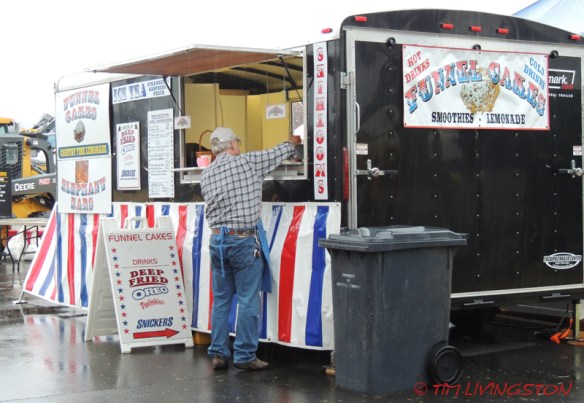
Not to mention funnel cakes!

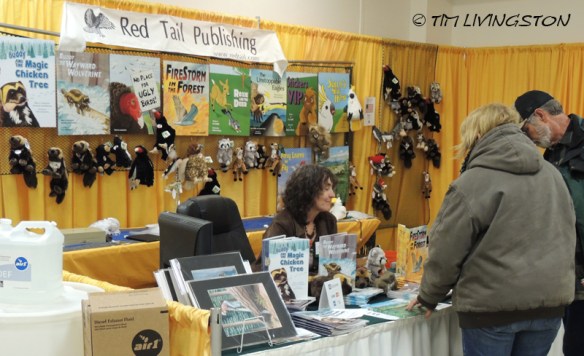
Mary visits with customers at the Red Tail Publishing booth.
Sunrise at the Sawmill

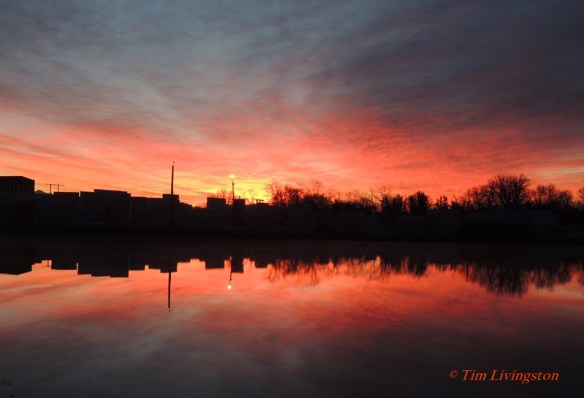
This morning’s sunrise over the otter pond at the sawmill.
This morning, sunrise was quite a treat for the eyes. Even in the middle of a large industrial site you can find a moment to enjoy nature.

Looking east over the mill site toward Lassen Peak.

A red tail hawk perches on a log deck while on a morning hunt.

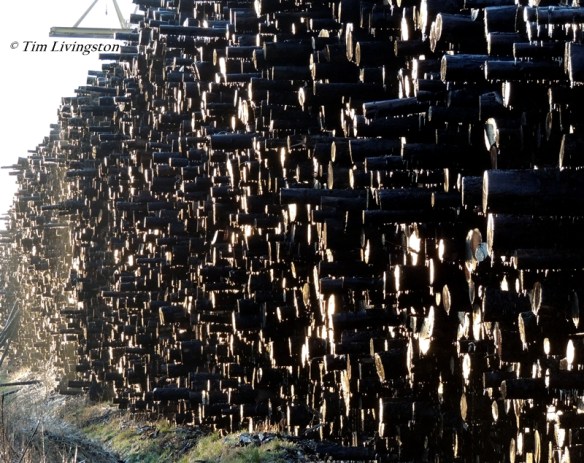
The big log deck forms a wall of wood.

A great blue heron gets in a bit of morning fishing.
Forestry Friday … Drought!

I took this picture of Lassen Peak on January 8th, 2013.
In California we’re in another severe drought. I took these two pictures of Lassen Peak in January, one this year and the other last year. You can see the stark difference. Lassen Peak is the southerly most of the major cascade volcanoes and is 10,463 feet (3,189 M) tall. Last year we had over 20 inches of rain at this time, and this year we have less than 4 inches. The snow pack is almost nonexistent. Cattle ranchers are having a hard time. There’s no new grass and the foothills are as brown as July. The price of hay is going to go through the roof forcing many of the ranchers to sell off their cattle. Our ski resorts are having a terrible winter due to the lack of snow. It’ll be a tough year for these folks and the long term forecast is grim. Expect the California water war to once again rear it’s ugly head.

Lassen Peak taken on January 22nd, 2014.
This summer we are expecting our share of challenges in the woods. Drought stress will cause tree die off. This will create prime conditions for bark beetle infestation as the trees become more and more stressed. Worst of all will be the fire danger. I think red flag fire warnings will be the theme of the this summer.

Blitz rolls in the snow while she still can.
Forestry Friday … What a difference a Decade Makes
Do you have a favorite spot in the woods that you like to get away to and reconnect with nature? Somewhere that you’ve camped with your family or just a quiet place to escape the everyday bustle. The familiarity of that kind of place has a timeless quality about it. That is part of what makes it happy and comforting. We want it to always be there and never change.

This is where we escape. Blitz gives Mary a snuggle.
As a forester, I work with a changing forest every day. Some changes come quickly like a timber harvest. Some come violently as with a wildfire. Mostly, change comes slowly. The different seasons transform the forest each year. This brings about my favorite yearly change, the Spring burst of growth. The fruits of my labor are on full display, as tree buds elongate and spring forth new needles. Each year the trees that we planted are a little bigger than before.

Hunter in 2002.
This photo was taken of my old buddy, Hunter, in 2002. In the background was a newly planted forest. The trees were harvested from the area directly behind him in 2000 and the seedlings were planted in 2001. If you look closely, you can see the small pine trees growing. Lassen Peak is just visible on the horizon in front of Hunter.

Blitz, Hunter’s daughter, sits on the same stump in 2014.
Jump ahead to 2014 and Blitz sits on the same stump. The trees we planted have now grown for twelve seasons. Many of them are over twenty feet tall. The view of Lassen Peak is gone. Blitz was barely able to sit on Hunter’s stump because decay caused it to crumble under her. The yearly change may seem small, but when viewed over a decade, it’s dramatic. Expecting the forest not to change is like expecting your child not to grow up. Forests are dynamic and never static. Our memories and old photographs may not change, but our forests always will.