Canyon Live Oak, Quercus chrysolepis, is an evergreen oak of the California Sierra Nevada and Coastal Range. Its full range stretches from Mexico and Arizona north to southwestern Oregon. These trees typically prefer shallow soils like those found in steep canyons common in the low and mid elevation mountains. Hence the name. These sites are normally poor soil quality and aren’t the best locations for growing commercial timber. Canyon Live Oak is not considered as a commercial species. Its main commercial value is as firewood. However, it has a high intrinsic value as a species important to wildlife. In forest management it is far more beneficial left on the landscape providing food, nesting and roosting habitat.
Tag Archives: forest
Forestry Friday … Loggers To The Rescue
This article appeared in The Economist and sums up the need and benefit of thinning the forests of the Sierra Nevada. I’ve added a few comments about it below.

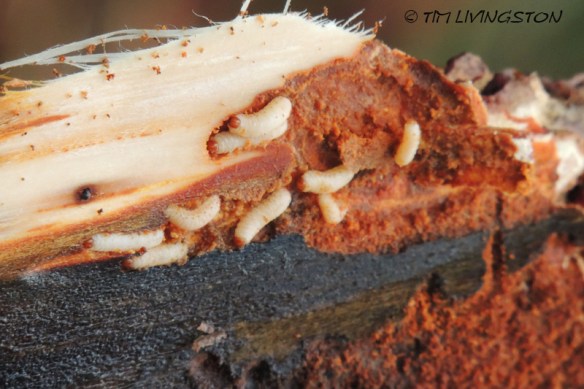
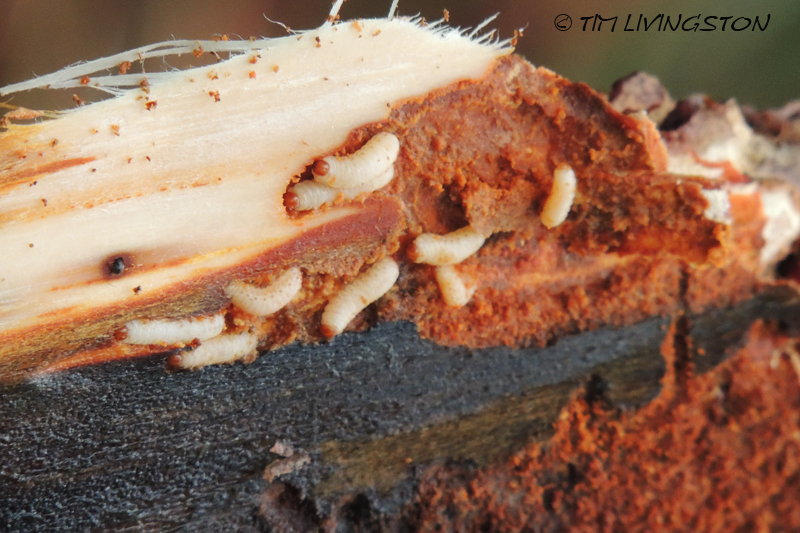
The larval form of bark beetles are what kill the tree. The adult beetle chews a nursery gallery into the tree and lays her eggs. The larva hatch and spread out from that gallery creating more galleries as they feed. During this feeding process the larva girdle the cambium of the tree causing it to die.
I really appreciate the discussion regarding water generation through thinning. I believe this is one of the least discussed benefits of practicing forestry in the West, but in California it’s one of the biggest benefits with our constant water deficits. Thinning the Sierra forests would generate an enormous amount of water for California.
When comparing the cost of controlled burning to mechanized thinning (logging) you can’t ignored the cost incurred when controlled burns get out of control. The cost differences between doing controlled burn and fighting out of control fire is enormous. I’m not saying don’t use controlled burning, but fire suppression costs need to be included when controlled burns get out of control. Controlled burning is one tool available, but cannot come close to solving the problem of all the overstock forests.
Commercial thinning that includes merchantable (larger) trees is the only economically sustainable way to accomplish the massive level of thinning that needs to be done. The author points out 52 trees per acre was the historic density of trees in the Sierra. Research has shown that the proper density for optimal growth in fully stock mature timber stands to be between 43 and 64 trees per acre depending on the size of the trees. If we remove 236 trees per acre to reach 64 trees per acre, then some of those trees have to be big enough to make a 2 x 4. If there is enough value in the larger trees, a timber company will pay the federal government to thin the forest instead of the government paying a contractor to clean up and dispose of the unmerchantable trees.
What’s the upside? We get healthy resilient forests that are more fire resistant. Wildfires that do start are less severe, and safer and easier to control. There is more water available to the state. The wood isn’t left to rot. It is used in wood products and to generate electricity. People doing these forest related jobs see an economic benefit, particularly in the rural communities. The practice is sustainable and wood is our great renewable resource.
Lastly, some folks are going to fret over the impacts of logging at that scale. I want you to know this, timber harvests are studiously planned to mitigate the potential negative impacts they could cause. Secondly, just imagine the negative effects of these mega-fires. I’ve seen them and their effects are staggering. I’ve yet to see one large burn ever have it’s negative impacts fully mitigated.
Wild Wednesday … Moment In Time
This watercolor was inspired by a chance encounter with a black bear while hunting a few years ago.

Wild Wednesday … Wild Wood
Forestry Friday … Tree Planters!

Tree planters from “Timber.” A WIP.

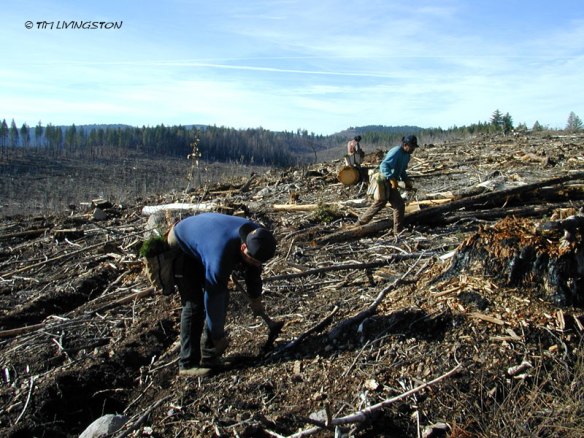
Planting trees in the Gun II Burn in 2001. See more about the Gun II burn in my post “Of Trees and Dogs.”

A freshly planted Douglas-fir seedling.
Wild Wednesday … Pretty Crazy In Pink?
I see a lot of strange things in the woods, but one day this summer I saw a creature out there that I had never seen before. It was a cat, but not a mountain lion or bobcat and it was pink. I know what you’re thinking, and you’re right, it was the “Pink Panther.”

The Pink Panther up a tree. In case you don’t believe me, here is photographic evidence.
Yep, the Pink Panther was spotted by yours truly along Highway 3 on the west side of Trinity Lake. I don’t make these things up folks. There he was up a tall Ponderosa pine tree, way up!

If you look hard you can see him in the pine on the right side of the road.
He was about forty feet up the tree. I don’t know what he was doing up there. I don’t know how he got up there. He wouldn’t come down and he wouldn’t talk to me. So I took his picture and left him to his business.
I went by a few weeks later and he was gone. Keep and eye out, he may be coming to a tree near you!
Forestry Friday … Drought and Dust
It has been a long dry summer. We had a good rain two days ago, the first in about three months. That brought a bit of relief from the horrendous fire season California has been going through.

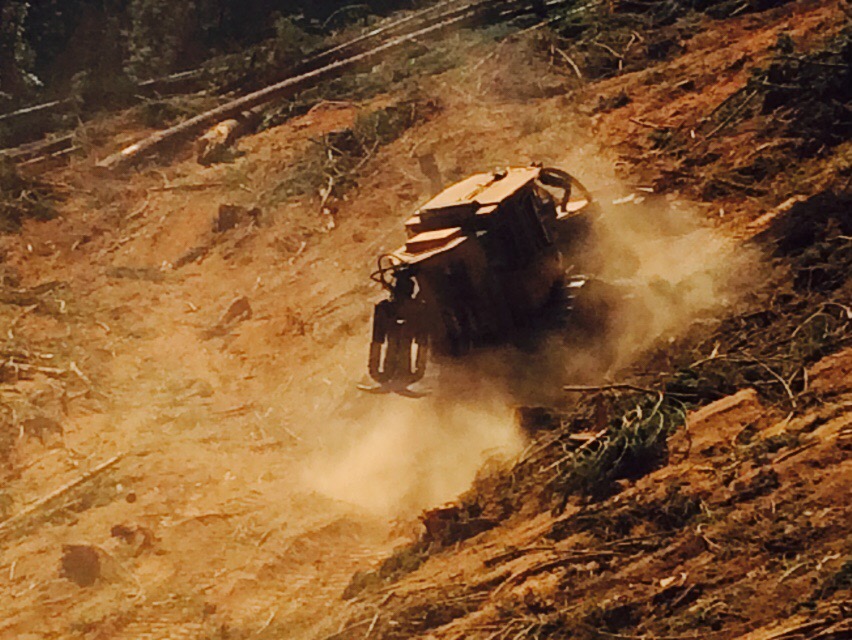
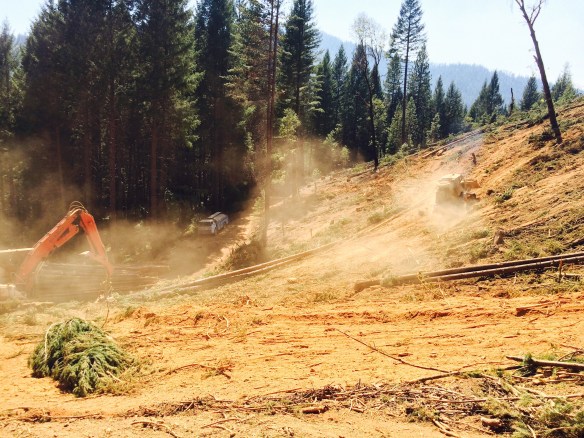
A skidder pulling another turn of logs down the hill to the landing in a cloud of dust.
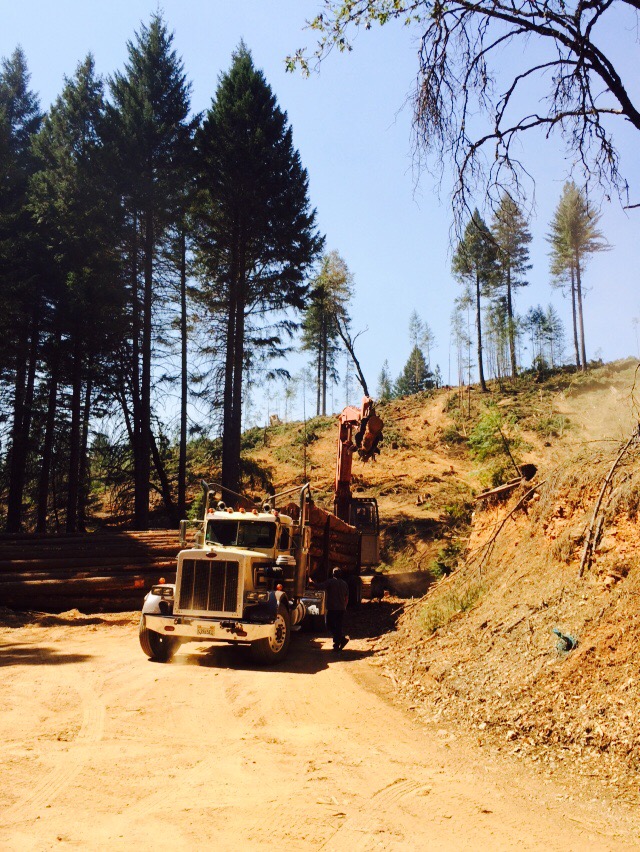
The logging crews have put up with terribly dust conditions, and it’s not over yet. Most of the equipment they run has climate controlled cabs, but it was just a few short years ago when they didn’t. The men would return home completely covered in dirt. Not to say they don’t go home dirty now, because they do. At least they don’t have to breathe in the dust all day.

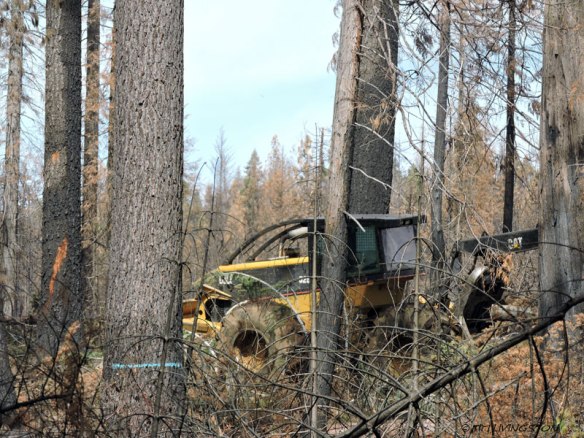
The processor is making logs, while the cat heads back for more.
There’s no doubt the modern logging equipment has done much to improve the safety, comfort and productivity of the crew members.
Having the crews out working in the woods during such dry condition might seem risky. However, these people are often the first ones to the fires, because they are already in the woods. They are our first responders when nearby forest fires break out.

Sailor and Bliss say, Sleeping in the pickup isn’t dusty or hot when the AC is running.
The day I visited this operation it was 105 F, dusty and hot.
Forestry Friday … First Trip to the Woods
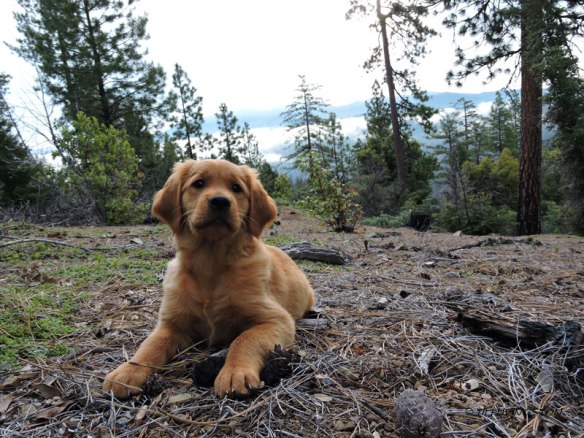
Bliss is a forester’s dog and this was her first day at work.

It’s her job to go to the woods. There’s no time like the present to start training her.
On her first day she got to play in numerous rivers and visit the redwoods. Not bad for a day one. I documented her day in the gallery below.
Forestry Friday … From The Woods
Today I’m coming to you from the Trinitys. I happen to have a cell signal so I’m making this post with my iPhone. Many of you may know that we are in a severe drought here in California. You can see by the dust coming off this logging operation how dry things are. Our logging crews are suffering with the dry conditions and the dust. Full fire precautions are in effect. Fire season has been pretty brutal this summer. We’re crossing fingers and hoping for the best for the rest of the logging season.

Dust is flying, hazy smoke is in the air and Trinity Lake, in the background behind the lower left trees, is down to about 30% capacity. It’s dry dry dry out there.
Forestry Friday … Big Stumps Talkin’

A managed redwood forest.
Last week, I was in the redwood country of our coastal mountains. However, I wasn’t down in the parks with the gigantic and ancient trees. As you might imagine, I was in young, working redwood forests.

Wild Foxglove
It’s beautiful country and full of surprises. One of the surprises you’ll find in these forests are the old stumps of the ancient forest giants that were logged over a hundred years ago.

A giant redwood stump.
These old stumps tell a story of the past. The stump pictured above looks like it has two eyes. The “eye” on the left is a spring-board hole. Way back when, the timber fallers would cut a notch in the tree up above the butt swell. They then wedged a board into the notch. They stood on the board, called a spring-board, to cut the tree down. Two man teams with double bit axes and cross-cut saws fell these trees. The spring boards elevated the fallers up the tree where it wasn’t as thick, making it easier to cut. That’s why these stumps are so tall.
Many of these stumps are charred on the outside. The fires that caused this may have been intentional. It was a common practice of the time, to burn the logging site after the trees were felled. They did this to eliminate slash. After the big trees were cut the slash was so deep it was difficult for a man to get through it. The fire solved this problem and left burned stumps behind.

This redwood stump is fifteen feet across.

A spring board hole cut into the stump.

Looking west from the Coast Range toward Humboldt Bay and the Pacific.
I did a watercolor of a logger bucking a log with a cross-cut saw, which is showing in my post Misery Whip – The Final. Timber fallers on spring-board would be a good subject for an illustration. I might have to work on that. Happy Friday.