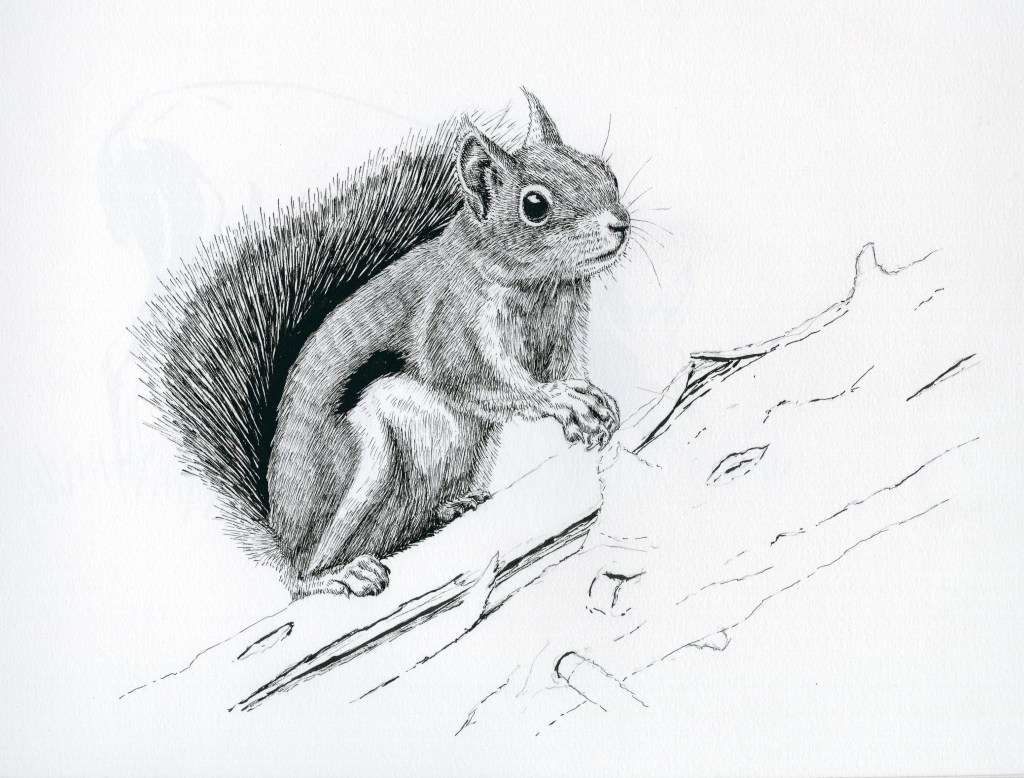
I’m starting my new piece of art for the Sierra Cascade Logging Conference Forestry Education Fundraising Auction. That’s a mouth full. I don’t have anything to post yet, but here is last years entry.
I’m going to need to top this one! Stay tuned for my progress reports.
I was ask once on a webinar how long did it take to do a pen and ink. I wasn’t sure. I rarely take time to complete a piece in one sitting. The process for me is usually broken down into segments done when I have time to draw. This time I wrote down my time as I completed different segments. Here’s how it broke out.
Pencil work took 20 minutes.Brush pen work 10 minutes. The .3 to .8 ink pen took 20 minutes. The brush pen was a Kuretake 50. I highly recomend this pen.The fine line of the squirrel work was 1 hour and 45 minutes. The fine line work on the limb was another 2 hours. A .05 pen was used for the fine lines. Staedtler Pigment liners were used for the line work.The black background shading was done in 1 hour 15 minutes. I used the brush pen and a Copic Wide 110. I spent 10 minutes of finishing work.
The final time was 6 hours and 15 minutes. It was done over approximately 10 sessions averaging 37 minutes each. I drew during lunch breaks, while waiting a doctor appointments, sitting at road construction and in the evening at home. It was not efficient and I probably could have done it in 4 hours without interuption. I draw when I can.
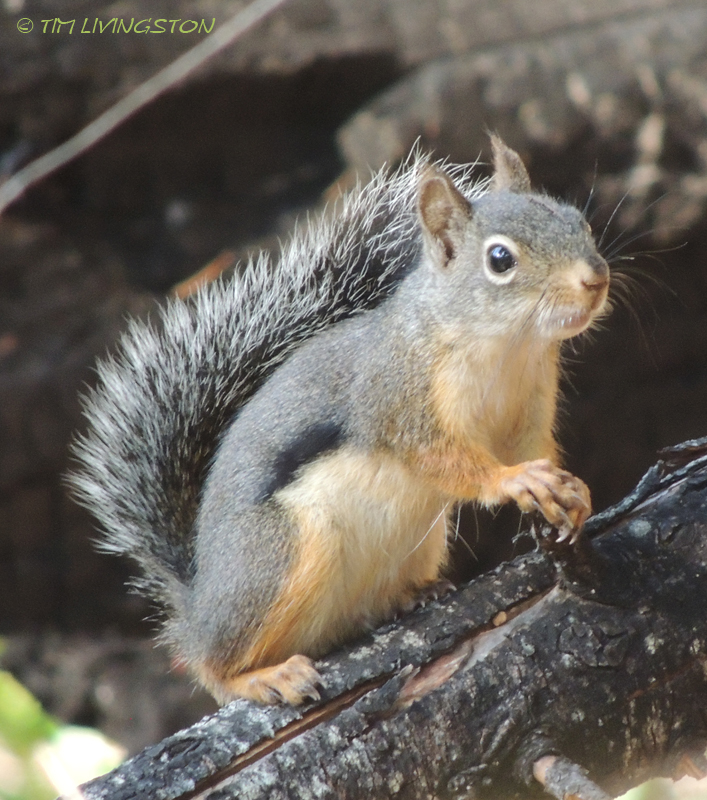
Here’s Doug in his natural habitat.
Douglas Squirrels, (Tamiasciurus douglasii) are small squirrels. They’re smaller than gray squirrels and larger than chipmunks. John Muir described them thus, “He is, without exception, the wildest animal I ever saw,—a fiery, sputtering little bolt of life, luxuriating in quick oxygen and the woods’ best juices.” I think of them as the security alarm of the forest. When one is disturbed it sounds it’s loud chirping alarm and it doesn’t care whether it’s alarming on a person, deer or bear. Once they start, they won’t stop until you leave.
During the last few weeks I’ve had a Siggy and Sailor come to work with me while the weather was cooler. Mostly, it’s been too hot, but we’ve had a few nice days.
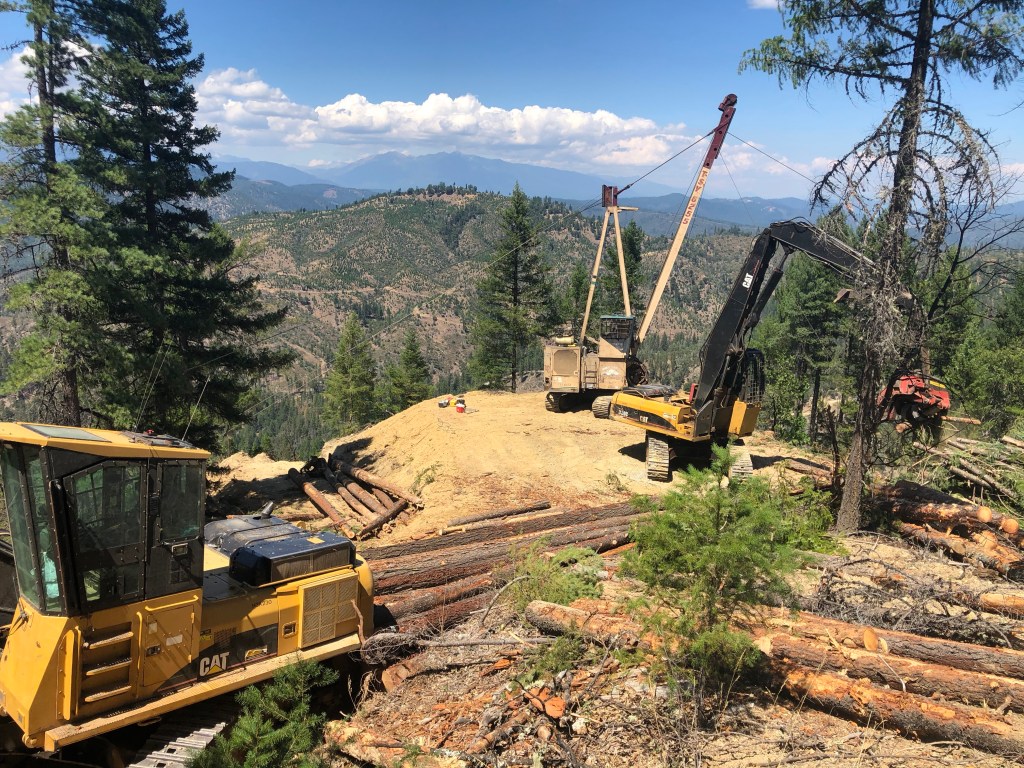
Siggy’ s doing some quality control one some poles. Posing in a pine plantation from my reforestation days. We visited a logging side for student loggers!We went through the Ponderosa Burn. It was replanted several years ago and the new forest is well on its way. On a warm day the Northern Sierras we have to be sure a girl can get a drink. Sailor got to go visit loggers with me on the Westside toward the coast. He patiently waited in the truck so I can talk to the contractors. Steeper ground requires yarders for logging. Sailor thought the creek felt pretty good after riding around.
This was Saturday afternoon. What started out beautiful turned to spitting snow on us. It was over a hundred degrees just three days before in the valley. I feel like I’m in Montana! 🥶
This fire season in California has been epic in the worst possible way. Not only did we have the state’s largest recorded wildfire, the Ranch Fire, but we’ve had the most destructive fire, the Camp Fire. During any prior year the Carr fire would have been the most destructive fire in California, but this year has been exceptionally bad for wildfires.
I was out checking in on one of our salvage logging contractors on the Carr Fire last week. The timber salvage operations are well under way. Click on the gallery of images to read about it.
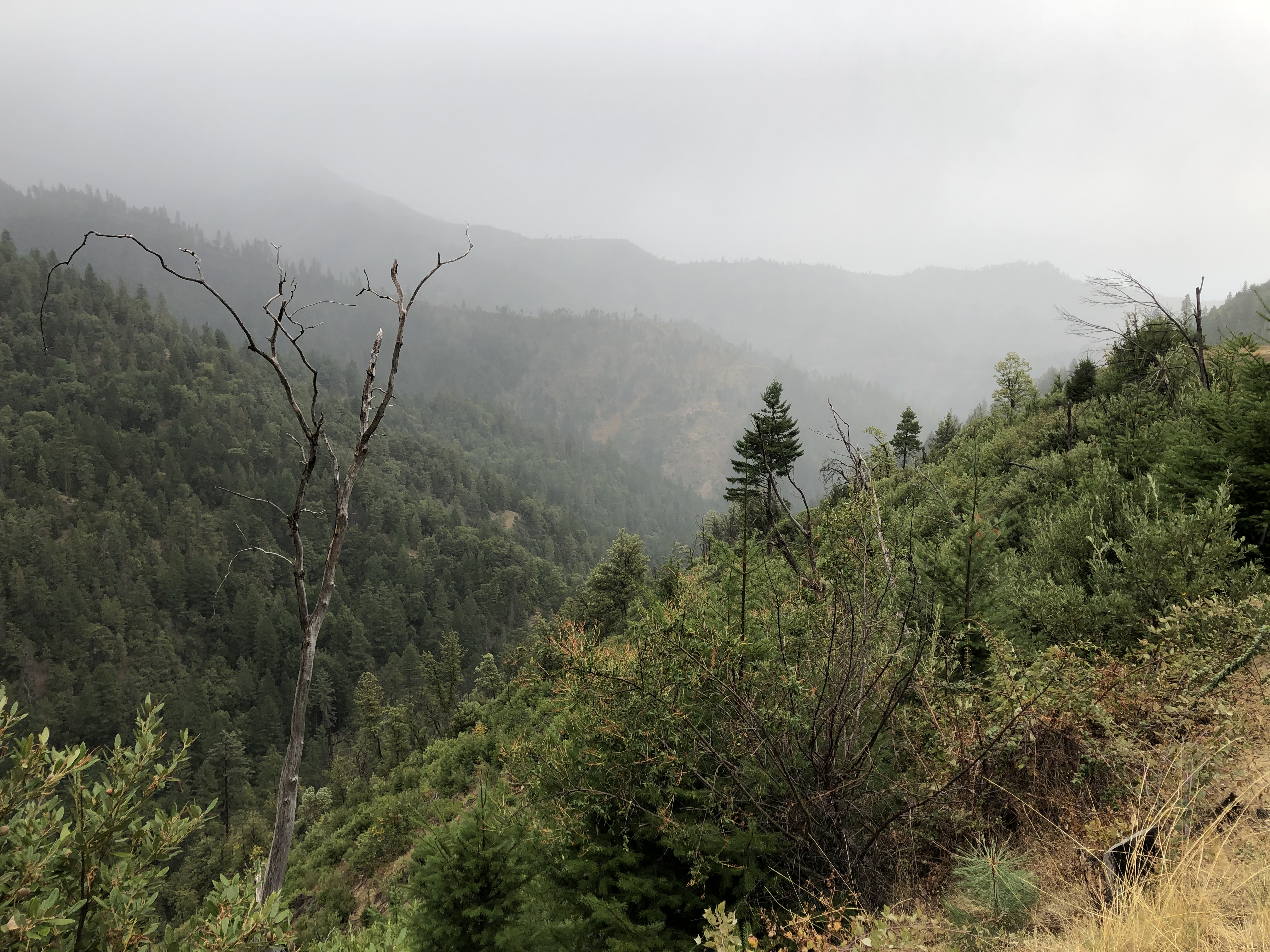
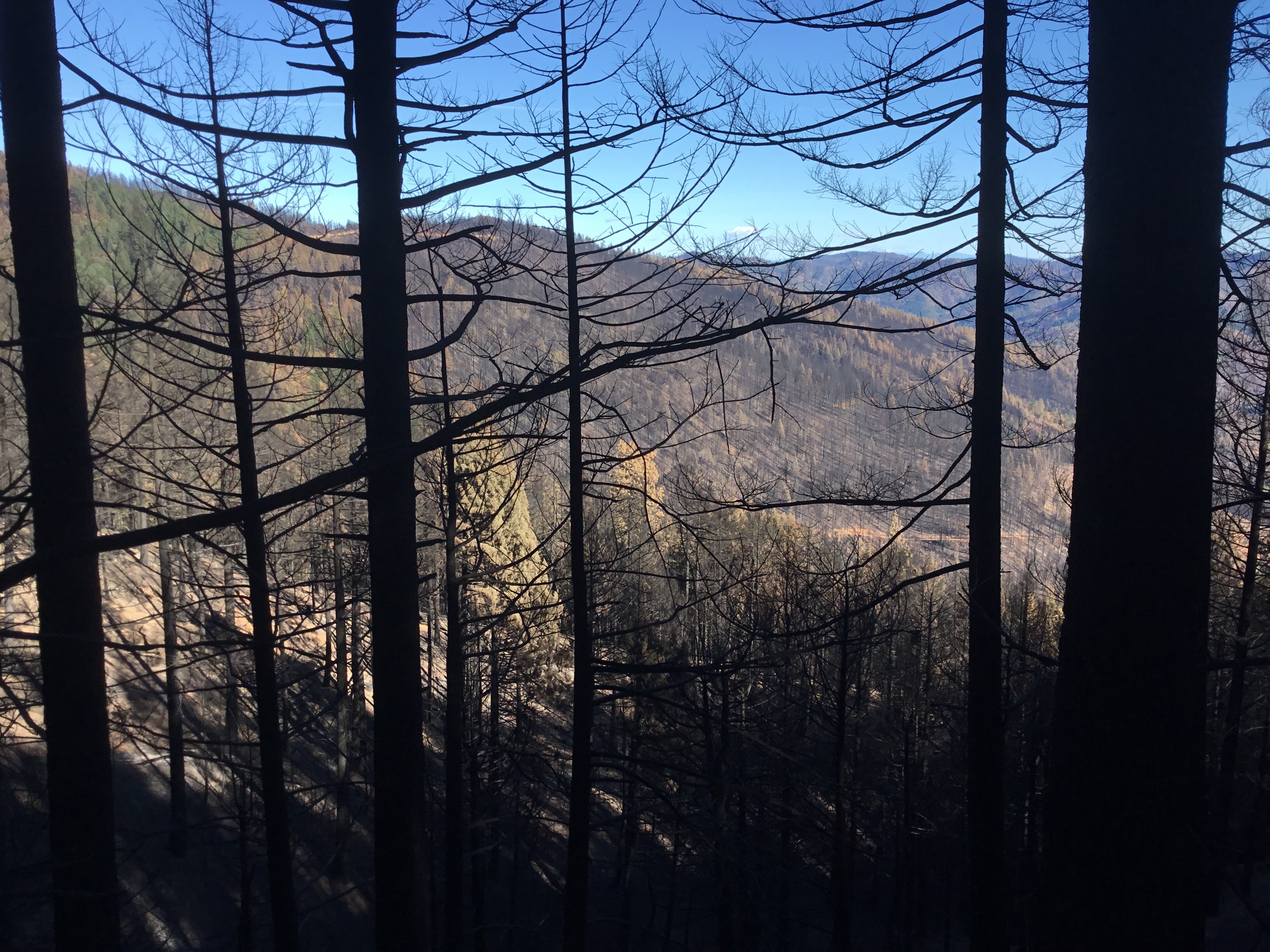
This view is from the Highland Ridge Road looking down at the Community of French Gulch. Over the course of a couple weeks the fire made a run at the town three separate times. Many homes were destroyed.
The Carr Fire left hundreds of millions of board feet of dead timber in it’s wake.
It’s like a ghost forest.
Bark beetles immediately invaded the fire killed trees. In the spring they will spread the many of the surviving trees.
This is one of many of our salvage loggers. It is imperative to get the wood to the mills as fast as we can. It begins to deteriorate as soon as it’s dead. The tractor is skidding trees to the processor,. The processor cuts the trees into logs, while the loader sorts the logs into decks.
Here the processor manufactures trees into logs.
A couple of big logs waiting to be skidded into the landing.
On steeper ground we use track laying skid cats to move the trees to the landing. The land around Redding that burned is very steep.
The logs get sorted by size and species while waiting to be delivered to the mill.
The trees don’t always burn completely during the fire, but the heat alone is enough to kill them.
This part of the forest had been thinned before the fire. By spacing out the remaining trees the fire burned at a lower intensity. The fire wasn’t as hot, the flames were smaller, and the remaining trees were resilient enough to survive the fire. Thinning these trees in a logging operation saved them.
Even now, weeks after the fire was contained there are still hot spots out in the burn. We may still find some hot spots in the spring.
Since I wrote this post the rains began in earnest. Our fire season has come to brutal end.
I was out in the Carr Fire burn area today. It’s quite devastating to see the thousands of burned acres of forest. This fire destroyed over 1600 structures, but it also killed millions of trees. We are faced with an epic fire salvage operation that will take years to complete. That will be followed by an equally epic reforestation program
With all the fires burning in California there has been a lot of discussion about logging to reduce forest fuel. Doing so makes our forests more fire resilient. There is fear among many people that logging of any kind will destroy our forest. The truth is the the fires are destroying our forests. This is a short video of such a logging operation from last year on the Lassen National Forest. The Forest Service prepared this project. Our company bought and logged the timber sale. The result is a healthier more resilient forest.