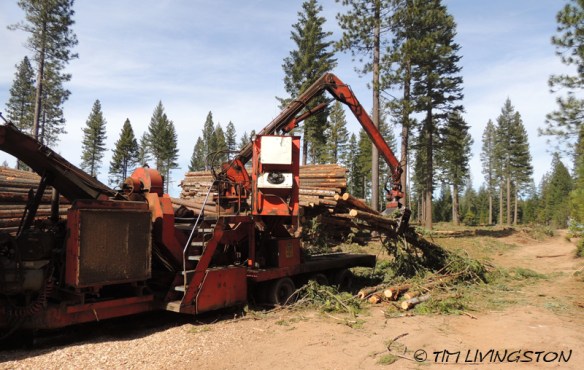
Forestry Friday … It’s Summer Loggin’ Season

Logging is in full swing and the dust is flying. It’s dry out there and the crews have their fire tools sharp and fire pumpers full.


logging, skidding, skid cat

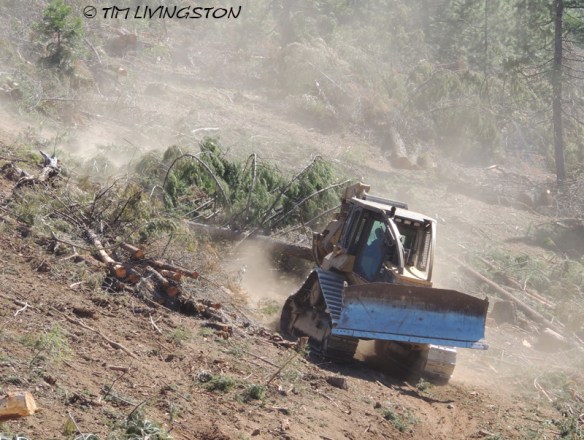
Craig winds his dozer down the skid trail.

logging, skidding, skid cat

A skid of logs chattering toward the landing.

logging truck

A load of logs pulls out of the landing. I hope you don’t mind a little dust.

Forestry Friday … The Rim Fire

This Op-Ed ran in the San Francisco Chronicle. It is by Bill Keye, a friend and fellow Registered Professional Forester. It’s about the Rim Fire rehabilitation. The Rim Fire was the enormous fire that burned into Yosemite National Park last year. I’ve been thinking about posting on this topic for a while, but when Bill published this piece, I decide to use it, because it is so well written. National forests begin new era of cooperation after Rim Fire


National forests begin new era of cooperation after Rim Fire

Updated 1:14 pm, Saturday, May 24, 2014
  • The 2013 Rim Fire near Yosemite National Park has brought together timber industry representatives and environmentalists in a new era of cooperation. Photo: Jae C. Hong, Associated Press
    The 2013 Rim Fire near Yosemite National Park has brought together timber industry representatives and environmentalists in a new era of cooperation. Photo: Jae C. Hong, Associated Press

Disaster sometimes comes with a silver lining. Last summer’s 257,000-acre Rim Fire torched more than trees. The enormous blaze, which incinerated a large swath of the Stanislaus National Forest near Yosemite National Park, knocked out power transmission and threatened San Francisco’s water supply. It also cleared away some of the toxic social underbrush that has stymied federal forest management efforts for many years. This could lead to more fire-adapted, resilient and carbon-rich public forests across vast stretches of Northern California.

A Tuolumne County group, which includes both timber industry and environmental representatives, had been meeting prior to the Rim Fire, searching for – and finding – common ground on previously deadlocked issues of forest management. Formed under the auspices of a 2009 law promoting ecological restoration, the Yosemite-Stanislaus Solutions collaborative is at the forefront of a new approach that is bringing people together to heal broken landscapes. The old “spotted owl versus logger” polarities have given way to fresh consensus, with fire ecology at its core.

Collaborative participants agreed on a mission “to restore and maintain healthy forests and watersheds, fire-safe communities and sustainable local economies using a science-based approach.” Since the Rim Fire, the collaborative has been aggressively pushing recovery efforts, which will include clearing dead trees from roadsides and replanting some of the most damaged sites. These restoration treatments begin with salvage logging, and this is where the story gets interesting.

Environmental members of the collaborative are sending a message to fellow conservationists that the days of routinely demonizing timber harvest on public lands may be coming to an end. An April letter from the group to Regional Forester Randy Moore, who oversees all the national forests in California, explained, “While individual members in YSS may prefer one or another of the possible salvage treatment alternatives, we all agree that prompt implementation of the hazard tree and salvage logging projects is essential to move the restoration process forward. Once salvage plans are completed, reforestation, watershed restoration, fuel reduction, and habitat enhancement plans can be given priority attention.”

This kind of consensus has been a long time coming, but it reflects growing concerns about the sustainability of our national forests in a time of climate change and increasingly destructive wildfires. California’s national forests are racking up ever-greater acreages of what the U.S. Forest Service terms “deforested conditions” following extreme wildfires such as the Rim Fire. These are situations where most, if not all, of the existing trees have been killed. Without replanting with trees, many of these burned acres will become choked with brush species, which store much less carbon than healthy timber stands.

The trend is now so firmly established that the Forest Service projects that by mid-century, our national forests will emit more greenhouse gases than they absorb. In other words, federal lands set aside for broad conservation purposes are on track to becoming major carbon polluters.

Yet this outcome is entirely avoidable.

Besides tree planting, forest restoration work requires an increased use of tools proven to reduce wildfire risks; thinning, chipping and prescribed fire. In some cases, selective timber harvest may be ecologically desirable, especially to improve site-growing conditions for long-lived and drought-tolerant Sierra Nevada pine species.

In addition to wildfire concerns, there is renewed focus on watershed health. This is especially important in California where most of our fresh water supply originates in our mountainous national forests.

Some organizations will continue to fight the old timber wars from the 1990s, raising alarms, fundraising and litigating to maintain their prestige and power over public land policies. Others, like the Yosemite collaborative members Central Sierra Environmental Resource Center and Tuolumne Group of the Sierra Club, are helping to move the forest management debate forward. Similar collaboratives have formed throughout the West to begin the process of revitalizing depressed rural economies.

Environmentalists who support forest restoration and ecosystem resilience are leading the way. Those clinging to past misgivings and ideological purity are being moved toward the exits.

Will some interest groups litigate to try to put a stop to the Forest Service’s recovery plans? Probably, but I hope not.

Even if the federal government, with the support of the collaborative, authorizes salvage logging, there will be plenty of dead trees left to decay naturally. The state’s wood-processing industry isn’t what it used to be. Even if the Forest Service wanted to clear all the dead trees – which it doesn’t – California sawmills couldn’t possibly absorb that much timber before it decays and loses commercial value.

There is something for everybody in the Rim Fire’s aftermath, most particularly the prospect of a healing, and not just for the land, but for the people who dearly want to see that land nurtured and sustained.

William Wade Keye is a registered professional forester and a past chair of the Northern California Society of American Foresters. To comment, submit your letter to the editor via our online form at www.sfgate.com/submissions/#1

Forestry Friday … Bug Kill!

“Bug kill” or “beetle kill” are the terms we use for insect killed trees. Bark beetles kill more trees in our forest than any other insects. They are always present in the forest. At low population levels, the dead trees or snags they create are left for wildlife. When beetle populations spike up, we salvage most of the dead trees.

salvage timber, bark beetles, forestry

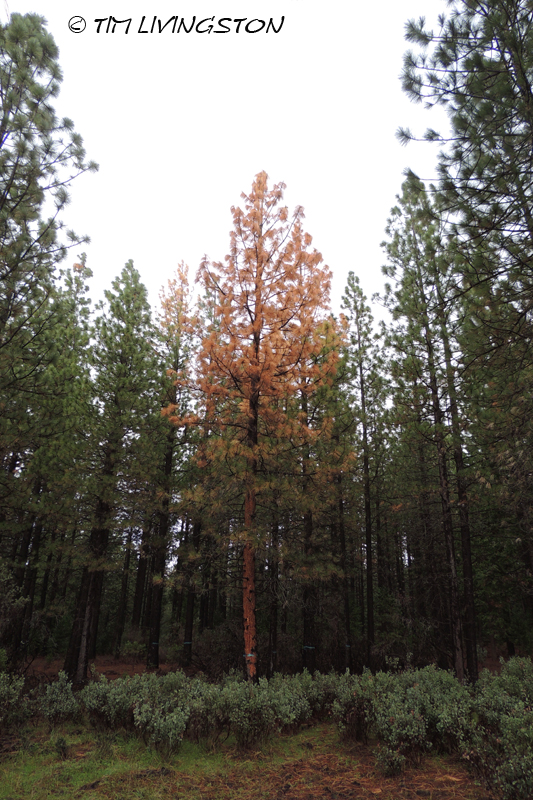
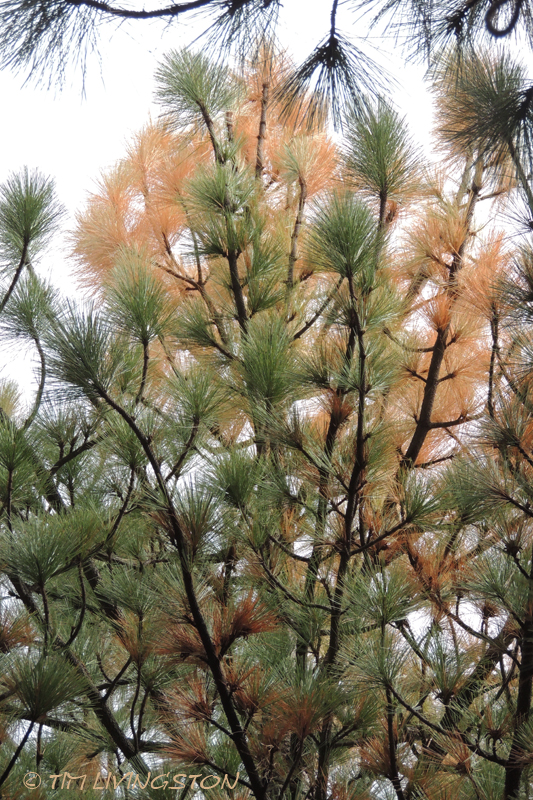
We salvage dead and dying trees to capture their value while the wood is still sound. Red or fading tops signal the problem areas.

bark beetle, pitch tube, ponderosa pine

This pitch tube is the entry point where the beetle first bored into the tree. If the pitch tube is amber in color, the tree successfully fended off the attack. When the pitch tube is pinkish like this one, the beetles successfully penetrated into the tree.

adult red turpentine beetle, Dendroctonus valens

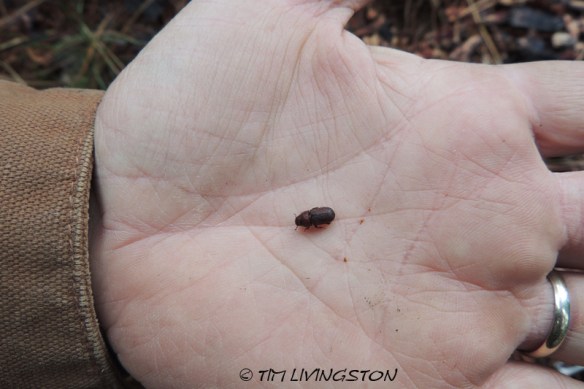
This is the culprit, a red turpentine beetle, Dendroctonus valens. They bore into the trees to lay eggs. Trees in a weakened state, such as during severe drought, attract these beetles.

Red turpentine beetle, Dendroctonus Valens, bark beetle, Ponderosa pine

The red turpentine beetle adult, Dendroctonus valens,  normally attacks the base of the tree. Such a tiny creature can do so much damage.

bark beetle, larva, Dendroctonus valens

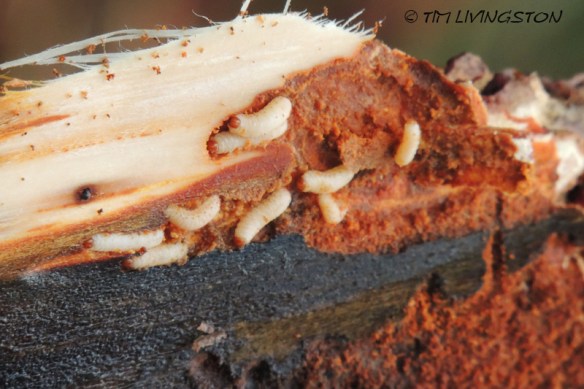
The larva of bark beetles are what kill the tree. The adult beetle chews a nursery gallery into the tree to lay her eggs. The larva hatch and spread out from that gallery creating more galleries as they feed. During this feeding process the larva girdle the cambium of the tree causing it to die.
bark beetle, Ips

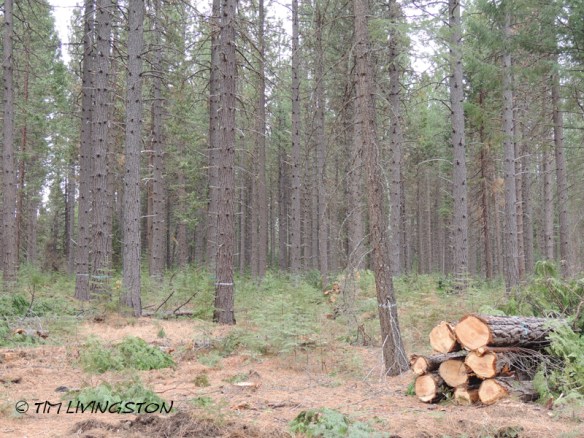
The top of this Ponderosa pine is dead. This in an indication of a different beetle, Ips sp. Location of the attack on the tree can be a diagnostic tool for identification of the insect attacker. There a many species of bark beetles that attack trees.
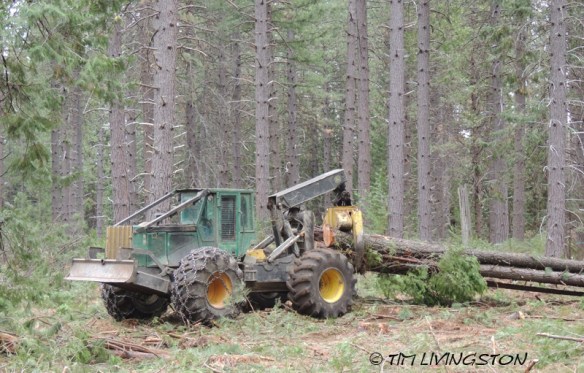
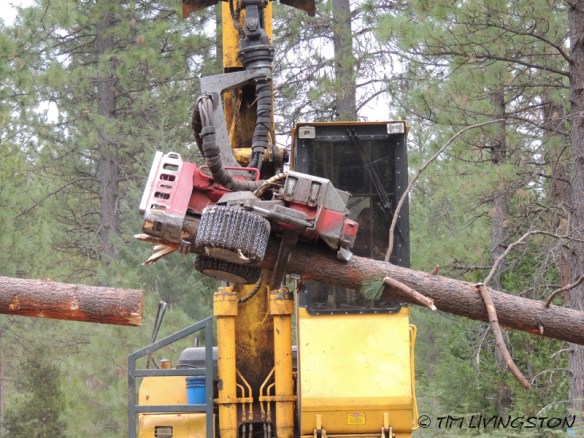
I’ve been asked over the years what can be done to protect the trees from these beetles. The answer is very little. Keeping your trees thinned out reduces competitive stress between the trees. Reducing stress on the trees is the only effective way to reduce attack by the beetles. However, in years when the beetle populations peak, they will even attack healthy trees. Once you see evidence of beetle attack, it is already too late. Salvaging the dead and dying trees is all that can be done. You have to “log the problem away.”

Forestry Friday … The Guardian

Every now and then, I come across a special tree. One that was left unharvested because it so inspired people. The landowners left this tree when they logged the property. The ones that owned it next also left it, and so it goes. This tree is 7′ 3″ in diameter at breast height (DBH). The largest Ponderosa pine on record today is 9′ 2″. The Guardian isn’t the biggest, but it’s a big BIG tree.

Ponderosa Pine, Forest Giant

The sign reads, “The Guardian     Borne ?     Age ?     May You Live Forever”

That’s a nice sentiment, but it won’t happen. Trees, like people, have a limited lifespan and Ponderosa pines if left to grow their natural lives rarely survive to 500 years. However, one Ponderosa was measured at 933 years. Like the sign says, “Age ?” for The Guardian.

Forestry, Ponderosa pine, forest giant

What brainiacs decided it was a good idea to graffiti this tree with chainsaws? Ponderosa pine has flaky bark that sheds off. If they would leave it alone for a couple of decades, most of the carving would disappear.

It’s always a Kodak moment when I come across one of these forest giants. Some that I’ve seen included an 8′ plus sugar pine near McCloud, the 8′ “Mother Viola” sugar pine near Viola (now deceased from a huge wind storm), a 7′ western white pine near LaPorte and a 10′ Douglas-fir near Quincy, all in California.

Ponderosa Pine

I parked close to the tree as a size reference. Many of the young trees below are it’s offspring.

If your are interested in the biggest trees in the United States, you can check out the Big Tree Registry.

Golden Retriever

Meet Skidder, no he’s not my dog. He belongs to the logging crew I was visiting. Yes, I gave him back, after a ride in my truck.


Forestry Friday … When Is A Pine Cone Not A Pine Cone?

When is a pine cone not a pine cone? The answer,… when it’s not! Folks often see a conifer cone and call it a pine cone, but in reality it may not be a pine cone. There are many types of conifers that aren’t pines, such as spruce, true fir, hemlock and Douglas-fir to name a few.

Pondersosa pine, pine cone, pen and ink, ink, drawing

Ponderosa pine cone in pen and ink.

So why do so many folks refer to all conifer cones as pine cones? Apparently, the pines won the branding contest. In the UK many people call refer to vacuum cleaners as Hoovers, in the USA many people call all colas Cokes and conifer cones are pine cones.
Pine cones have thick scales with a little point called an umbo. These images are some of our local pines.

cones, pine cones, Ponerosa pine, forestry

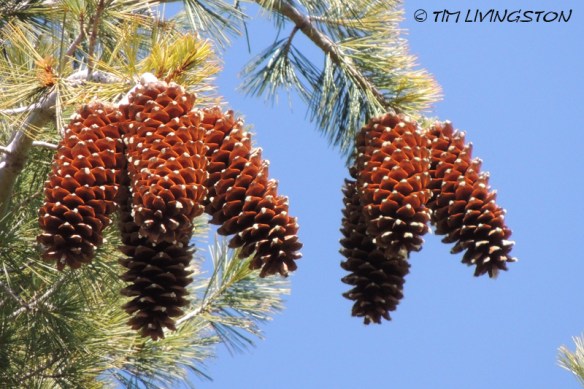
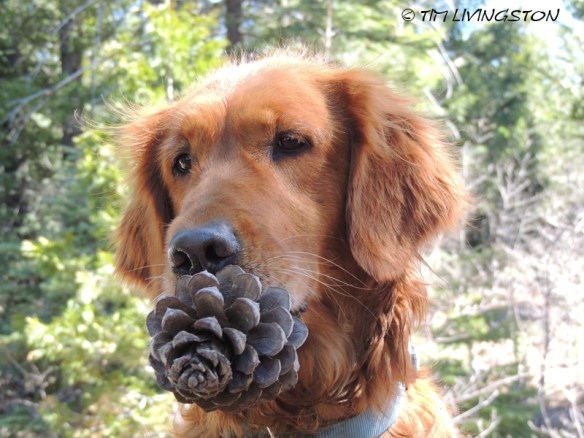
Ponderosa pine cones are the classic western pine cones.

cones, pine cones, sugar pine, forestry

Sugar pine cones are the longest pine cones and reach 24 inches long. Sugar pine are a member of the white pine family.

cones, pine cones, gray pine, digger pine,, forestry

Gray pine cones are large heavy cones that are very common in the foothills of California.

cones, pine cones, knobcone pine, forestry

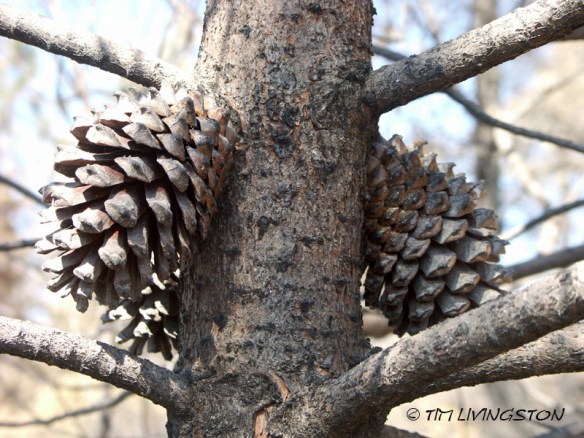
Knobcone pine cones are serotinous cones. Serotinous cones can remain attached to the tree for years and open after fire. These trees are referred to as fire pines.

cones, pine cones, Lodgepole pine, forestry

Lodgepole pine are another fire pine. The cones are usually less than 2 inches wide.

cones, pine cones, big cone pine , Coulter pine, forestry

Several years ago my youngest son climbed a Coulter pine tree to collect these beauties. Coulter pine is also called “big cone pine”, because they have the biggest cones of all, up to 10 pounds. These cones resemble a medieval mace.

Many of the non-pine species have thin scales with no point. These are some images of our local non-pine conifers.

Cones, true fir, white fir, fir cones

White fir cones disintegrate when they’re ripe. White fir is a true fir. True fir cones stand upright on the limb.

Cones, true fir, white fir, fir cones

It is rare to find intact true fir cones on the ground. This one was cut out of the tree by a squirrel.

cones, mountain hemlock, hemlock, hemlock cones

Mountain hemlock have a thin scaled small cone.

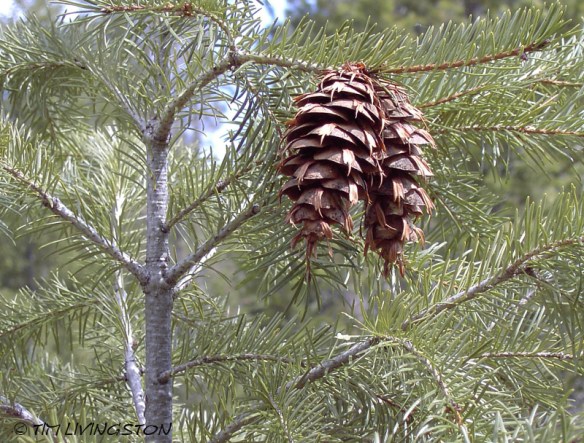
Douglas-fir, cones, Douglas-fir cones, forestry

Douglas-fir cones have extended bracts that stick out between the scales.

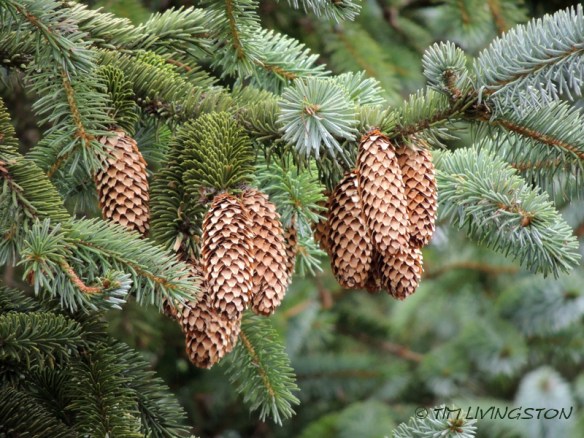
spruce, Sitka spruce, spruce cones

Sitka spruce cones also have thin scales. These spruce grow on the west coast from California to Alaska.

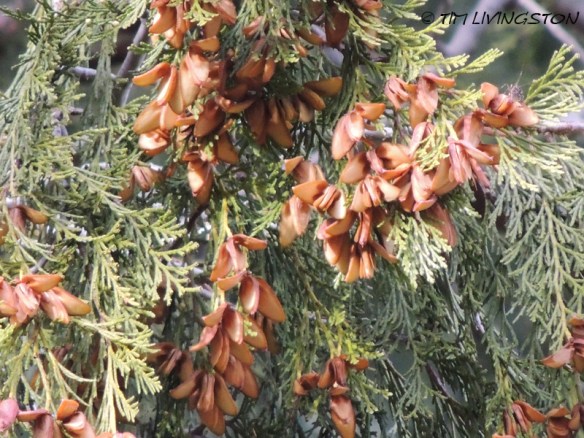
incense cedar, cedar cones, forestry, wooden pencils

Incense cedar have tiny cones. Incense cedar is used for making wooden pencils.

This is a small sample of some of our local conifers. Next time someone calls a non-pine cone a pine cone, you’ll be ready to give them a forestry lesson.

golden retriever

It just seems right to end this post with a picture of Blitz. She’s still here in spirit.


Forestry Friday … Can You Read Tree?

Have you ever read a tree? Trees write stories for us to read, if you know how. They write their stories with tree rings. Trees grow a new ring each year. There have been many papers written on how tree rings from old trees show us climate cycles during the life of a tree. This type of study is called Dendroclimatology.

The tricky part of determining climate history from tree rings is that climate is only one variable that affects tree growth. Using tree rings to examine climate is best done with very old trees. Knowing what the forest was like around the tree as it grew, is also important. Corroboration with other old trees in the area is essential. In the early years of a tree’s life, it is often influenced much more by local factors other than climate.

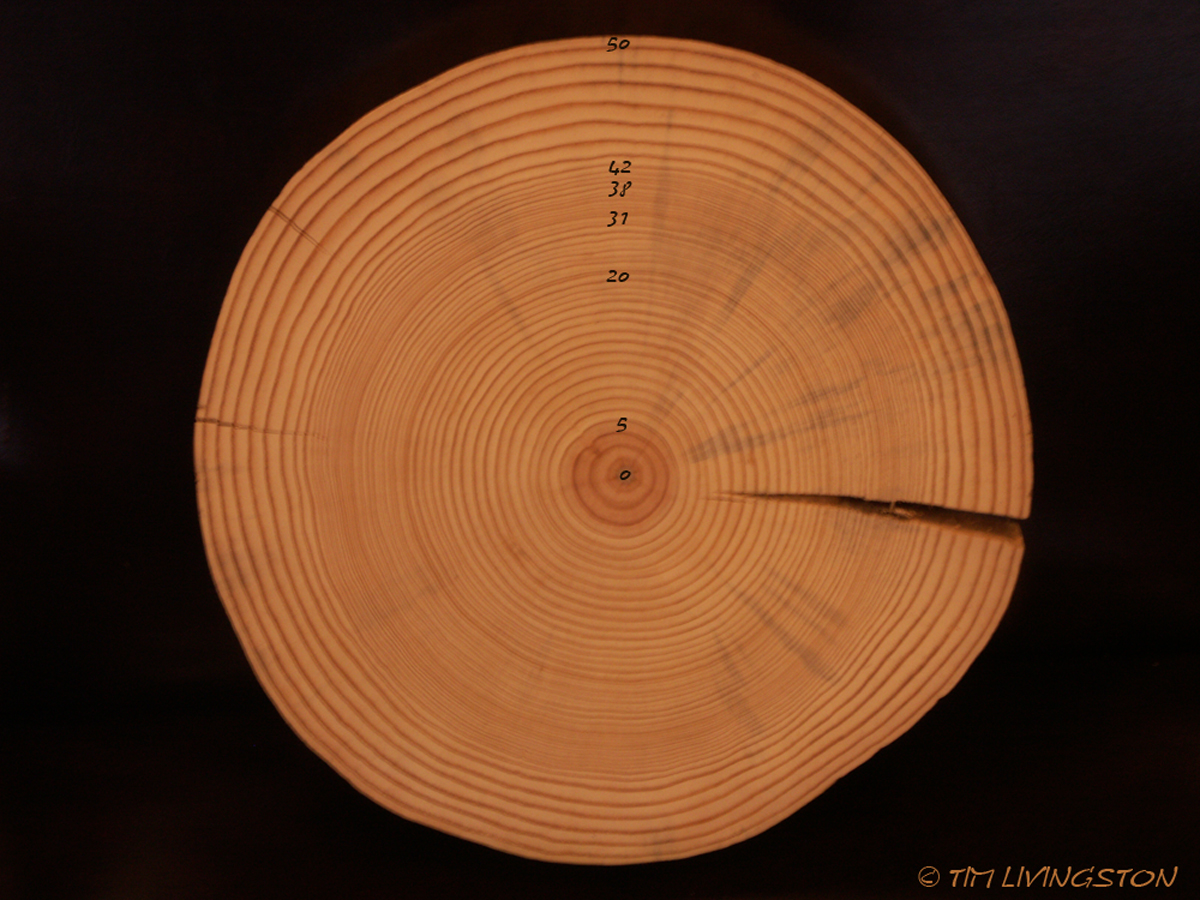
forestry, tree ringsAbove is a cross-section of a 50-year old Ponderosa pine tree. Let’s read it. This tree doesn’t tell us about climate, it tells us about it’s neighborhood. The numbers represent the age of the tree at that particular point.

0 years –               In the beginning, was the seedling. The tree seeded into an opening in the forest. Perhaps, the opening was a result of past timber harvesting or fire.

5 years –               The rings were wide and the tree was growing fast. At this time, the rings began to get smaller because the young tree was starting to compete with the neighboring saplings.

20 years –             The tree continued to grow at a slower rate, but the competition with the neighboring trees was really beginning to slow it’s growth. The foliage (crowns) of the trees grew together as the trees bumped into each other.

31 years –             The timber stand was very dense as the trees grew together. The lower limbs died since little sunlight reached them. With fewer limbs and foliage, the tree made less energy. The tree was growing very slowly.

38 years –             Something changed in the neighborhood, because this tree started growing a little faster. The timber stand may have been thinned in a logging operation, or some neighboring trees may have died from insect attack. Something reduced the number of neighboring trees. With fewer trees around it, our tree had less competition. It received a greater share of sunlight, water, and nutrients.

42 years –             After a  few years with less competition, the crown grew into a bigger, better, energy making factory. Upon recovering from heavy competition, the tree had the capability to grow faster.

50 years –             The tree was harvested.

Now that you have seen it done, can you read a tree? Put on your detective hat and give it a try.

Forestry Friday … Forest Snapshot Coastal Douglas-fir

Blitz and I have seen a lot of country in our travels. This shot was taken at Lake Prairie in the Northern California Coast Range where the Douglas-fir forests intertwine with coastal prairies. This little lake has been a nice place to stop on the way home to cool off on a warm summer day.

Douglas-fir, Lake Prairie, Blitz, Golden Retriever, forest, forestry

One of Blitz’s favorite stop off places is Lake Prairie.

dogwood, wildflower, nature, photography

I’m so glad that the dogwood are in bloom at this time.


Forestry Friday … It’s Take My Followers To Work Day!

Gallery

This gallery contains 26 photos.

It’s take my followers to work day at the Forester Artist. Come along on one of my typical days. Having said that, rarely are my “typical” days typical. Let’s start by out checking in at the Pole Plant to see … Continue reading

Forestry Friday … Too Many Trees!

forests, forestry, forester artist, biomass, harvesting

After years of fire suppression efforts, our forest have become very dense.

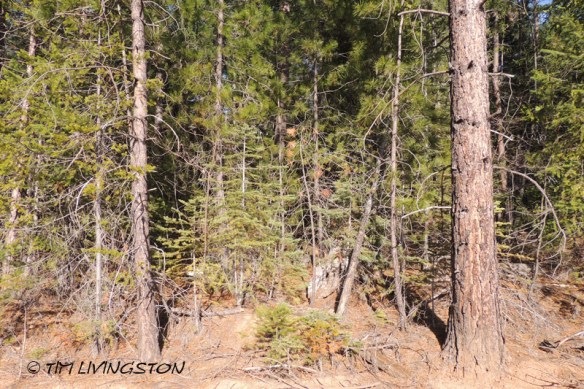
One of the biggest problems in the western forests of the United States is that we have too many trees. It used to be, frequent fires kept the undergrowth clear without killing the older mature trees. Fuel loads weren’t allowed to get too high. With less fuel built up in the forests, fires burned at low intensity.

Much of our forestland is choked with thickets of trees. Timber stands have grown dense from a century of full fire suppression. These thickets are susceptible to insect attack and drought stress mortality. Fuel loads in the forest are huge. The fires of today burn at such high intensity that it is difficult for firefighters to fight them safely. We are now having larger and more destructive fires, such as the Rim Fire that burned into Yosemite National Park.

Thinning so many small trees was slow and expensive, but with today’s modern logging technology we now have the ability to thin these timber stands efficiently.

forests, forestry, forester artist, biomass, harvesting

Thickets like this provide ladder fuels that cause crown fires.

First, the sawlogs are harvested for lumber. Next, the biomass is harvested and put into doodles.  Biomass are the trees or tops of trees that are too small for products like lumber, poles or veneer. Doodles are harvested bundles of small trees.

forests, forestry, forester artist, biomass, harvesting

Doodles

The trees marked in white are the “save” trees that won’t be harvested.

forests, forestry, forester artist, biomass, harvesting

Thinning out the excess trees.

forests, forestry, forester artist, biomass, harvesting

Skidding logs.

Sawlogs being skidded into the landing.

forests, forestry, forester artist, biomass, harvesting

Log processor

The log processor manufactures the trees into logs.

forests, forestry, forester artist, biomass, harvesting

Chipper

The small trees are chipped into a van to be hauled to the co-generation plant and turned into electricity.

forests, forestry, forester artist, biomass, harvesting

Thinned stand

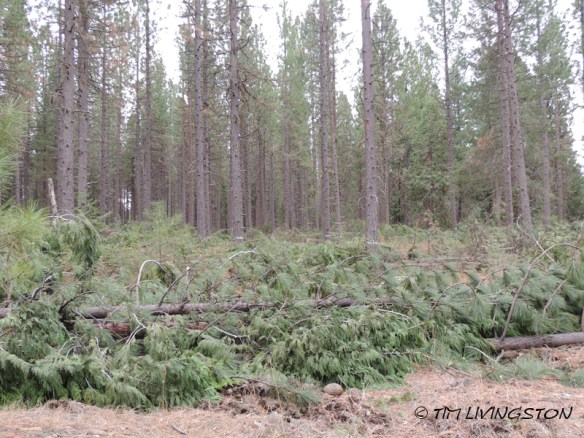
Thinning these timber stands leaves them more resistant to fire and insect attack. A healthy fire is the goal.

forests, forestry, forester artist, biomass, harvesting

Blitz, the canine wood chipper, says, “I’ll chip this doodle myself.”

Forestry Friday … Steam Traction Engine

Best Traction Engine, traction engine, pen and ink, logging, old time, logs

The Best Steam Traction Engine in pen and ink.

I’ve always enjoyed old time logging scenes as subjects for pen and ink. The steam traction engine in this picture is the same model as the one in my blog banner.

Horses and oxen were the first source of power for lumberjacks. Then, steam traction engines, steam donkeys and locomotives heralded the age of steam in the woods. The Best Steam Traction Engine came to the woods around 1890. There were many different makes of traction engines during that era but, the Best Steam Traction Engines were the machines that operated in our neck of the woods. They hauled logs from the woods to the mills and lumber from the mills to market. The Best Manufacturing Company was started by Daniel Best, and based in San Leandro, California. They built these tractors until 1908 when the Best Manufacturing Company was acquired by Holt Manufacturing Company. Soon after, C. L. Best, Daniel’s son, then started the rival C. L. Best Gas Traction Company. In, 1925 Holt and Best merged to become Caterpillar Tractor Company.

The first time I saw one of these machines in person, I was amazed by its enormous size. The big drive wheels are over seven feet tall. It was a huge tractor used for hauling huge loads.