The Golden Moment

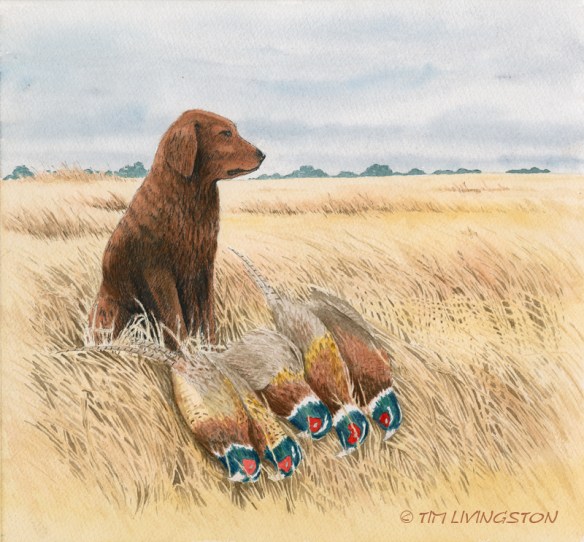
golden retriever, Blitz, pheasant, ringnecks, pheasant hunting, watercolor, watercolour, pen and ink, painting

Blitz, a contented retriever doing what she loves. In watercolor, pen and ink.

Forestry Friday … It’s Take My Followers To Work Day!

Gallery

This gallery contains 26 photos.

It’s take my followers to work day at the Forester Artist. Come along on one of my typical days. Having said that, rarely are my “typical” days typical. Let’s start by out checking in at the Pole Plant to see … Continue reading

Forestry Friday … Too Many Trees!

forests, forestry, forester artist, biomass, harvesting

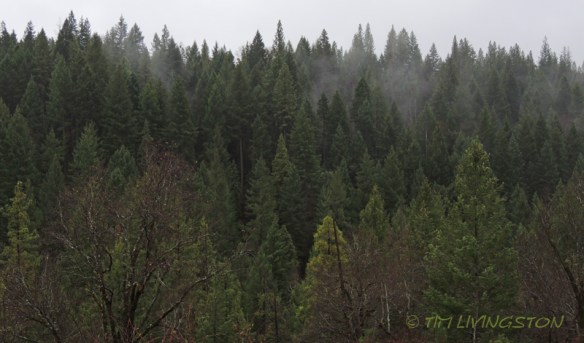
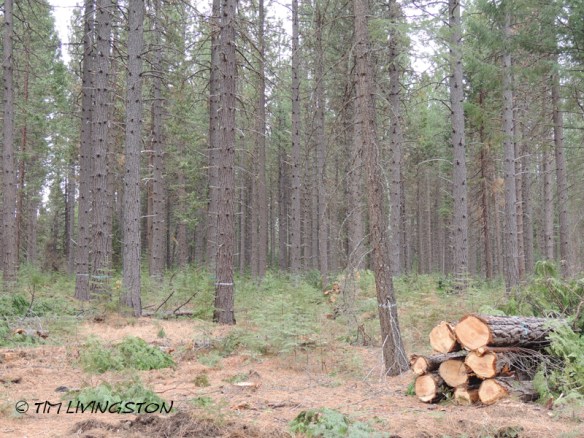
After years of fire suppression efforts, our forest have become very dense.

One of the biggest problems in the western forests of the United States is that we have too many trees. It used to be, frequent fires kept the undergrowth clear without killing the older mature trees. Fuel loads weren’t allowed to get too high. With less fuel built up in the forests, fires burned at low intensity.

Much of our forestland is choked with thickets of trees. Timber stands have grown dense from a century of full fire suppression. These thickets are susceptible to insect attack and drought stress mortality. Fuel loads in the forest are huge. The fires of today burn at such high intensity that it is difficult for firefighters to fight them safely. We are now having larger and more destructive fires, such as the Rim Fire that burned into Yosemite National Park.

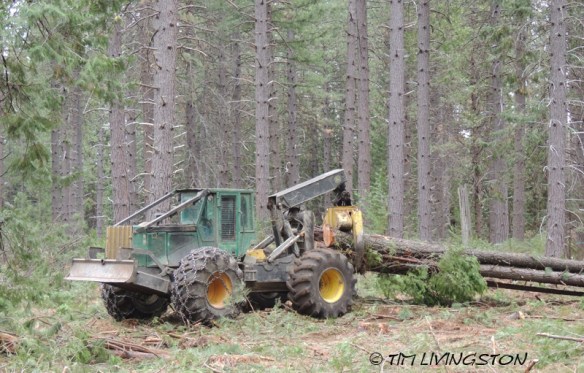
Thinning so many small trees was slow and expensive, but with today’s modern logging technology we now have the ability to thin these timber stands efficiently.

forests, forestry, forester artist, biomass, harvesting

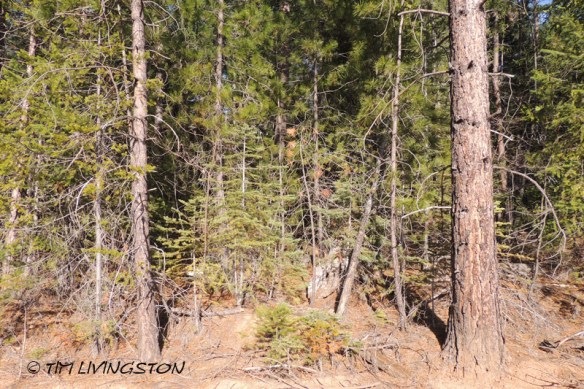
Thickets like this provide ladder fuels that cause crown fires.

First, the sawlogs are harvested for lumber. Next, the biomass is harvested and put into doodles.  Biomass are the trees or tops of trees that are too small for products like lumber, poles or veneer. Doodles are harvested bundles of small trees.

forests, forestry, forester artist, biomass, harvesting

Doodles

The trees marked in white are the “save” trees that won’t be harvested.

forests, forestry, forester artist, biomass, harvesting

Thinning out the excess trees.

forests, forestry, forester artist, biomass, harvesting

Skidding logs.

Sawlogs being skidded into the landing.

forests, forestry, forester artist, biomass, harvesting

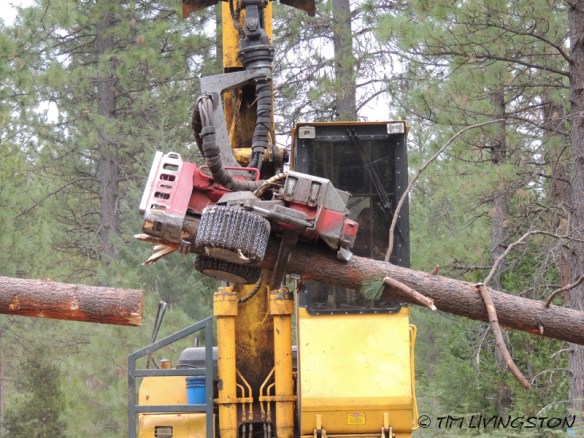
Log processor

The log processor manufactures the trees into logs.

forests, forestry, forester artist, biomass, harvesting

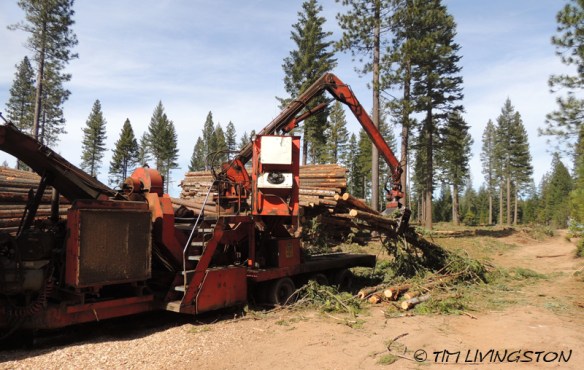
Chipper

The small trees are chipped into a van to be hauled to the co-generation plant and turned into electricity.

forests, forestry, forester artist, biomass, harvesting

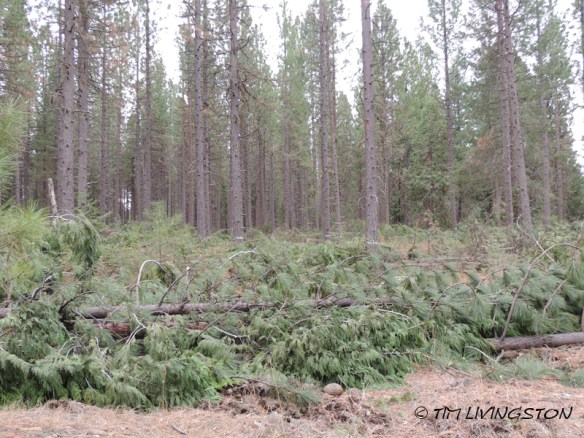
Thinned stand

Thinning these timber stands leaves them more resistant to fire and insect attack. A healthy fire is the goal.

forests, forestry, forester artist, biomass, harvesting

Blitz, the canine wood chipper, says, “I’ll chip this doodle myself.”

Naughty Dog Stealing Bliss

After all his mischief he was wiped out!

MaryALivingston's avatarSneaking Bliss

I’m not usually one to pet shame…h o w e v e r…
While I was working in the office, doing some long overdue scanning. Sailor decided to dash out with a roll of toilet paper. Apparently, he already stole two rolls. Not off the rack either, he opened the cabinet door and took them out of storage.

He was pretty pleased with himself until Tim caught him red-pawed with the third roll, which was saved in the nick of time. Although, it does have some puncture holes for a breezy fresh clean . Careful where you put your fingers.

So here you have it, a teenage boy up to no good with toilet paper.

Sailor TP'd the yard and house. Classic teenager. Sailor TP’d the yard and house. Classic teenager.

View original post

Forestry Friday … Resilience of Nature

golden retriever, logs, log deck, Blitz

Blitz in the shade of the Pole Plant log deck.

Nature is fragile or is it? Humans certainly have the ability to wreak havoc on our environment, but given time, it heals. I’m not suggesting careless disregard. I believe it’s our responsibility to be the best stewards of our natural world that we can be. The ospreys don’t mess in their nest and neither should we. My experience as a forester over the years has taught me that Mother Nature is a relentless and tough lady. In the natural environment, disturbance often equals opportunity.

In the top picture of Blitz lying next to the pole log deck, it is treeless except for the stacks of logs waiting their turn in the mill. Now look at the picture below. Blitz is sitting in a lovely pine forest. This place was a log deck too, forty-seven years ago. It wasn’t replanted by people. The surrounding forest took it back. The pines invaded this site with no help at all. I was six years old when this process took hold. Now a pine forest stands where a log deck once sat.

Forest, growth, golden retriever, log deck

This was the site of the Little Giant Mill log deck.

Today, by replanting and with proper nurturing, we replenish harvest units and the burned areas much faster than just letting nature take its course. We have a better scientific understanding of our environment and more sophisticated technology available today to manage our forests. We’ve come a long way in forest management over the last one hundred years. Trees weren’t replanted back then, but forests have grown back. Our sustainable forestry practices today are resulting in forests that are more healthy and vigorous.  I’d love to see these forests a hundred years from now.

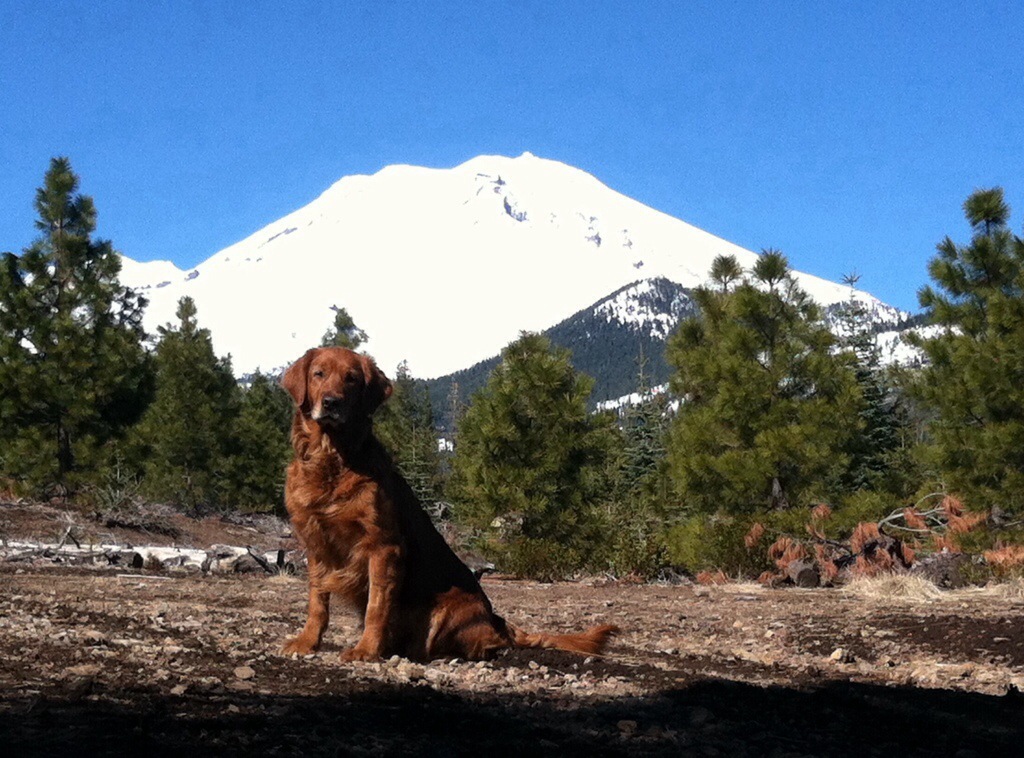
Snow On Mt Shasta

Blitz live from the field!

20140312-151650.jpg
Recent rains have put a glow on Mt Shasta. We aren’t out of this drought yet, but it sure helps.

Forestry Friday … Masticator

What’s a masticator? Think of it as a big mobile wood chipper, or a mower on steroids. You may have seen these machines grinding up brush on the side of the road. They’re also used in forestry applications.

I came across a brush clearing operation on the neighbor’s property. Our neighbors happen to be a large government agency. They were shut down because a much needed rain storm made the woods too wet for operating. They were thinning a thirty plus year old Ponderosa pine plantation and removing competing brush with masticators. The thinned trees weren’t big enough to harvest for sawlogs. Masticating an area is expensive, but it makes the plantation more fire resistant and spaces out the residual trees for better growth.

Farther down the road, they used masticators to create a fuelbreak. This provides a break in heavy fuels giving firefighters a defensible line to make a stand against an oncoming wildfire. Shredded and crushed wood from the masticated brush is left on the ground. This woody debris still burns, but the flame lengths and rate of spread of a fire are reduced, thus making it manageable for a fire crew. It’s also a location that a fire crew can use for backfire operations. Over time, this material will decompose, further lessening the fire risk.

The current fuelbreak was originally cleared as a firebreak during the Finley Fire in 1990. A fuelbreak is a change from a heavy fuel type, such as brush, to a lighter fuel type like grass. A firebreak is the removal of all fuel down to bare dirt.  After the fire, we replanted our section of the same fireline in 1992. Our trees are now twenty-two years old. As these trees grow larger, they’ll be developed into a shaded fuelbreak. A shaded fuelbreak utilizes the shade of trees to suppress the growth of underbrush. This keeps fuels on the forest floor light. Pruning trees creates a break in the vertical fuel ladder reducing the chance that a ground fire becomes a crown fire.

The neighbors didn’t replant trees in the firebreak immediately after the fire. While our section of the fireline grew trees, their section grew brush. Our stand of trees is twenty years along the process of becoming a shaded fuelbreak. The neighbors must continue to retreat the brush to maintain their section of the fuelbreak.

Forestry is a process with a long planning horizon. I commend the neighbors for creating the fuelbreak. This treatment also benefits our property. However, by making the investment in planting trees early, we saved money on brush removal, while accelerating forest restoration at this site.

Click on the image for a larger view.

Forestry Friday … The Critical Period

Critical Period means the time of year when the special timber operations practices set forth in these regulations are required to minimize nesting disturbance to a species of special concern.

-California Forest Practice Rules

Forestry, Northern Goshawk, goshawk, protection

This Northern Goshawk fledgling was ready to take me on.

Species of Special Concern include Bald Eagle, Golden Eagle, Great Blue Heron, Great Egret, Northern Goshawk, Osprey, and Peregrine Falcon.  Species of Special Concern are not the same as Threatened and Endangered Species.  T and E species rise to a much higher standard of protection.  They are protected under rules originating from the Endangered Species Act.  

When a nest site of a Species of Special Concern is identified in a timber harvest plan area, a buffer zone is established around it.  The buffer zone sizes differ according to the species.  The critical period is based on the nesting season for that particular species of bird.  No timber harvesting is allowed within the buffer zone during the critical period.   After the critical period, harvesting can take place, but the nest trees are always retained.  There are limitations as to the type of harvesting that can take place in the buffer zone, such as no clearcutting is allowed.  The harvesting practices allowed in the buffer zones are tailored to each species. depending on their needs.

The Northern Goshawk fledgling in the picture was discovered after my crew and I stumbled onto a nest tree.  We were marking trees when one of the guys came and informed me he saw a “great big bird in a nest.”  When we went to investigate, I could see right away it was a Northern Goshawk fledgling, and there wasn’t one, there were two. 

The young birds were branching.  This is when they hop from branch to branch strengthening their wings before they have mastered flight.  We stopped marking and began moving away from the nest.  One of the Goshawk parents was nearby but moved away from us.  This was a relief because Goshawk parents are well known for attacking people that are too close to their nest.  This usually happens when the chicks are very young.  Apparently, they are less protective when the chicks are older.  We watched the young birds from what we thought was a safe distance, so as not to spook them.  Then, one of the youngsters glided out of the nest to a branch in a nearby tree.  Its sibling, not wanting to be left alone, followed.  Only this bird wasn’t as advanced in its flight training as the first.  It glided downhill and smacked straight into the trunk of a white fir tree and tumbled to the ground.  I told the crew, “Oh my God, I think we just killed it.”  Fortunately, it popped up on its feet, screeching all the while.  

I sent the crew to mark timber in a different area.  Then, with my camera in hand, I headed down the hill to check the condition of the young Goshawk.  It was mad as hell and ready to give me what for. Otherwise it was okay.  I took a few pictures and backed off to let it calm down.  I knew, at this age, it would be able to hop its way back up the trees to safety.   The parents weren’t far away and would tend to it.

For the Northern Goshawk the buffer zone is twenty acres and the critical period is from March 15 through August 15.  The forester who prepared the timber harvest plan knew the Goshawks were living in the plan area.  He protected their nest tree, by making it a no harvest area.  However, the uncooperative goshawks had decided to move out of a perfectly good nest and build a new one in the logging unit.  We were the first to discover the new nest.  As a result, a new twenty acre buffer zone was established around this nest and none of the trees we marked in the area were harvested. 

osprey, sawmill, forestry

This Osprey was behind the sawmill last week. It might be our boy from the nest tower.

The buffer zone for the Osprey is 5 acres and the critical period is from March 15 through August 15. 

Bald Eagle

Bald Eagle

golden eagle, eagle, photography, nature, wildlife

Golden Eagle

If harvesting is done with a helicopter, they can operate no closer than one quarter mile of the nest tree.  This is true for Bald Eagle, Golden Eagle, Northern Goshawk and Osprey.  Peregrine Falcon get a one half mile buffer.

The Great Blue Heron, also known as "The Fly Up The Creek".

Great Blue Heron

The herons and egrets have a 300′ buffer around nest trees.  Their critical period goes from February 15 through July 1.

Golden retriever, Blitz, pheasants

Blitz says, her critical period is pheasant season.

Forestry Friday … Of Trees and Dogs

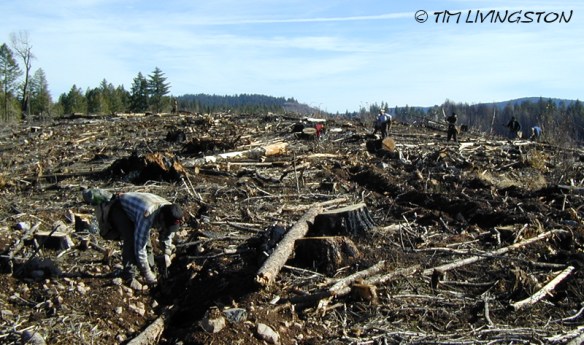
When I was a reforestation forester, the district I worked on had about 2,600 acres burn in the Gun II Fire. The fire burned over 60,000 acres in total. It was my responsibility to implement the reforestation on our 2,600 acres.

Tree planting, wildfire, fire restoration

Planting trees in the Gun II Burn.

As an artist, I paint on a small canvas. As a forester, I paint on a big one. After a large wildfire, the landscape canvas can be huge. Reforestation on this scale is a lot of work.  It’s very gratifying knowing I had a hand in starting this new forest. Each year when I return, the trees are a little bigger. I picked up and carried every box of trees, hundreds of thousands of trees.

Below are four photo point pictures showing how this canvas has changed over time. I had a few of my friends help demonstrate how big the trees have grown over the last 12 years. It’s a running joke around here, that you must have a dog if you’re a forester.

Fire restoration, forestry, seedlings, golden retrievers

May 5, 2001  Immediately after planting.  Hunter and Blaze pose for me.

Fire restoration, forestry, seedlings, golden retrievers

February 19, 2006   That’s Hunter and Blaze peeking through the trees.

Fire restoration, forestry, seedlings, golden retrievers

July 7, 2010  The trees have been thinned.  Blitz and Hawk pose.

Fire restoration, forestry, seedlings, golden retrievers

October 23, 2013  The trees are over twenty feet tall.  Now it’s just Blitz.

A farmer grows his crop over the course of a year, but our crop takes decades.  Counting each year that passes is an occupational reality of being a forester. Seeing my dogs in these pictures also reminds me of time marching on.  Now, there are new generations of both dogs and trees. To me, their lives are intertwined with the forest. This forest is full of our stories.