 Pen and ink from “Timber”, the cleanup part of the logging operation. The chipper chips the tree tops. Straw mulch to cover the bare soil.

Chipping tops.

Pen and ink from “Timber”, the cleanup part of the logging operation. The chipper chips the tree tops. Straw mulch to cover the bare soil.
Chipping tops.

Preliminary sketch of Timber cover art in pencil.
Mary and I are collaborating on a new forestry picture book. We are deeply into the thick of the process. Our original forestry book, Forests, Trees and Wood, came out in 1993. It’s now out of print and this new book will take it’s place, (Red Tail Publishing 2016).
I had to visit one of our loggers the other day. My route took me through the little hamlet of French Gulch. It was settled during the Gold Rush, but you rarely see any rush around this sleepy little town these days.


We also enjoyed some rain. They say El Nino is coming and we’re hoping so.

A bark beetle infested Ponderosa Pine.
This story appeared in the LA Times, http://www.latimes.com/local/california/la-me-dying-forests-20151020-story.html. Biologist Greg Asner uses spectrometer and laser technology to assess the health of California’s forest from the air. He creates 3D imagery that displays the level of stress within the trees. Our forests are under tremendous stress from having too many trees per acre and not enough resources to go around. The drought is the straw to break the camel’s back. It really demonstrates the need for active forest management to help keep our forests healthy.
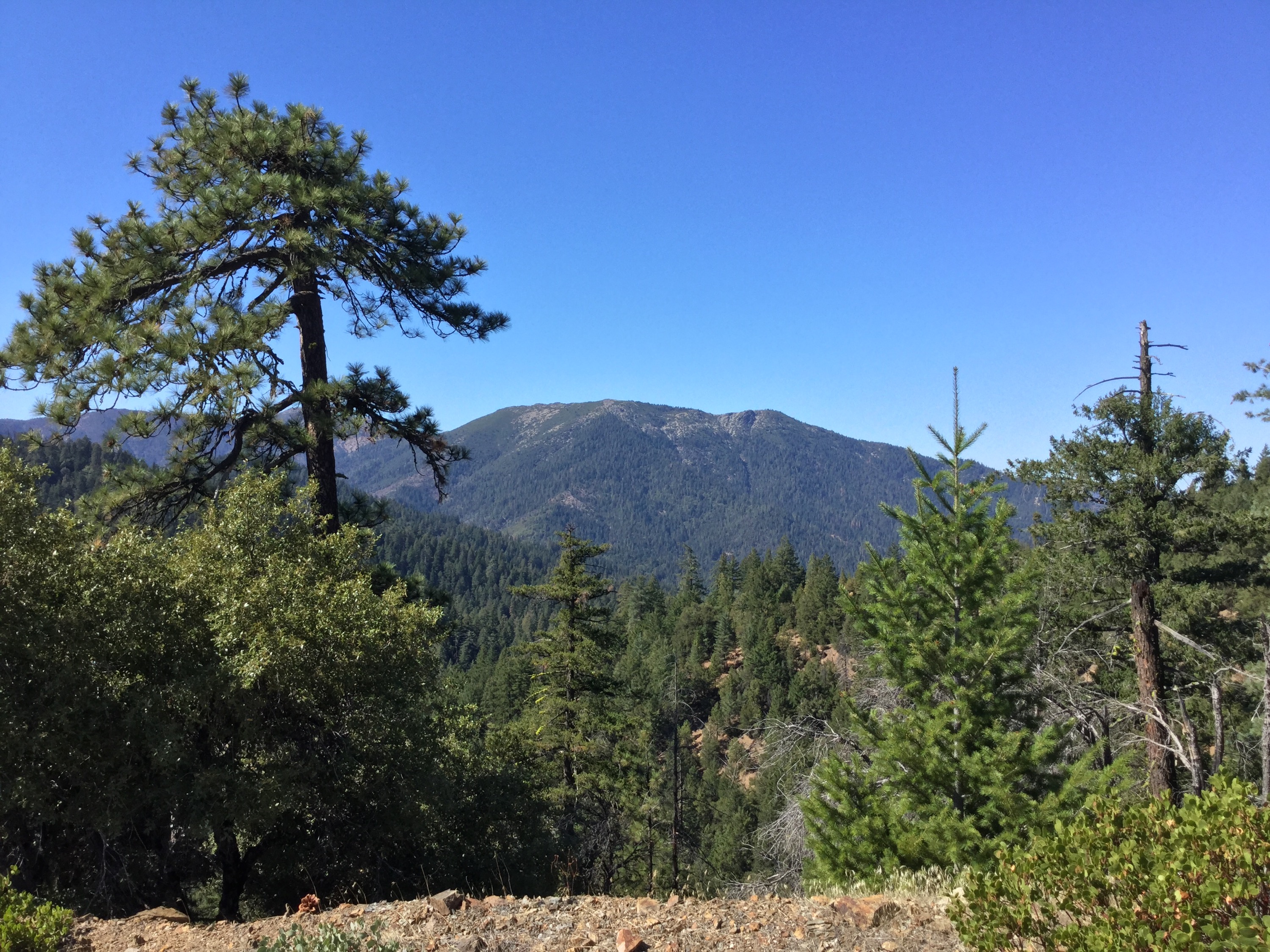
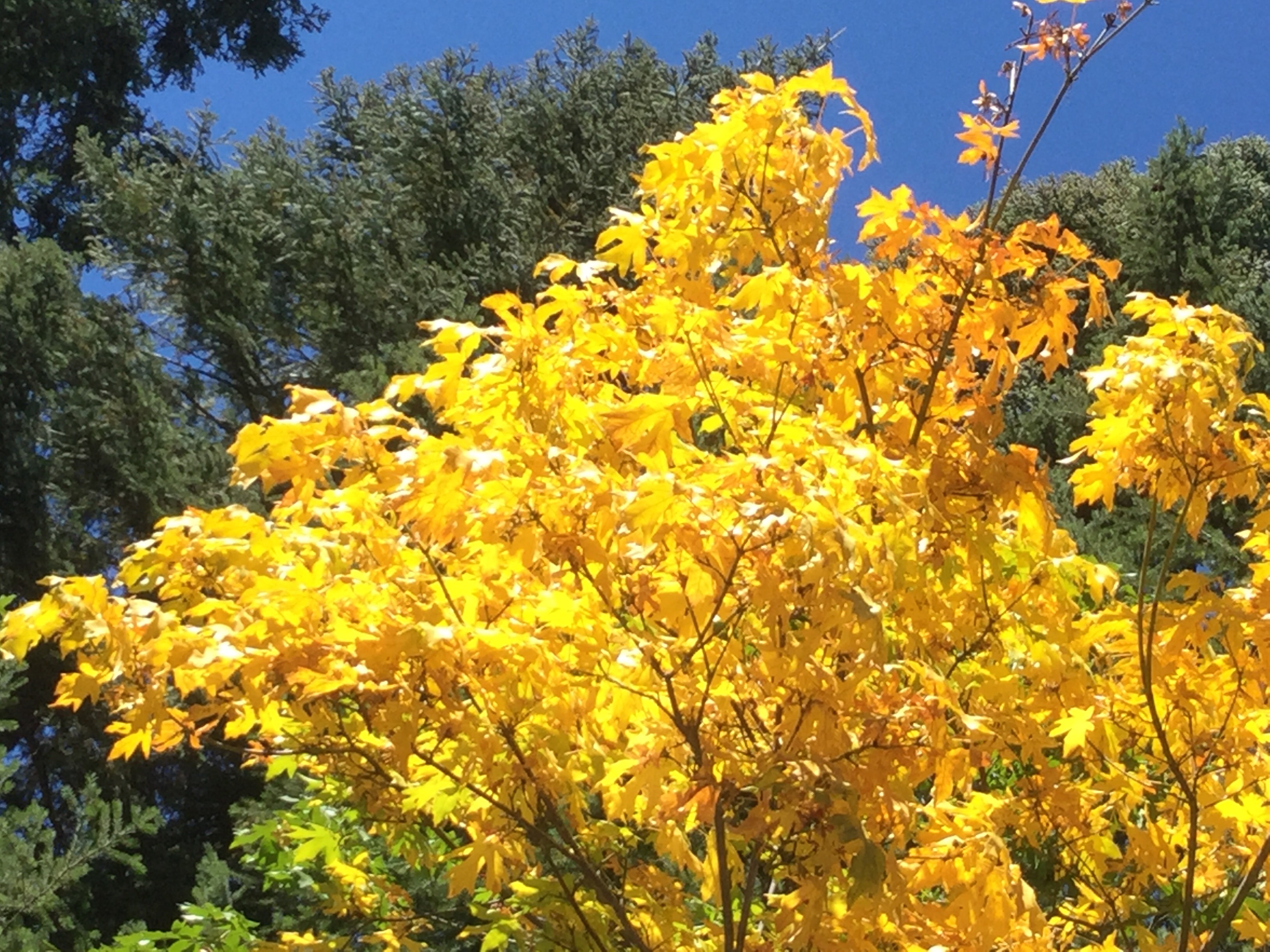 The view from my work. These are a few pictures from the fall woods last week. I was in Trinity County, the part that didn’t burn. Being out here every week is one of perks of a forester’s life. Somebody has to do it, so it might as well be me!
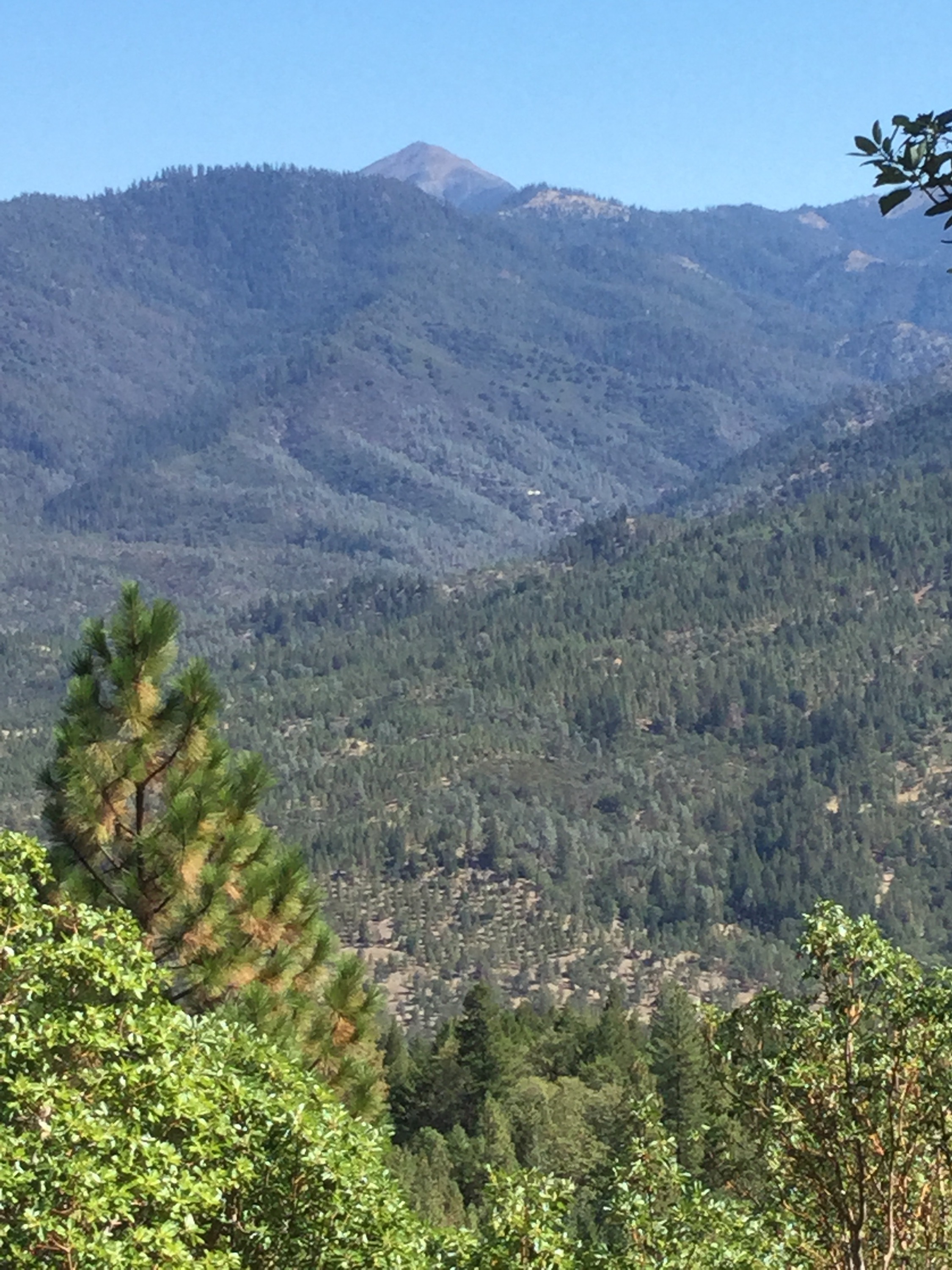
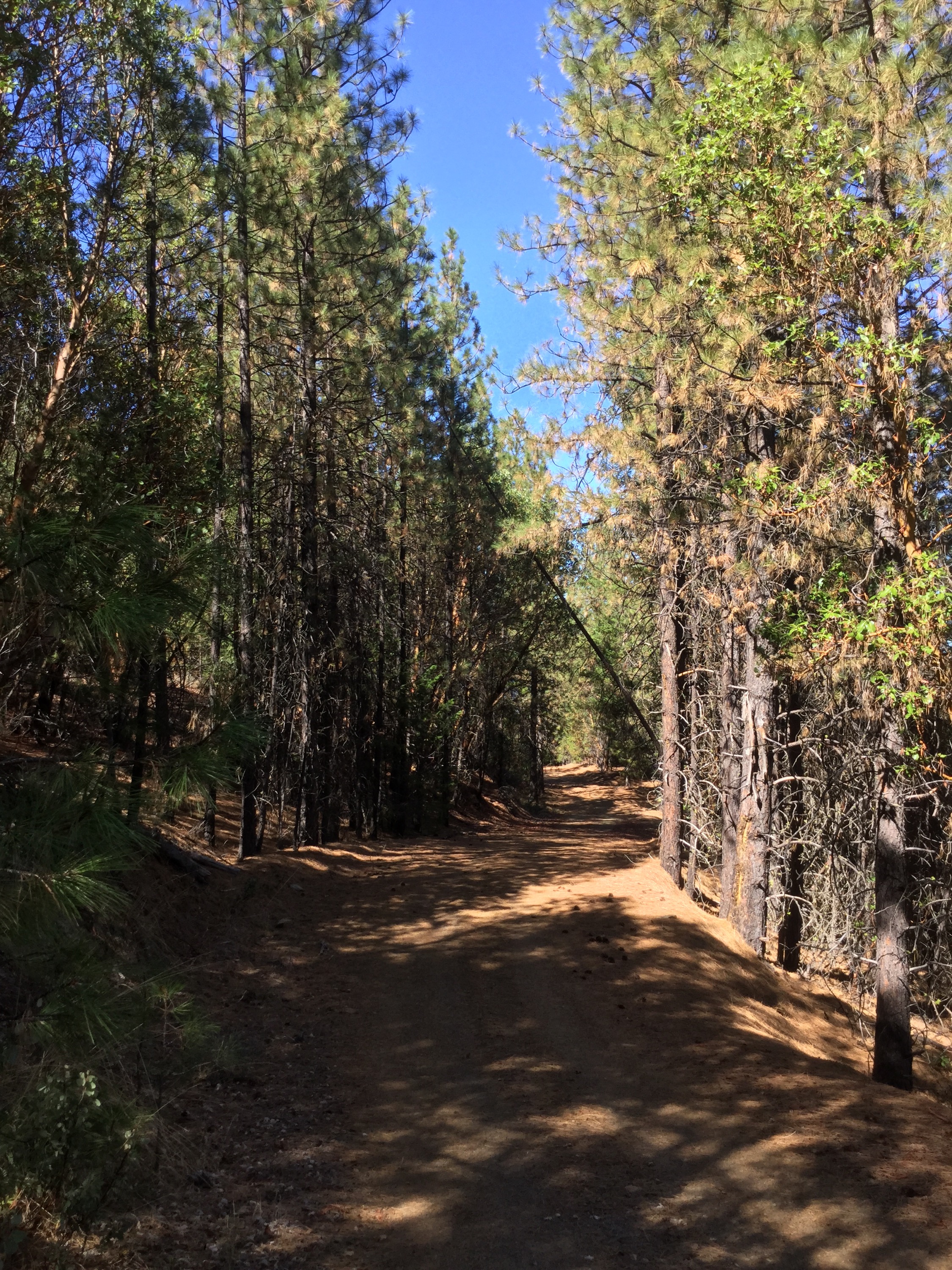
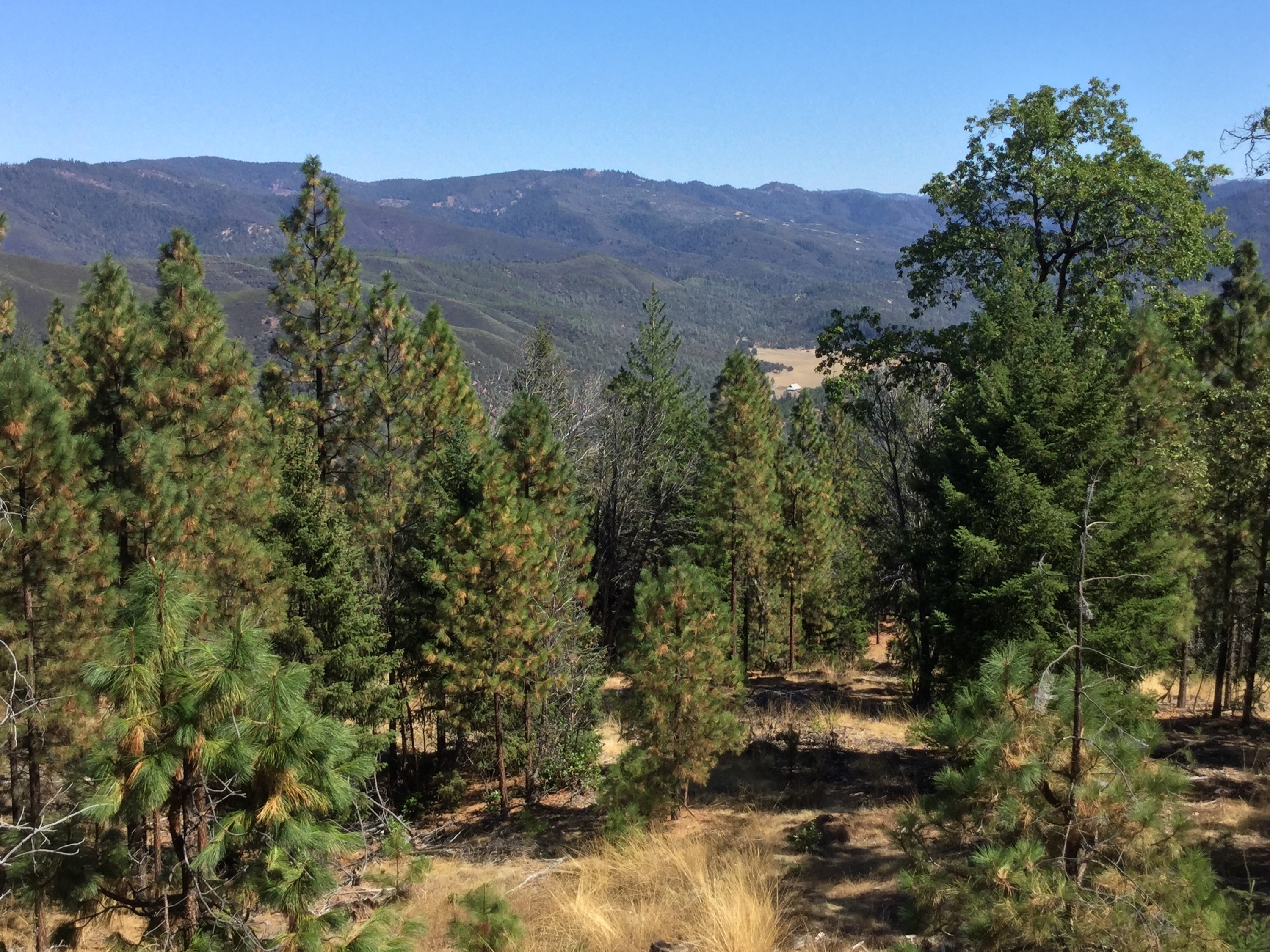
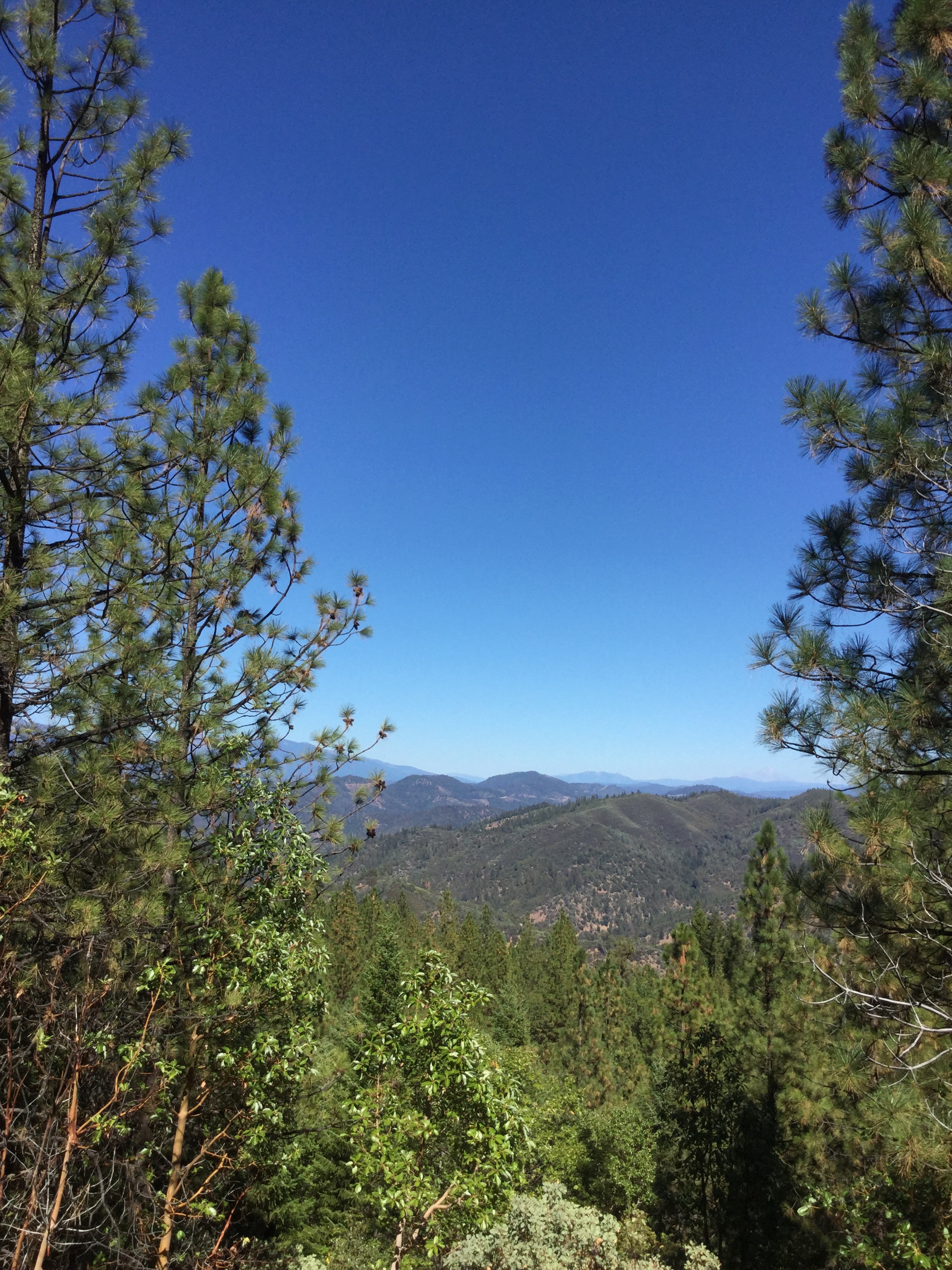
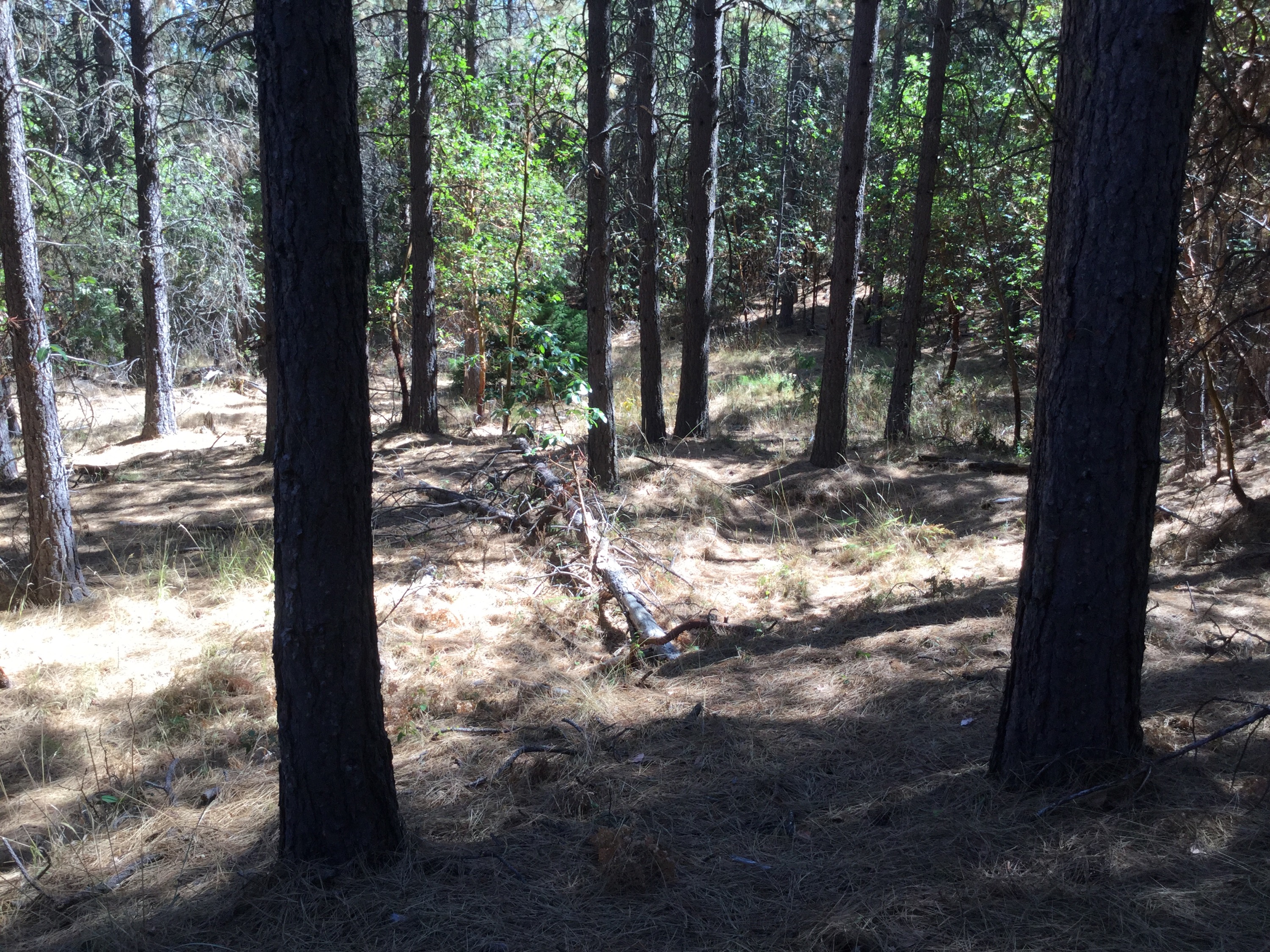
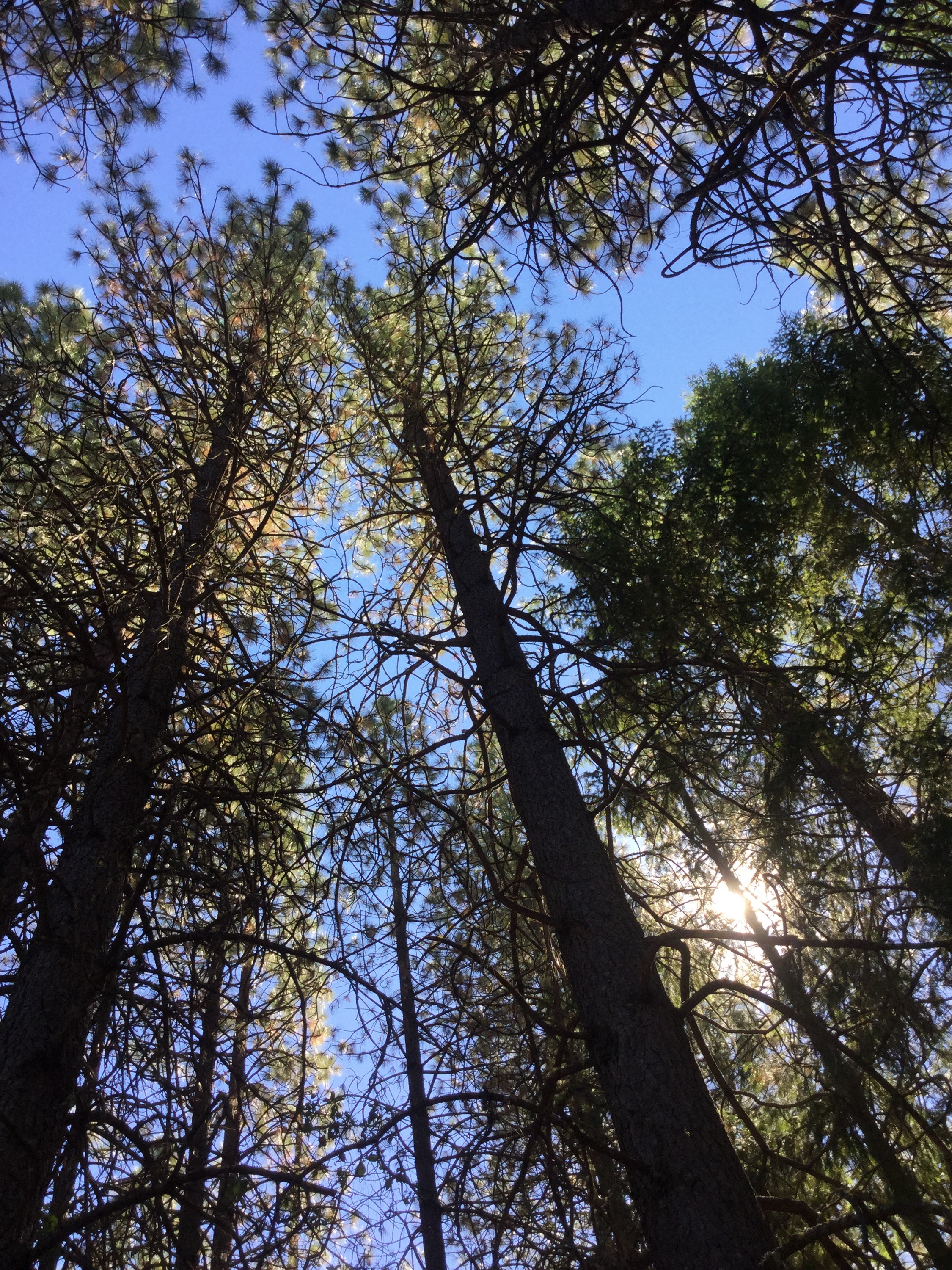
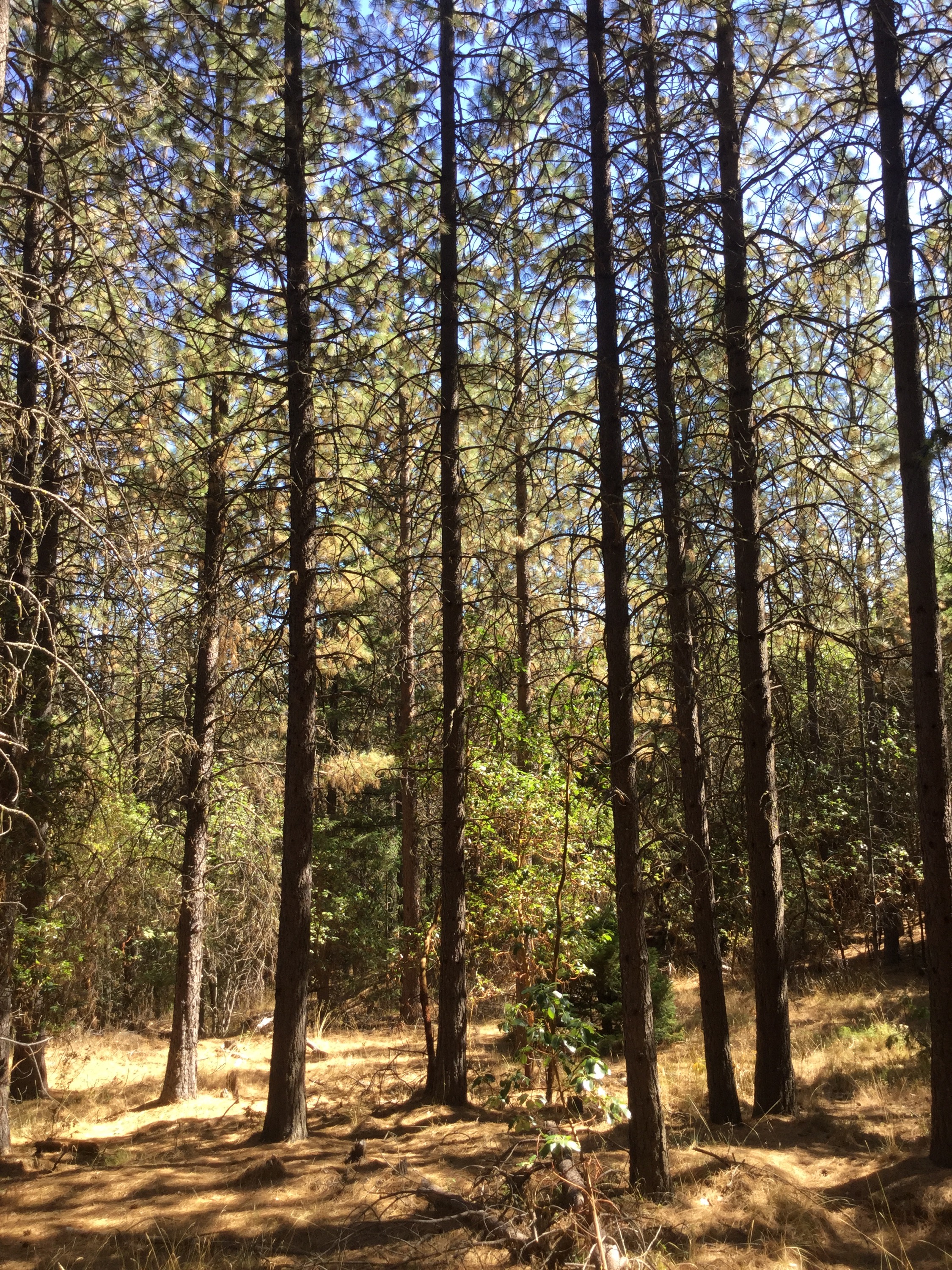 All in a day’s work.
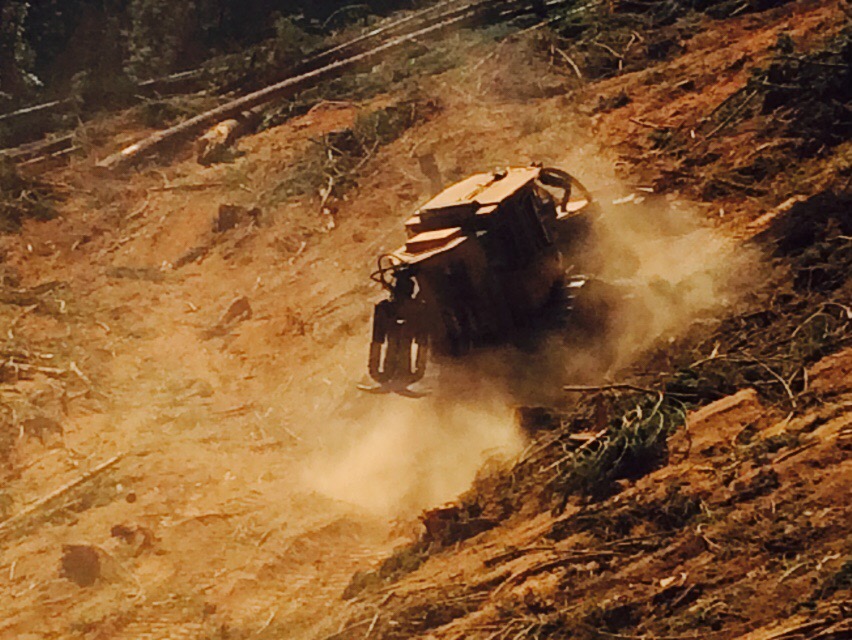
A dusty cat heading for another turn.
It has been a long dry summer. We had a good rain two days ago, the first in about three months. That brought a bit of relief from the horrendous fire season California has been going through.

A skidder pulling another turn of logs down the hill to the landing in a cloud of dust.
The logging crews have put up with terribly dust conditions, and it’s not over yet. Most of the equipment they run has climate controlled cabs, but it was just a few short years ago when they didn’t. The men would return home completely covered in dirt. Not to say they don’t go home dirty now, because they do. At least they don’t have to breathe in the dust all day.
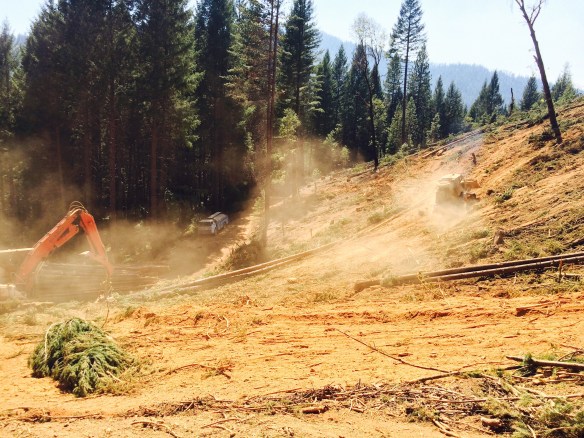
The processor is making logs, while the cat heads back for more.
There’s no doubt the modern logging equipment has done much to improve the safety, comfort and productivity of the crew members.
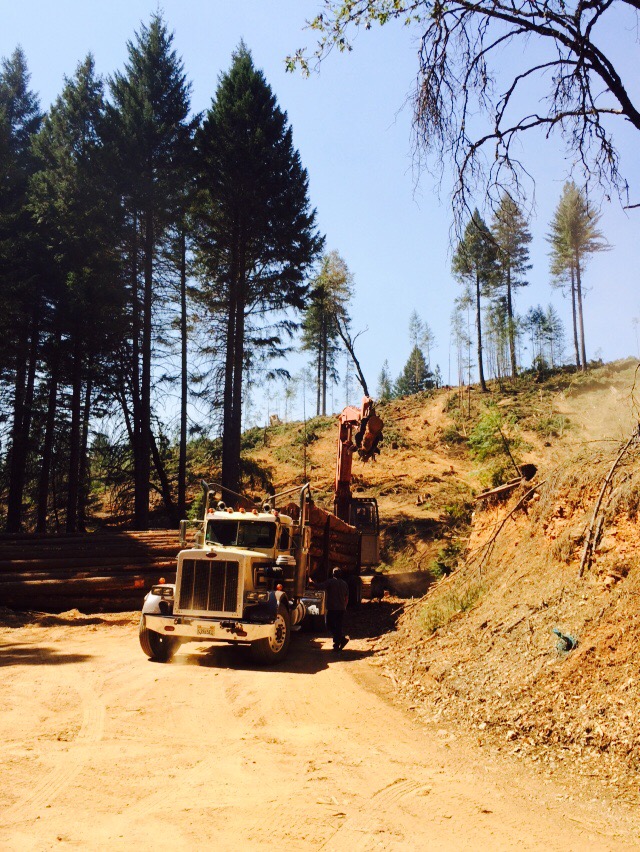
Loading the truck isn’t so dusty.
Having the crews out working in the woods during such dry condition might seem risky. However, these people are often the first ones to the fires, because they are already in the woods. They are our first responders when nearby forest fires break out.

Sailor and Bliss say, Sleeping in the pickup isn’t dusty or hot when the AC is running.
The day I visited this operation it was 105 F, dusty and hot.
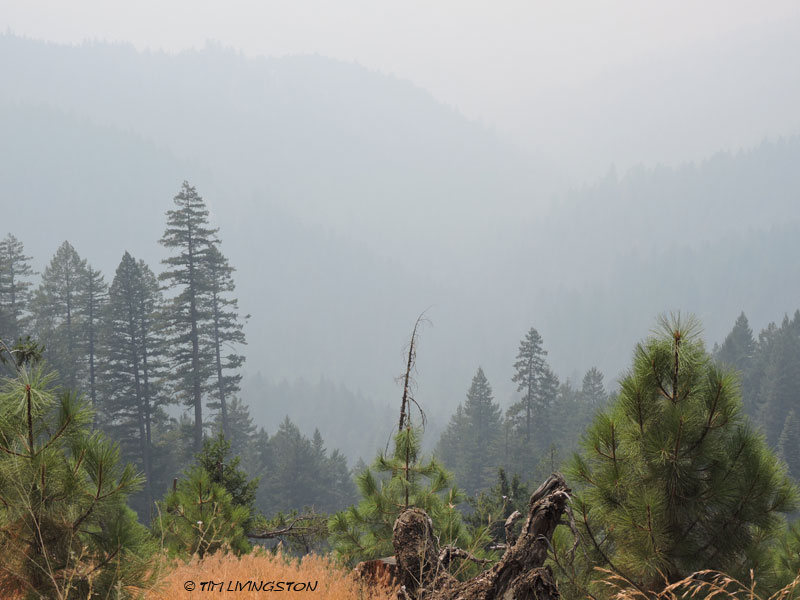 It’s August in California, with our typical forecast for this time of year, “sunny with 100% chance of SMOKE!” Large forest fires are burning up and down the state. The smoke is inescapable.

I was in the Northern Sierra near Stirling City earlier in the week. Smoky there too.
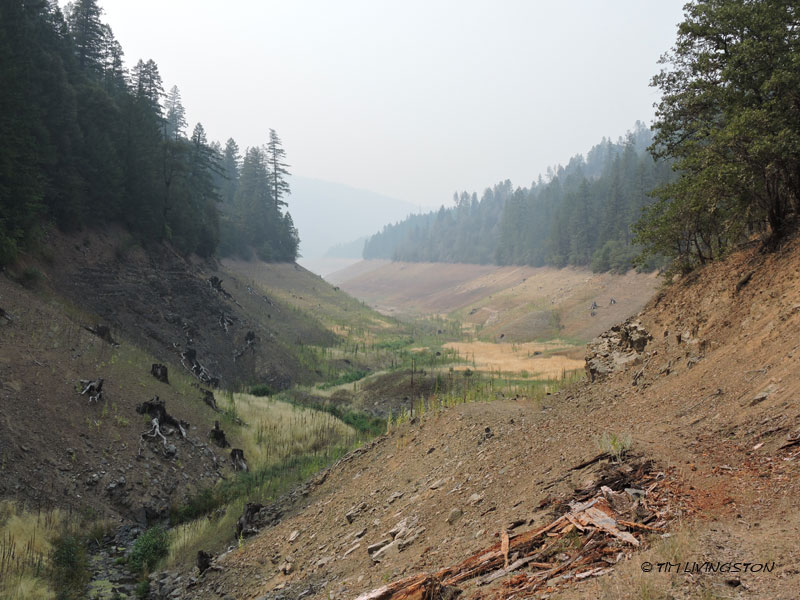
Drought is making our immediate problem much worse. Trinity Lake is somewhere back there.

That snag is a lightening rod just waiting for a bolt.

Looking toward the Trinity Alps.

This is how the view is on a clear day.

A pool made for a puppy!

Bliss says, “much better.”

The Spotted Pine Sawyer in pen and ink.

The spotted pine sawyer beetle is in the longhorn beetle genus. If you hang out around enough log landings you’re bound to see them. This one flew into my truck.

Be careful how you pick them up. They have strong mandibles and are happy to bite you.
They reproduce in dead and dying trees. Their larvae will bore into the log, thus reducing its value.
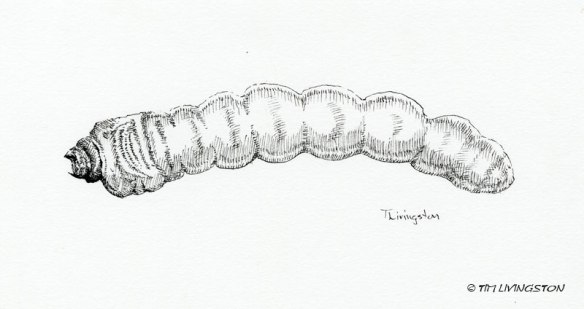
The larval form is a borer that damages the wood.
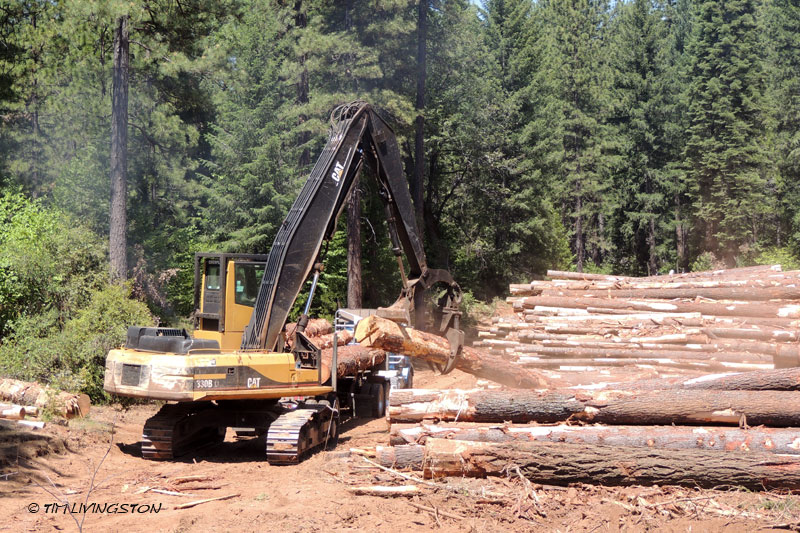
A log deck in the wood is a natural attractant for the beetles. If the logs sit in the woods too long the beetles will get into them.

Spotted Pine Sawyer, Monochamus galloprovicialis.
Bliss is a forester’s dog and this was her first day at work.
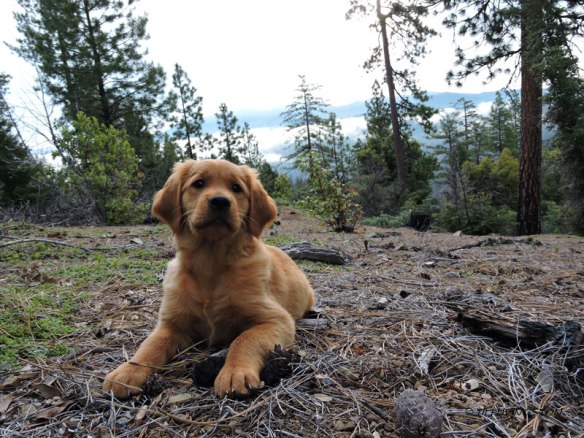
It’s her job to go to the woods. There’s no time like the present to start training her.
On her first day she got to play in numerous rivers and visit the redwoods. Not bad for a day one. I documented her day in the gallery below.


This story appeared in the May 2015, California Forest Pest Council newsletter. The effects of the drought are manifesting in Southern California forests through massive tree die-off.
Early Aerial Surveys Find Millions of Dead Trees
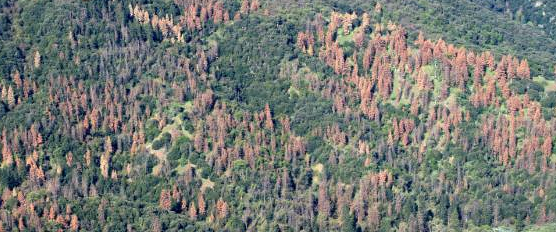
2015 Pine Mortality Near Tehachapi. By J. Moore, USFS.
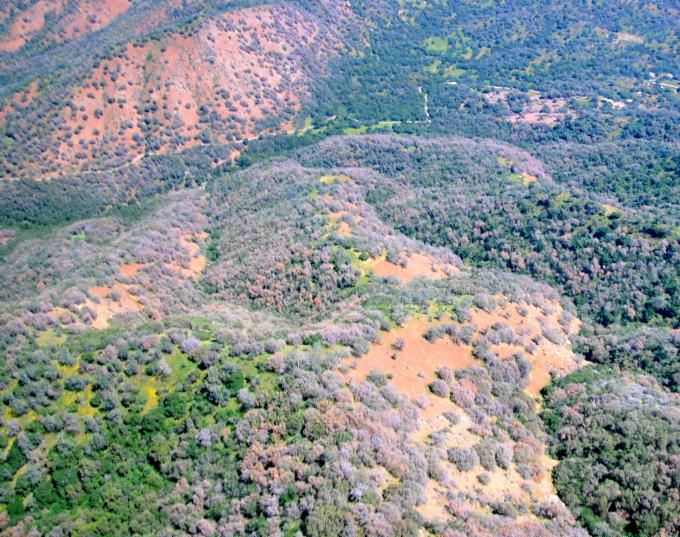
Hardwood Mortality in the Sierra Foothills. By Z. Heath, USFS.
 THE FORESTER ARTIST