As a public service to my fellow foresters and any interested civilians I present this video. Watch and you will see how to tell if your vehicle is stuck in the snow.
It took about two hours to dig out.

As a public service to my fellow foresters and any interested civilians I present this video. Watch and you will see how to tell if your vehicle is stuck in the snow.
It took about two hours to dig out.
Mechanized harvesting has opened up huge opportunities in forest management. Such as allowing an economical method for thinning small trees. The forest health ramifications are enormous. This article shows how technology is taking forest stewardship to a whole new level. Good stuff from the Finnish Forest Association.

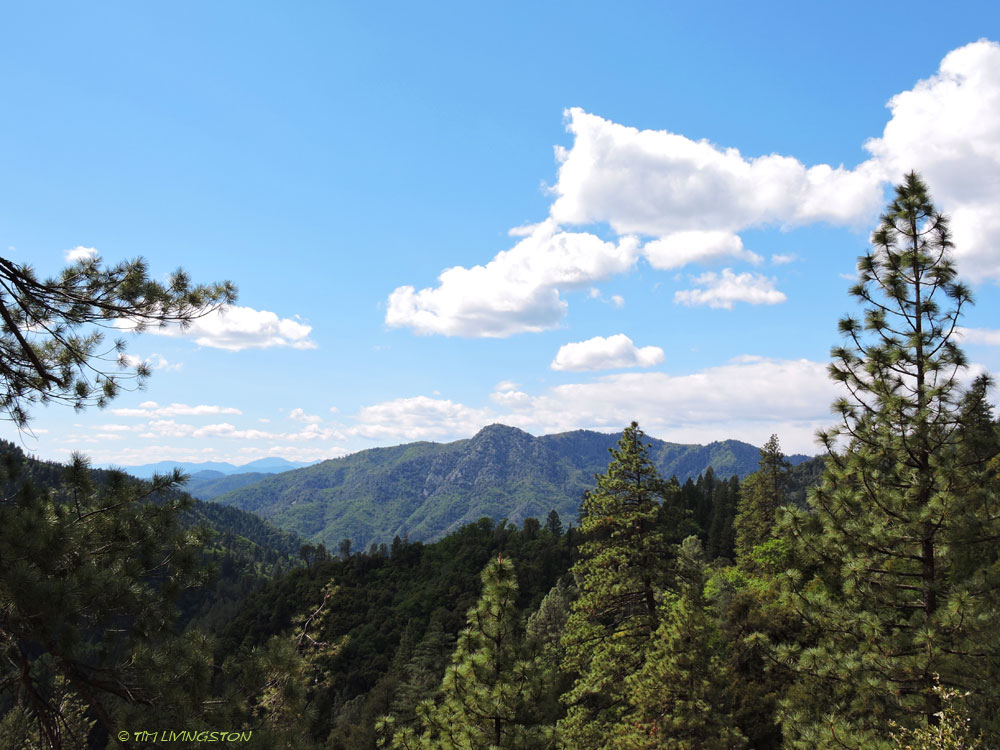
A view of the southern Cascades north of Lake Shasta. This picture was taken last summer. This area is a combination of private timberland and the Shasta-Trinity National Forest.
When I write about forestry, I’m most often sharing what goes on in a working forest. A working forest is one that produces commodities, like timber, fiber and bark, as well as provides for environmental benefits such as recreation, clean water and wildlife habitat. I have spent my career on working forests.
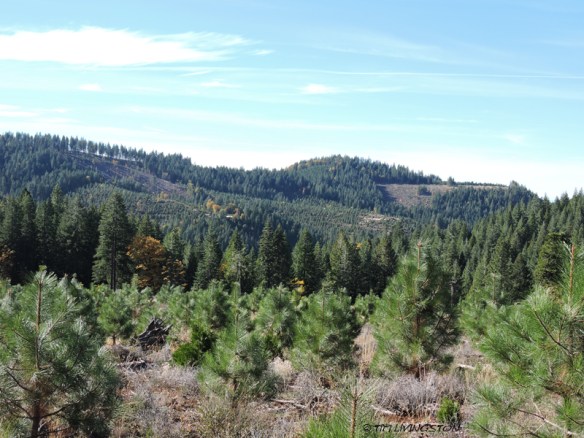
A working forest with plantations containing trees in all different life stages.
Think of a working forest like a farm. Farms grow crops of food and other agricultural products. We need farms for our food. Working forests produce forest products and we need them for our shelter. An important difference between the two is that forestlands take years to produce a crop. Working forests spend years growing undisturbed in between intervals of harvesting. They function as an important source of clean water and as a home for wildlife every year.
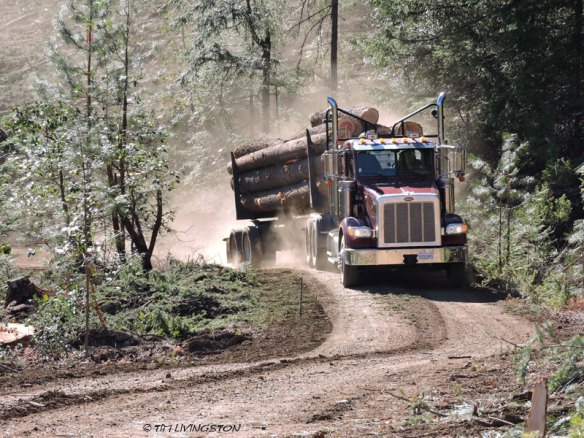
There’s a future house on the back of that truck.
One benefit of producing forest products from a working forest is that it creates income for the landowner. When the landowner has an economic return from managing trees the land will continue to be managed as a forest. There are real costs to owning forestland and if the owner can’t profit managing their forest, they may be forced to develope it into housing subdivisions or some other non-forest use. Then the wildlife habitat may be lost. In a sense the income from producing forest products protects these forests by making growing trees economically sustainable .

This forested area has been subdivided for homes.
All of our forests are important as wildlife habitat. The conventional wisdom is that mature forest provide the best habitat. That is true for species of wildlife that prefer mature forests. However, many species have different habitat needs that include forest at every age.

A dusky grouse.
Forests containing a greater diversity in habitats ranging from mature forest to freshly created openings will support a larger variety of species. Openings are created during harvesting. These openings are planted and then the seedlings begin to grow. Over time the forests develope a great diversity of trees in different age groups. This patchwork of different habitat is available to support many species of wildlife.

This private timberland has diverse habitat which attracts diverse wildlife species.
Working forests aren’t parks, but can still be available for recreation. Hikers, campers and hunters visit these forests year after year. I’m not saying that the working forests are better than the parks, but they each have unique purposes.
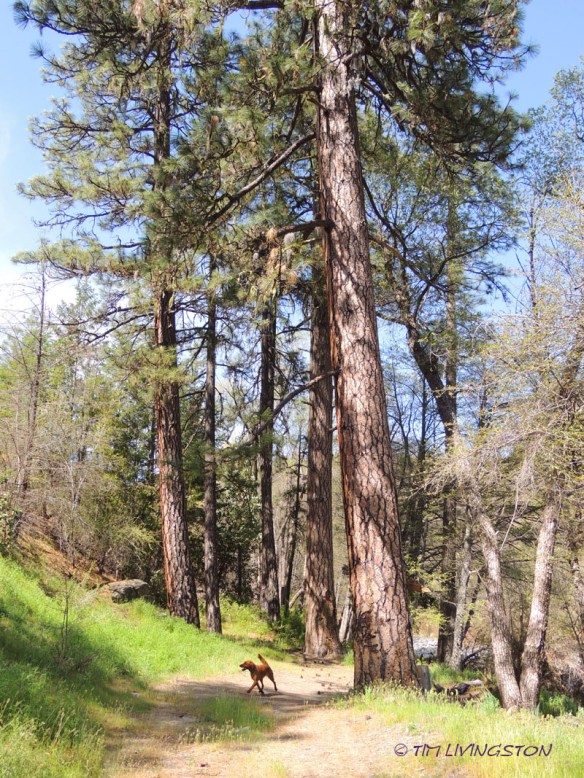
This is on the Mendocino National Forest. Our national forests are also working forest.
Forests are managed by different government agencies, private entities and individuals with a variety of goals. Forestland management is a topic I will explore more in the future. It warrants a full post.

Redwood National Park may not be a working forest, however even they use logging as a tool to achieve the long term goal of growing a healthy resilient forest.

Log Stringer Bridge
Here’s a sight we don’t see much in California anymore, the log stringer bridge. It used to be the standard bridge for small creek crossings on logging jobs. Most of the old log bridges have been removed and replaced with large arch pipes or metal bridges. This one was put in for a temporary crossing. When the logging is complete the logs will be removed and sent to the mill. The stream channel will be returned to it’s original condition and the approaches will be grass seeded and mulched to prevent erosion. This was an inexpensive solution to access an area that didn’t need a permanent bridge.

Bliss is helping with the log quality inspection. She offered to take care of the tiny logs and left me the big ones.

A perfect Fall day in the woods.
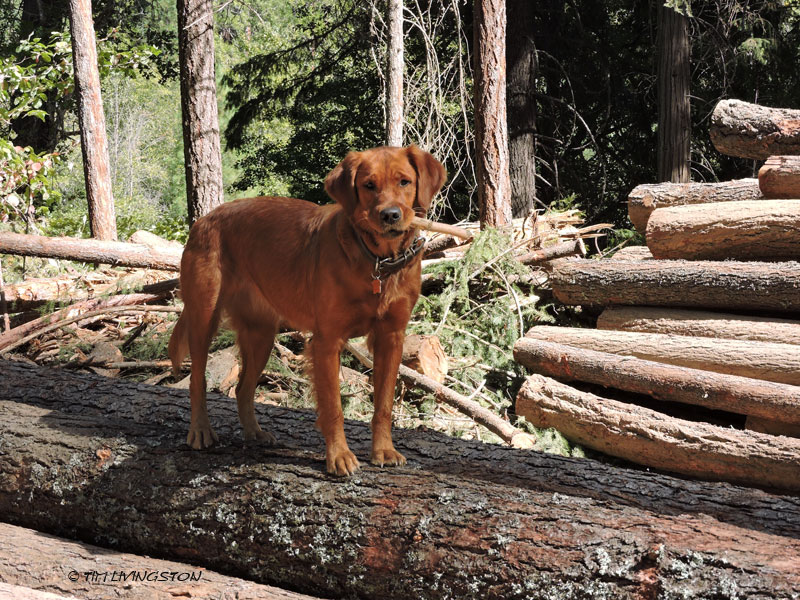
Bliss
This Summer I’ve been extremely busy and I haven’t had much time to devote to the blog. The near future looks pretty busy too. I might have to put Bliss in charge of it.
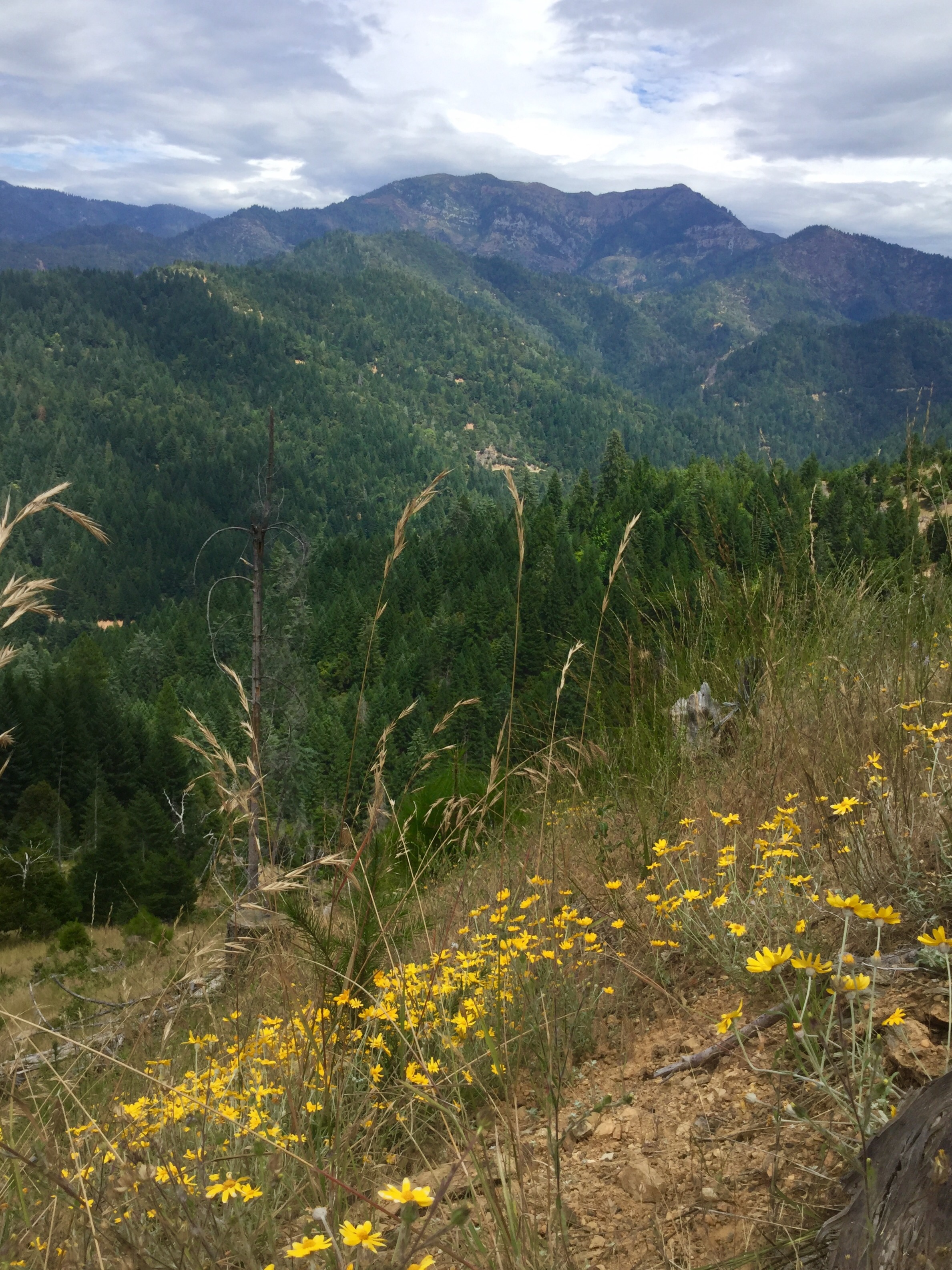 We have some cool weather moving through the Southern Cascades today. I got a rare signal in the back country. Here’s my view right now.

I highly recommend this program to you if you are a teacher in California. It is a fantastic way to get hands on experience in natural resource education. Especially geared for elementary teachers. For many years I taught Silviculture at the Shasta County camp. Great program and a lot of fun. Click here for FIT!

The view of the art table with one of the spreads in progress.
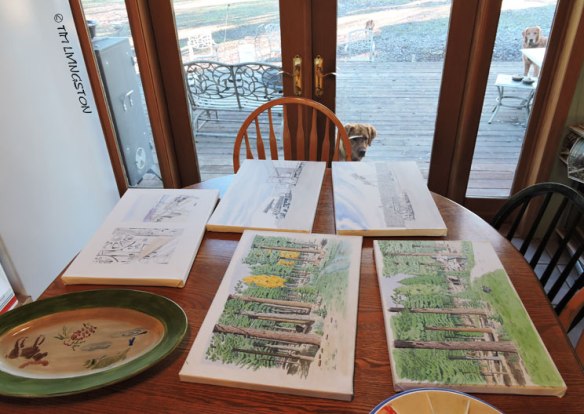
These were all that’s left to do. All have been started. Mary stretched and mounted them all for me, while I was painting. It’s good to have people! Working multiple illustrations at the same time is a very efficient way to get these done. By Sunday night I had completed two more spreads.
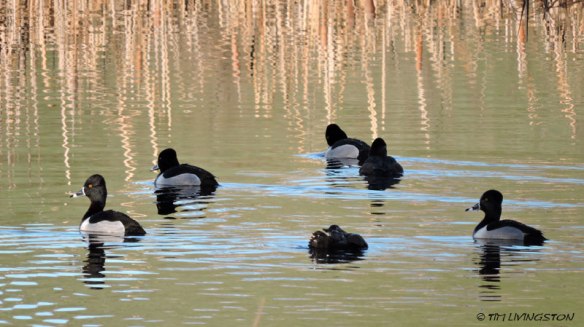
This is the view out my window at my painting table, while I work. Not bad.
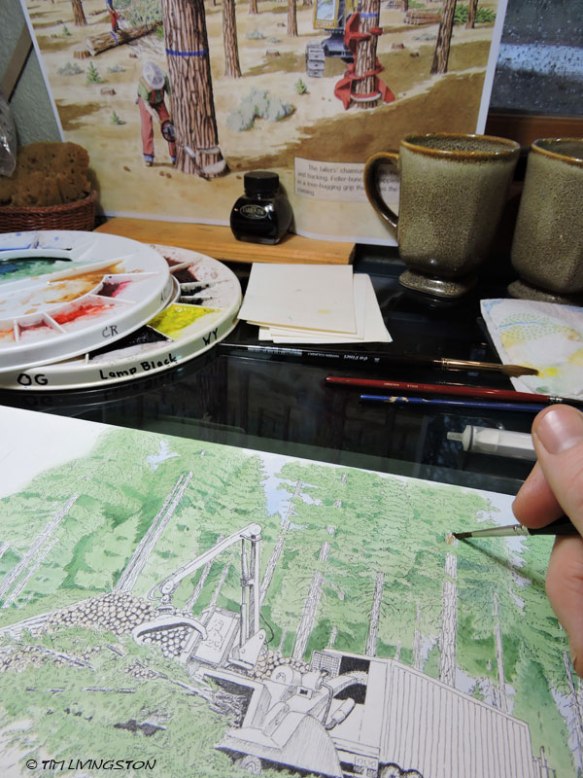
The inking is complete and I’ve been painting furiously. I taken some vacation time to complete this project. Today I was painting the chipper scene. I posted about that one before.
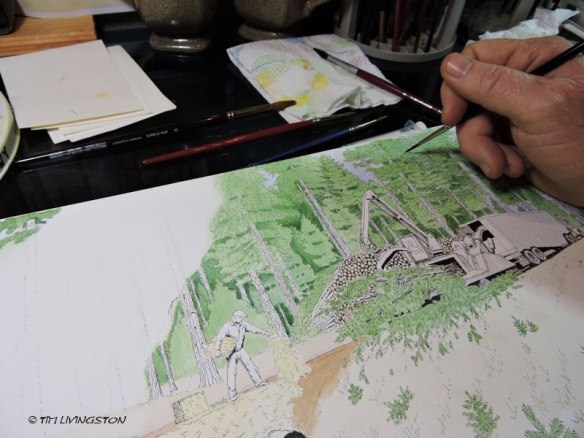
I couldn’t decide which picture to post, so here’s another.

The Pacific Fisher in mixed media. Pen and ink, and watercolor. This is a spot illustration for the new children’s picture “Timber!”
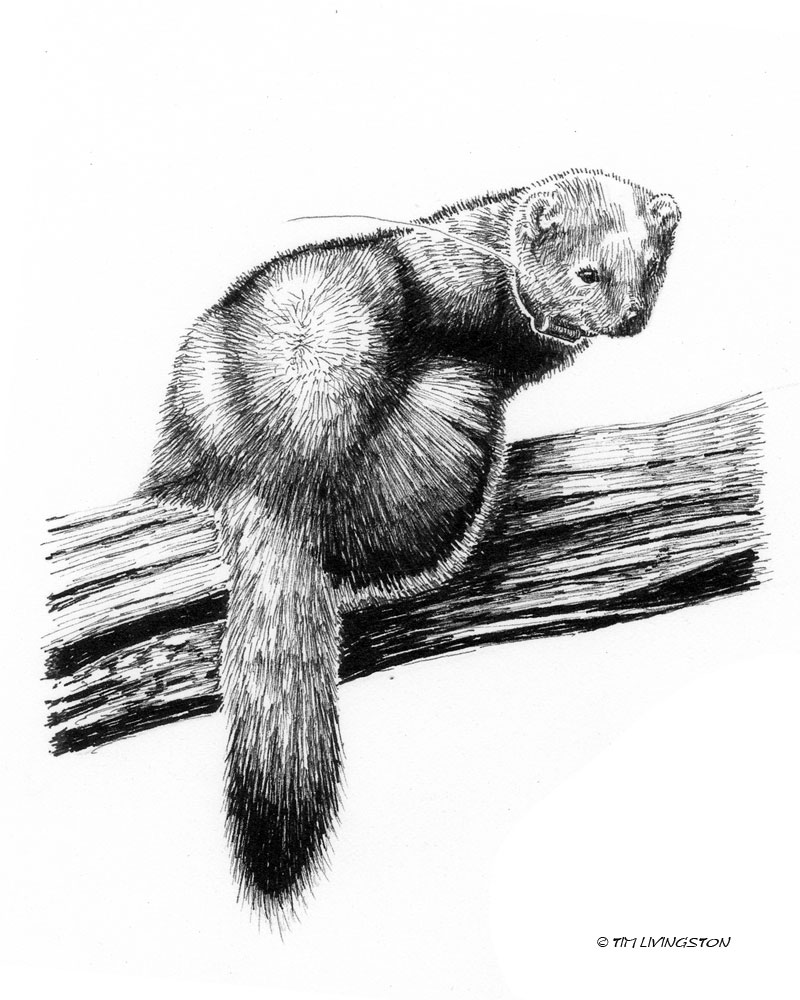
This is the pen and ink before the watercolor. Which version do you like better?
 THE FORESTER ARTIST