French Gulch

I had to visit one of our loggers the other day. My route took me through the little hamlet of French Gulch. It was settled during the Gold Rush, but you rarely see any rush around this sleepy little town these days.

We also enjoyed some rain. They say El Nino is coming and we’re hoping so.

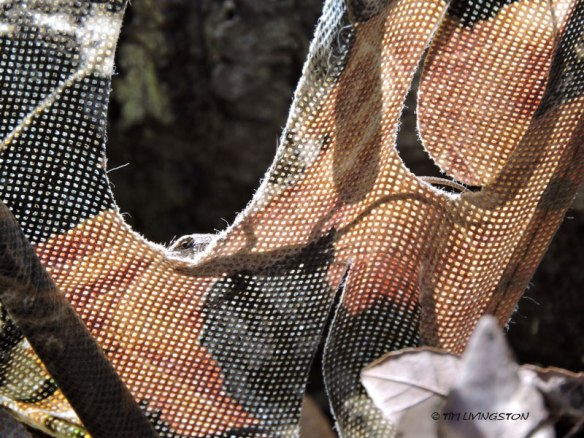
Wild Wednesday … I Spy With My Little Eye

lizard, nature, photography, wildlife

Do you see it?

Forestry Friday … Drought and Dust

tractor, logging, dust

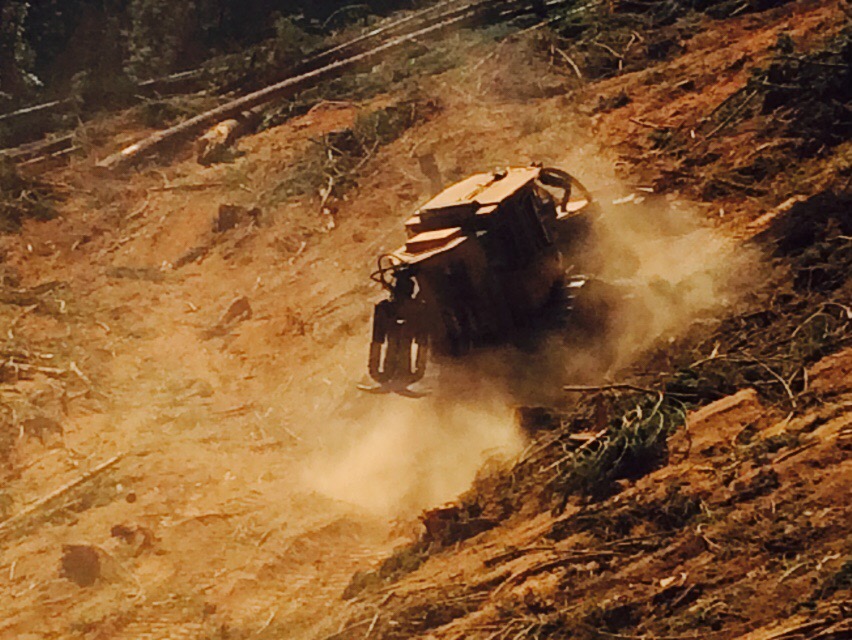
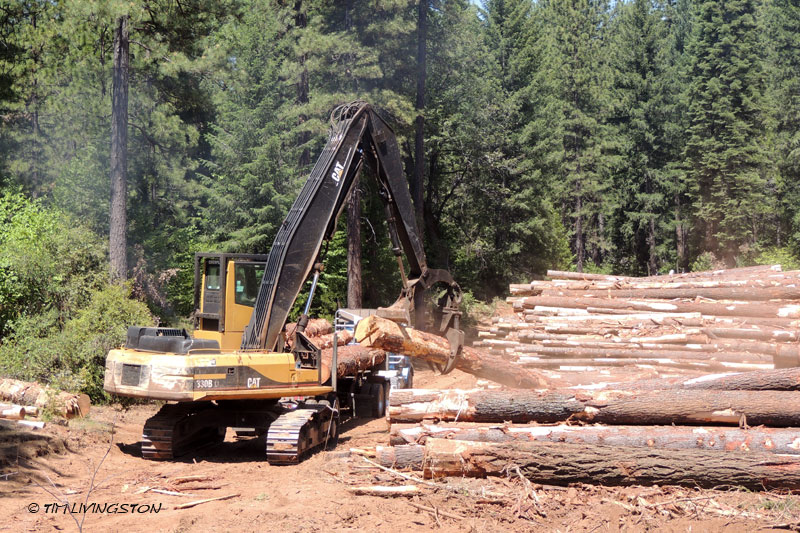
A dusty cat heading for another turn.

It has been a long dry summer. We had a good rain two days ago, the first in about three months. That brought a bit of relief from the horrendous fire season California has been going through.

skidder, logging loggers

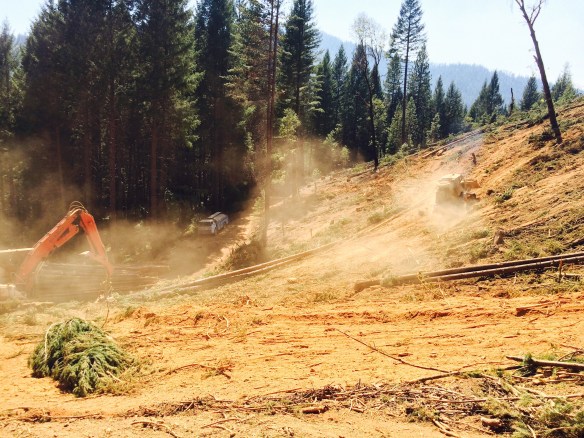
A skidder pulling another turn of logs down the hill to the landing in a cloud of dust.

The logging crews have put up with terribly dust conditions, and it’s not over yet. Most of the equipment they run has climate controlled cabs, but it was just a few short years ago when they didn’t. The men would return home completely covered in dirt. Not to say they don’t go home dirty now, because they do. At least they don’t have to breathe in the dust all day.

processor, logging logs logger

The processor is making logs, while the cat heads back for more.

There’s no doubt the modern logging equipment has done much to improve the safety, comfort and productivity of the crew members.

log truck, loggers, logging

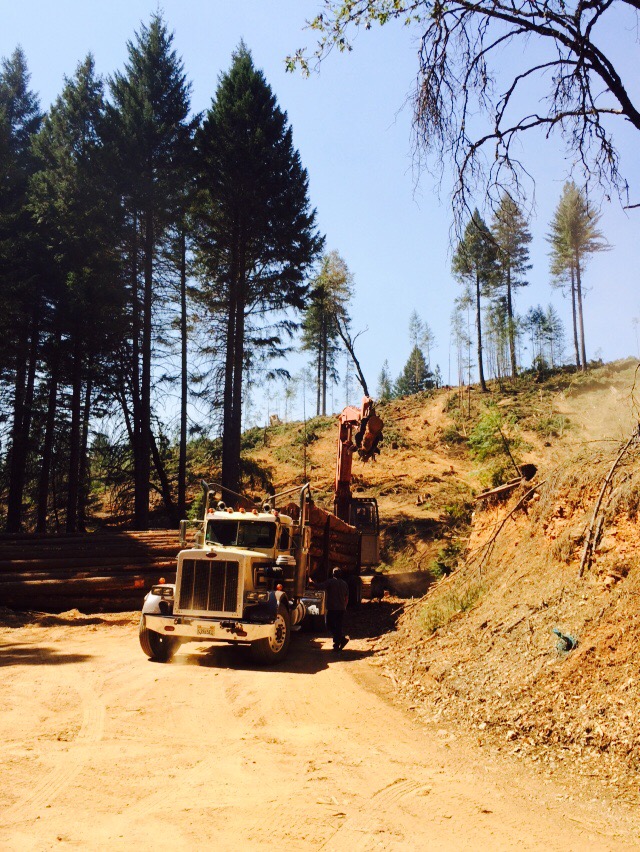
Loading the truck isn’t so dusty.

Having the crews out working in the woods during such dry condition might seem risky. However, these people are often the first ones to the fires, because they are already in the woods. They are our first responders when nearby forest fires break out.

dogs, golden retrievers

Sailor and Bliss say, Sleeping in the pickup isn’t dusty or hot when the AC is running.

The day I visited this operation it was 105 F, dusty and hot.

Wild Wednesday … California Valley Quail

California valley quail, California quail, valley quail, quail

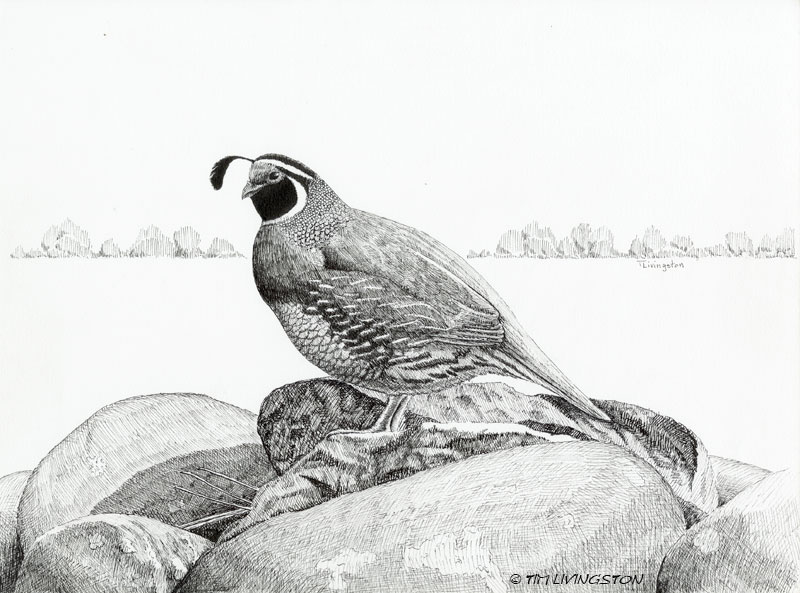
California Valley Quail, Callipepla californica, in pen and ink. This is the male. The covey often has one bird acting as lookout. This one was standing on a stone fence.

Wild Wednesday … The Killdeer

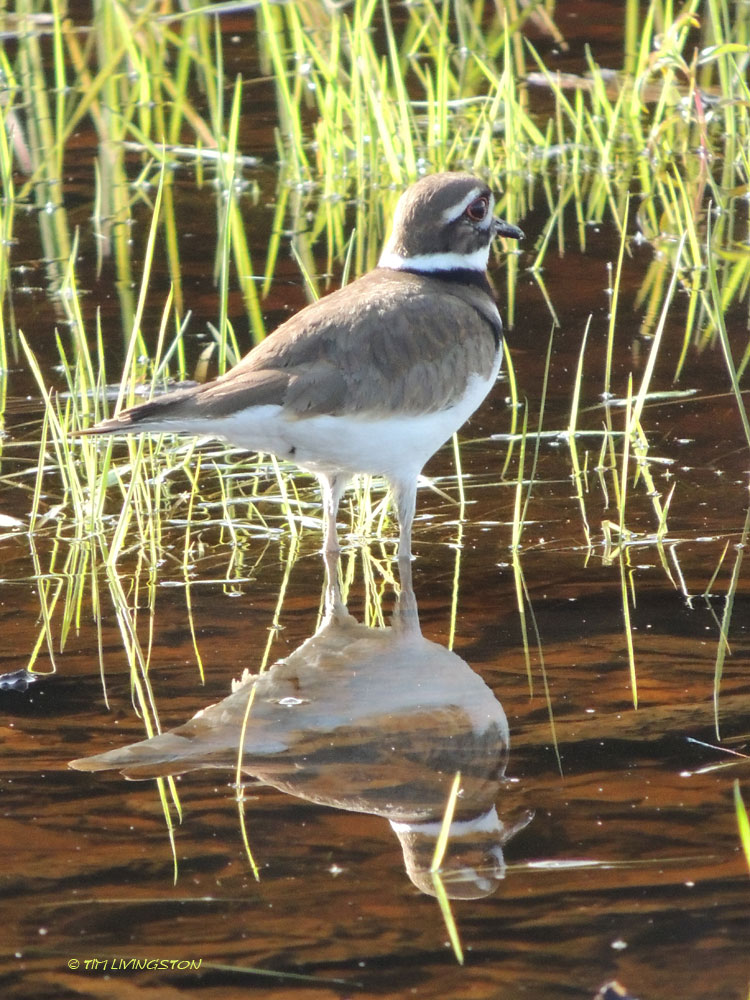
Killdeer001Killdeer in colored pen and ink, and in person. Killdeer2

Forestry Friday … Spotted Pine Sawyer

Pine Sawyer Beetle, pen and ink, pen, drawing

The Spotted Pine Sawyer in pen and ink.

PineSawyer3

The spotted pine sawyer beetle is in the longhorn beetle genus. If you hang out around enough log landings you’re bound to see them. This one flew into my truck.

PineSawyer2

Be careful how you pick them up. They have strong mandibles and are happy to bite you.

They reproduce in dead and dying trees. Their larvae will bore into the log, thus reducing its value.

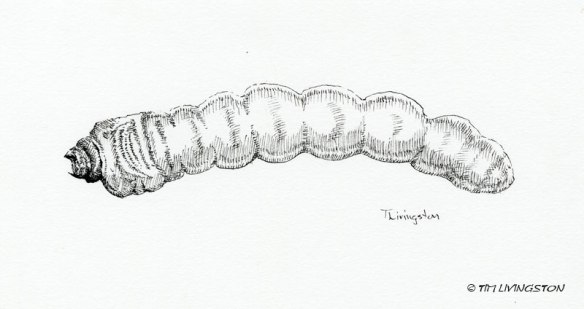
Pine Sawyer Grub, larva, larval

The larval form is a borer that damages the wood.

PineSawyer1

A log deck in the wood is a natural attractant for the beetles. If the logs sit in the woods too long the beetles will get into them.

PineSawyer4

Spotted Pine Sawyer, Monochamus galloprovicialis.

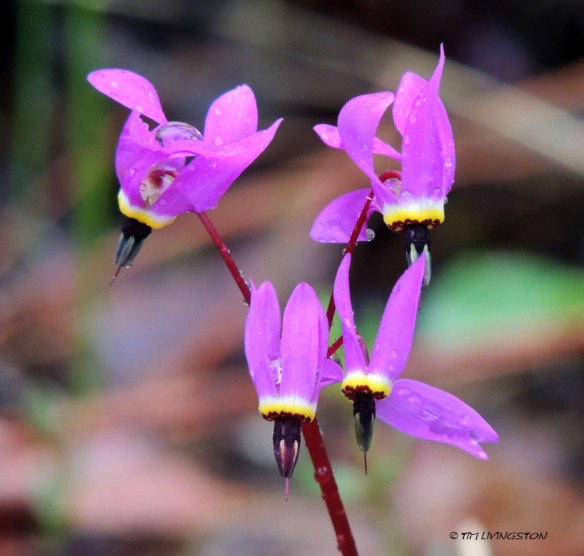
Wild Wednesday … Seeing Stars

shooting stars

Shooting Stars

Forestry Friday … First Trip to the Woods

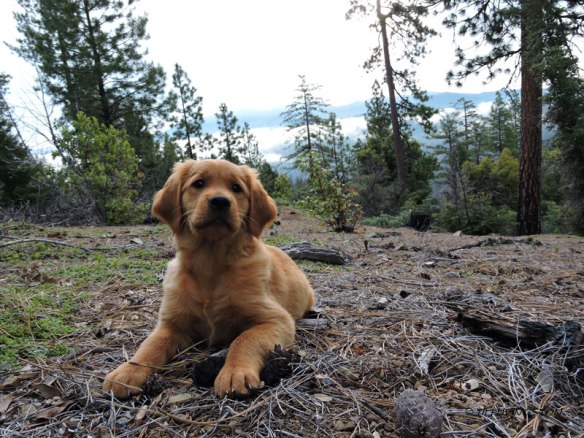
Bliss is a forester’s dog and this was her first day at work.

golden retriever, retriever,forester, puupy

It’s her job to go to the woods. There’s no time like the present to start training her.

On her first day she got to play in numerous rivers and visit the redwoods. Not bad for a day one. I documented her day in the gallery below.

Forestry Friday … Millions of Dead Trees

This story appeared in the May 2015, California Forest Pest Council newsletter. The effects of the drought are manifesting in Southern California forests through massive tree die-off.

Early Aerial Surveys Find Millions of Dead Trees 

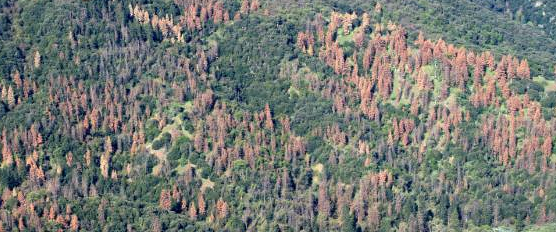
TehachapiBugKill

2015 Pine Mortality Near Tehachapi. By J. Moore, USFS.

The US Forest Service, Forest Health Protection conducted special early season aerial surveys of Southern California and the Southern Sierras in April to get a preliminary assessment of forest conditions in some of the most severely drought-impacted areas of the state. The Southern California survey covered more than 4.2 million acres and identified approximately 2 million dead trees over 164,000 acres. It included most of the Cleveland, San Bernardino, Angeles, and Los Padres National Forests as well as Pinnacles National Monument and nearby private lands. Noteworthy finds included a substantial increase in pine mortality on the Descanso Ranger District of the Cleveland National Forest as well as a large area of scattered live oak mortality south of the Palomar Ranger District. Increased pine mortality was also observed on the San Jacinto District, and large areas of live oak mortality were observed along the southern extent of the Angeles National Forest. In Los Padres National Forest, expanded severe Jeffrey and pinyon pine mortality was observed, and private lands north of Pinnacles National Monument had extensive areas of Coulter and gray pine mortality, as well as live oak mortality, for a third year in a row.
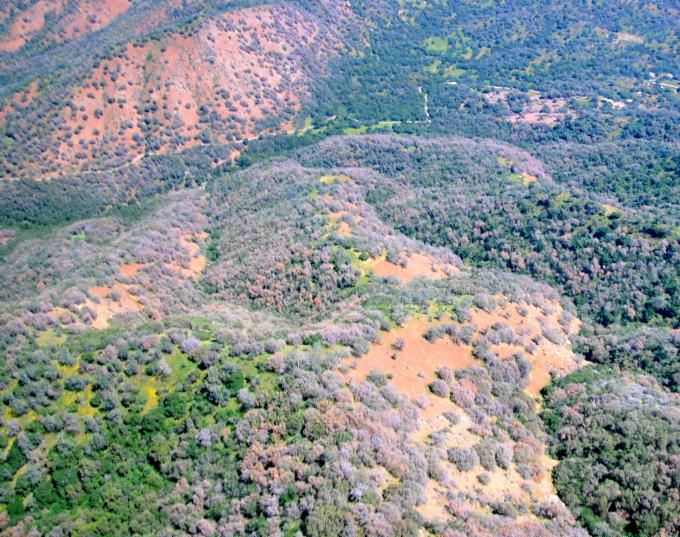
TehachapiBugKill2

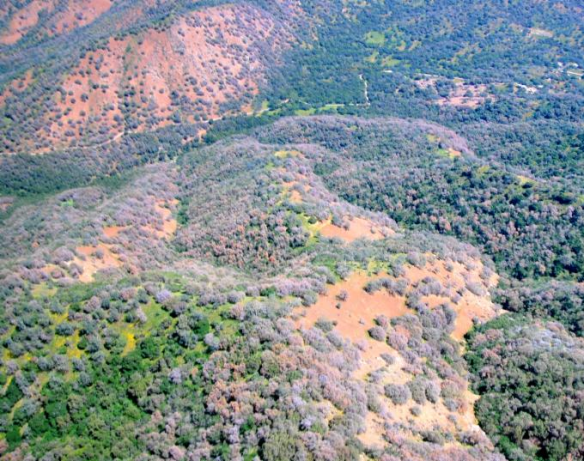
Hardwood Mortality in the Sierra Foothills. By Z. Heath, USFS.

The Southern Sierra survey included more than 4.1 million acres and identified nearly 10½ million dead trees over 835,000 acres. It covered western portions of Stanislaus, Sierra, and Sequoia National Forests and Yosemite and Sequoia-Kings Canyon National Parks as well as the Tehachapi Range and nearby private lands. Mortality in the Southern Sierras was quite severe in many pine species, especially ponderosa and pinyon at lower elevations and to the south, and foothill mortality was often widespread and severe, especially in ponderosa and gray pine. Mortality on the Stanislaus roughly doubled since July 2014 in the areas resurveyed this spring, with severe pockets of ponderosa and other pine mortality seen in the low areas to the south. On the Sierra and Sequoia National Forests, western pine beetle-associated pine mortality was common and severe at lower elevations, with an estimated 5 million trees killed, compared to about 300,000 trees last year in the same area. Southeastern portions of the Sequoia National Forest and wilderness areas further east also had intense pinyon mortality, and on the Tehachapi Range and private lands along the Sierra foothills, extensive areas of pine mortality were common.

Wild Wednesday … Curious Young Bear

Black Bear, bear, pen and ink, pen & ink, ink drawing, drawing

Curious Young Bear in pen and ink.

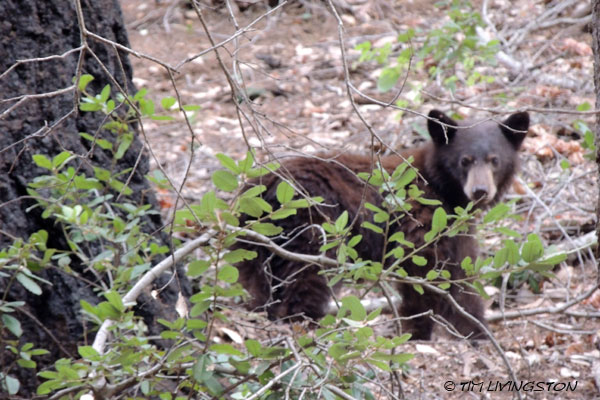
As we rounded the corner, we spooked this young bear. He ran up the hill a short distance and hid behind a large Douglas-fir tree. His curiosity got the best of him as he peeked around one side of the tree and his behind stuck out the other. I stopped the rig so we could watch him. He didn’t run away. We got out and started taking pictures.

California Black Bear, Ursus americanus

His curiosity got the best of him. He had to get a better look at us.

He watched us for a while and we watched him. An older bear would never have stayed for a look. Soon his curiosity was satisfied and we went our separate ways.

California Black Bear, Ursus americanus

California Black Bear, Ursus americanus

Monica was our pole plant/log clerk for many years and is a dear friend. She lives near Shasta Lake and has told me countless stories of her encounters with bears around her home. Of course she had to listen to my countless bear stories too. She just retired, so I gave her a signed and mounted print of this pen and ink. I think of her every time I look at it.