The white-head woodpecker is one of our residents in the Sierra Nevada. This one was really working over these sugar pine cones. The cones had already released their seeds, so this woodpecker must have been hunting insects.

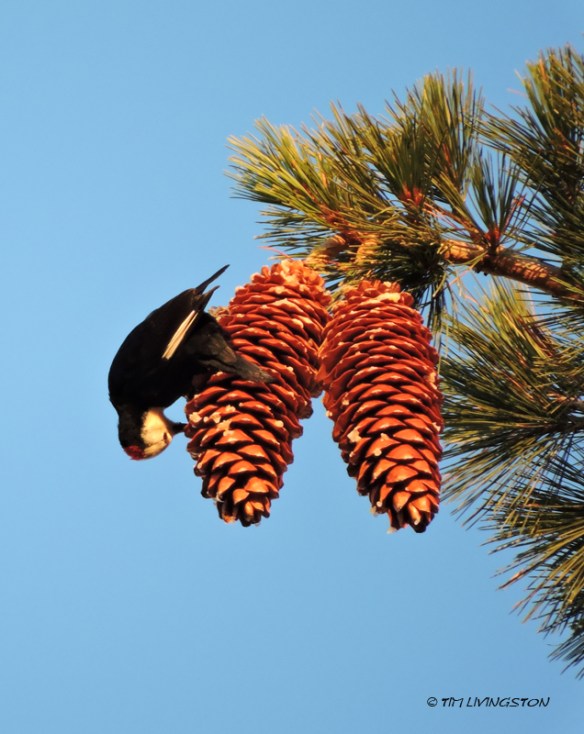


The white-head woodpecker is one of our residents in the Sierra Nevada. This one was really working over these sugar pine cones. The cones had already released their seeds, so this woodpecker must have been hunting insects.
There’s fire in the woods again!
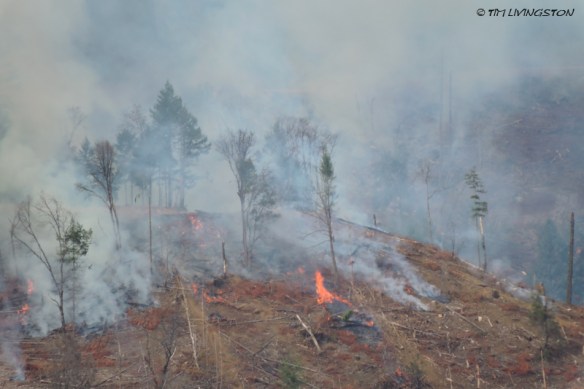
Burning slash in a logging unit. A forester favorite Fall pastime.
Not like the Summer wildfires this time. This burning is for fuel reduction after logging. It’s part of our Fall preparation for tree planting. We prefer chipping slash and hauling it to the co-generation plant where it can be turned into electricity. In some areas that option isn’t available so we have to burn the slash on site. Getting rid of the slash reduces the fuel load for future wildfires that may occur. It also releases nutrients into the soil in the form of ash. Those nutrients give a boost to the young seedlings that will be planted at the site in the Spring.
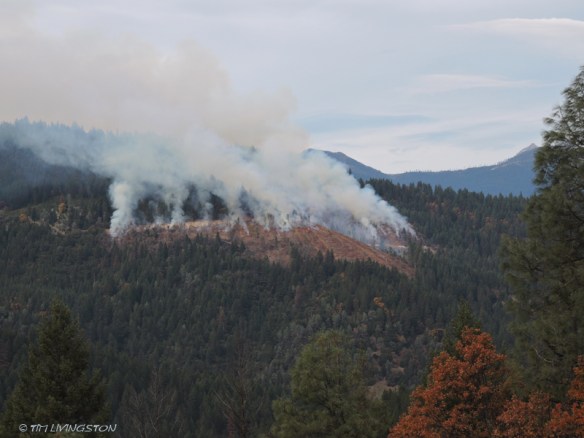
On flat ground the slash is often piled for burning. In this unit the entire site is burned, which is called a broadcast burn.
We aren’t trying to get rid of all debris within units, but we want to reduce it to a reasonable level. A certain amount of slash and debris left unburned acts as impediments to erosion. Over time it breaks down adding organic material back into the soils. However, too much debris creates a fuel load that will support an aggressive wildfire.
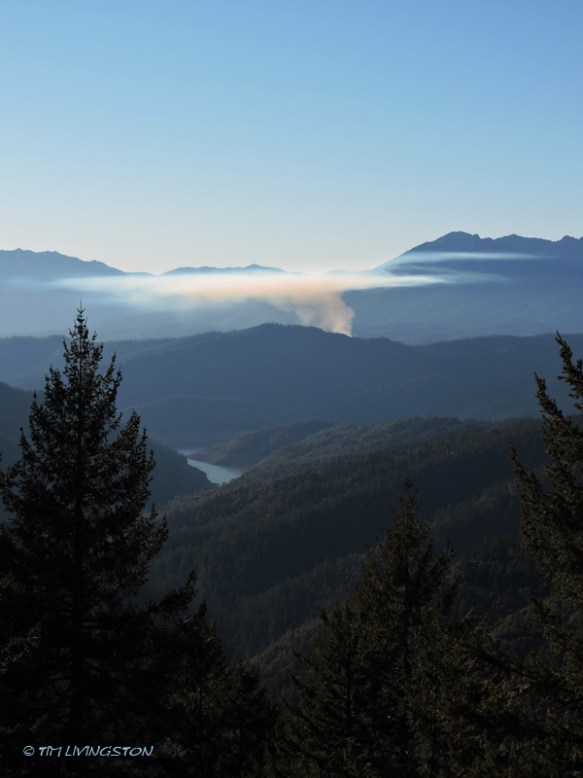
This smoke column rises over Trinity Lake and has reached an inversion layer causing the smoke to flatten out.
Burning is only allowed on specific days when weather conditions are right. We avoid conditions that are too dry in which fire can escape. We also have to be aware of what direction the smoke is being carried on the wind to avoid smoking out populated areas. In California we’re required to prepare smoke management plans to determine what conditions are appropriate for burning as to not create a smoke hazard for local areas.
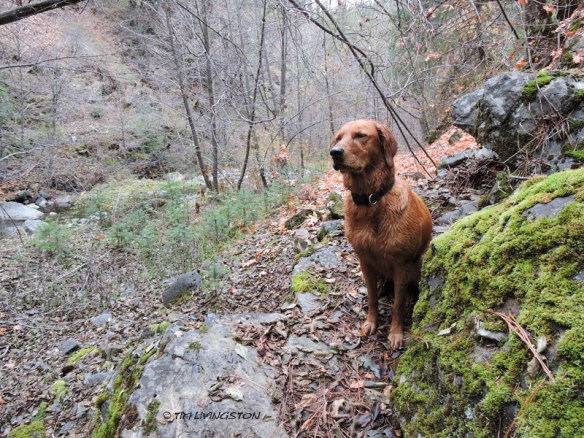
I had a companion on this day. Tessa, our friend’s dog, got to be a forester’s dog for a day.
Fall is traditionally incredibly busy around here and this season has been no different. Things are starting to wind down so hopefully there will more time for posting.
Today I’m coming to you from the Trinitys. I happen to have a cell signal so I’m making this post with my iPhone. Many of you may know that we are in a severe drought here in California. You can see by the dust coming off this logging operation how dry things are. Our logging crews are suffering with the dry conditions and the dust. Full fire precautions are in effect. Fire season has been pretty brutal this summer. We’re crossing fingers and hoping for the best for the rest of the logging season.

Dust is flying, hazy smoke is in the air and Trinity Lake, in the background behind the lower left trees, is down to about 30% capacity. It’s dry dry dry out there.
True fir refers to any species of fir that are in the genus of Abies. Species like red fir, Abies magnifica, and white fir, Abies concolor, are true fir. Douglas-fir, Pseudotsuga menziesii, is not a true fir. The gallery pictures are of a high elevation, old growth true fir forest. This stand is over 6,000 feet elevation. Click the pictures to enlarge.


One advantage to having a truck for an office, is to take a few minutes in the woods during lunch to engage in a bit of en plein air sketching. En plein air is a french term meaning “in the open air.” It refers to painting or sketching in the outdoors.
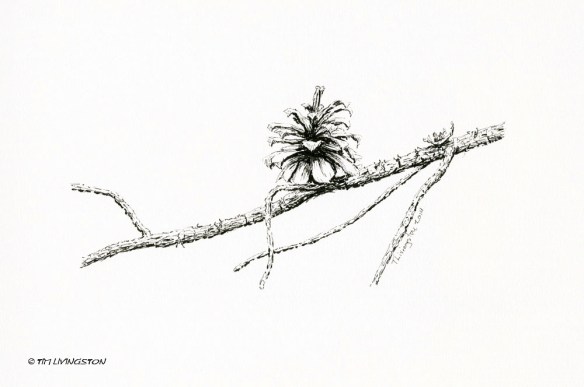
En plein air pen and ink of a lodgepole pine cone.
Here is some of our local lodgepole pine.


Click on the images to enlarge them.
In this year of drought, our forests are a tinder box waiting for a spark. That spark came from the sky on the last day of July. It reached 108 F in the valley. A major lightning storm rolled across the North State and left numerous forest fires in its wake.

Looking east toward Burney. On the right is smoke from the Day Fire and on the right is the Bald Mountain Fire.
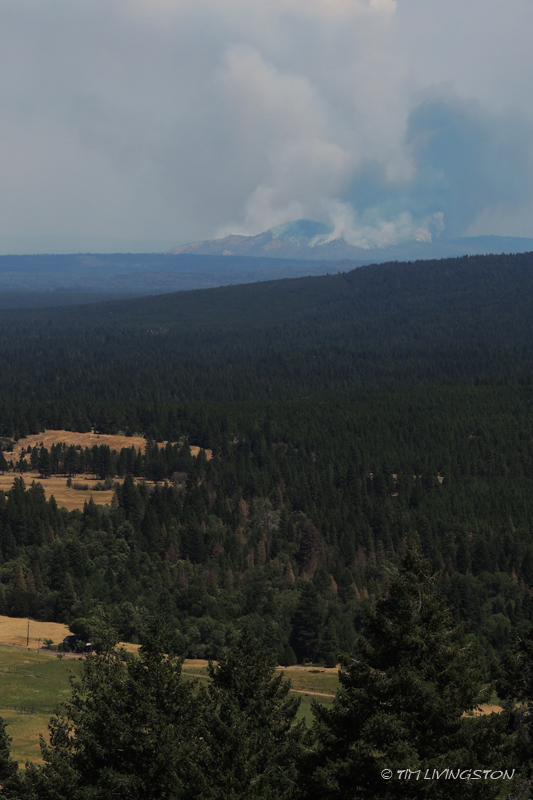
Bald Mountain.
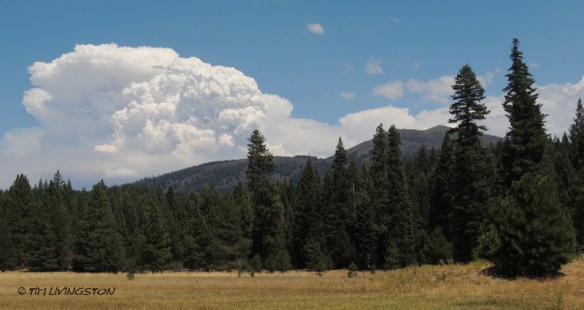
A huge thundercloud forms above the Bald Mountain Fire. Burney Mountain on the right, has a fire lookout on its peak.
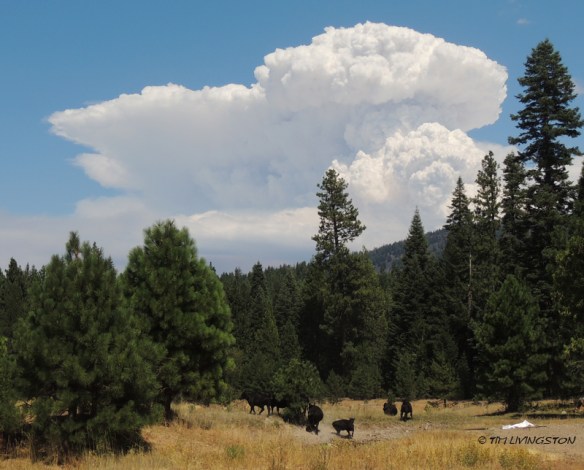
The cloud above the fire continued to grow all day as the fire exploded in size. These clouds create erratic winds that cause the fire to spot.
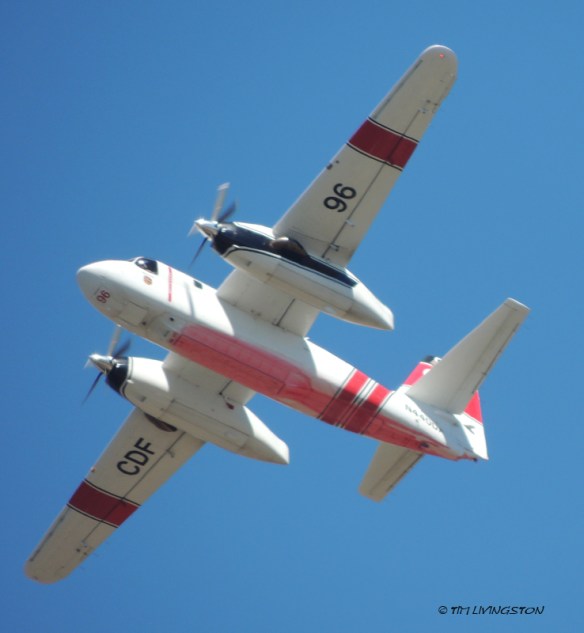
The air tankers bombed the fires throughout the daylight hours. This S2 is on its way to the Coffee Fire.

More fires were burning to the west. This column was from the Coffee Creek Fire.

A new fire called the Eiler Fire took off on the second day. It’s was close to the Bald Mountain Fire. The two fires were threatening the town of Burney. From the valley in Anderson, we could see at least six major smoke columns in all directions.

The beginning of the week brought us a rare and very wet cold front. The rain helped the firefighters get a handle on many of the fires. The same storm created flash floods and mud slides in Southern California.
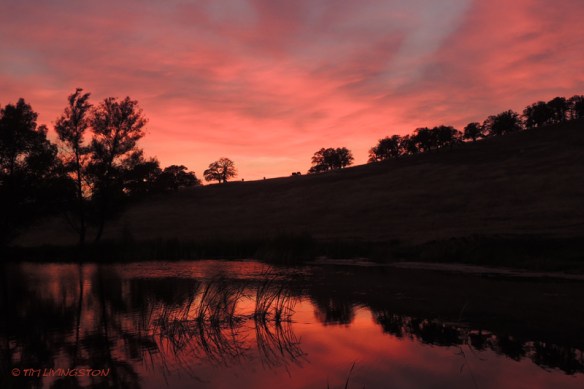
Wildfire sunsets are a silver lining.
Most of the east side fires are under control now, but several fires in the Klamath Mountains are still burning. We still have a long way to go to reach the end of fire season.

A managed redwood forest.
Last week, I was in the redwood country of our coastal mountains. However, I wasn’t down in the parks with the gigantic and ancient trees. As you might imagine, I was in young, working redwood forests.

Wild Foxglove
It’s beautiful country and full of surprises. One of the surprises you’ll find in these forests are the old stumps of the ancient forest giants that were logged over a hundred years ago.

A giant redwood stump.
These old stumps tell a story of the past. The stump pictured above looks like it has two eyes. The “eye” on the left is a spring-board hole. Way back when, the timber fallers would cut a notch in the tree up above the butt swell. They then wedged a board into the notch. They stood on the board, called a spring-board, to cut the tree down. Two man teams with double bit axes and cross-cut saws fell these trees. The spring boards elevated the fallers up the tree where it wasn’t as thick, making it easier to cut. That’s why these stumps are so tall.
Many of these stumps are charred on the outside. The fires that caused this may have been intentional. It was a common practice of the time, to burn the logging site after the trees were felled. They did this to eliminate slash. After the big trees were cut the slash was so deep it was difficult for a man to get through it. The fire solved this problem and left burned stumps behind.

This redwood stump is fifteen feet across.

A spring board hole cut into the stump.

Looking west from the Coast Range toward Humboldt Bay and the Pacific.
I did a watercolor of a logger bucking a log with a cross-cut saw, which is showing in my post Misery Whip – The Final. Timber fallers on spring-board would be a good subject for an illustration. I might have to work on that. Happy Friday.

A wildfire broke out west of town Friday afternoon.
Last Friday I posted Storm Clouds Brewing and talked about lightning and wildfire. Then Friday afternoon an aggressive wildfire broke out west of town. However, this fire wasn’t caused by lightning, it was caused because of an illegal marijuana grow.

It formed a huge column and began building it’s own thunder cloud.

The fire crews were scrambled and the air-tankers took to the air.
The thing is, Mary and I were planning a weekend away camping in our trailer at our favorite spot. The problem was, the fire was less then five miles from our camp where we had already staged our trailer. We made the decision to retrieve our trail while the fire was relatively small, only 300 acres.

As we approached camp the sky became angrier.
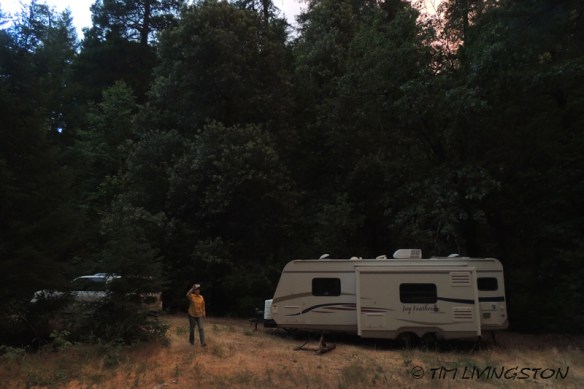
After reaching camp, we packed everything, hooked up the trailer and pulled out. The smoke made it very dark.

Looking to the sky from camp.
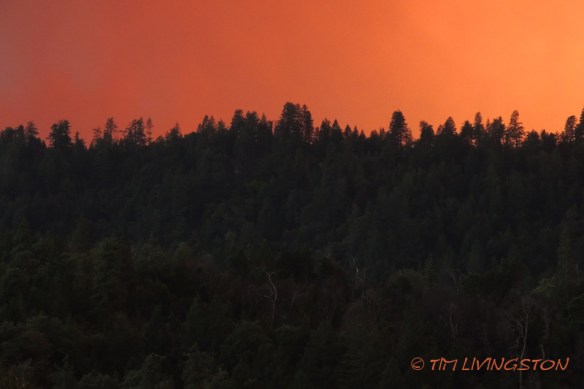
The fire was two ridges away when we hauled out.
We got the trailer safely home and by the time we went to bed the fire had grown to 2,800 acres.
Saturday was a new day and the fire had not advance too much over night. It was reported at 2,930 acres. We decided to head back up to camp to pick the last of our equipment. Sailor and Kinta came with us this time.
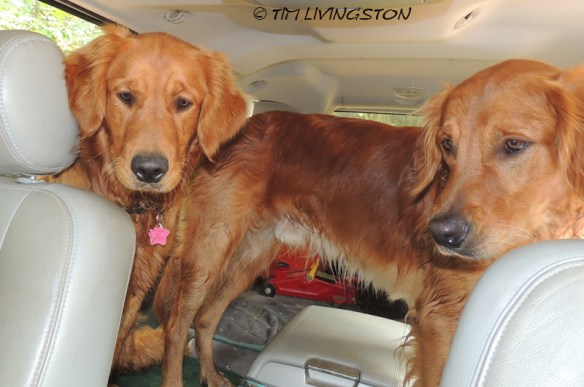
Sailor and Kinta are ready for an adventure.

It was still very smoky up near camp. An inversion had settled the smoke into the canyons.
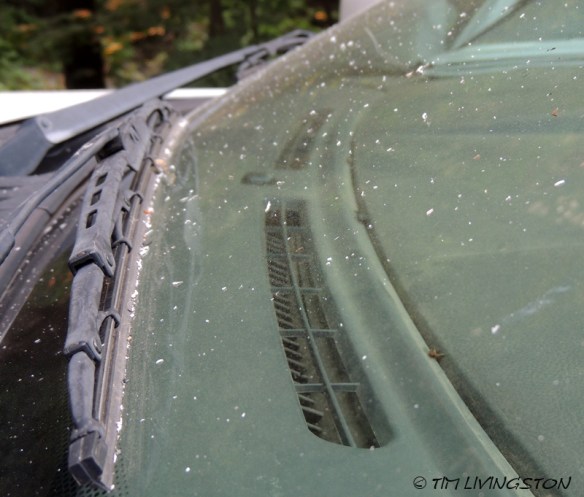
By the time we finished the truck was covered in ash. Clearly the fire was still actively burning.
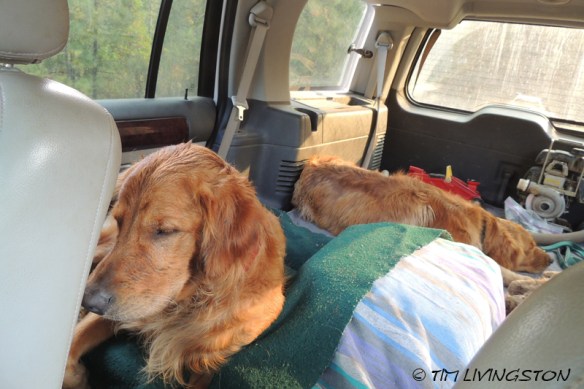
Sailor and Kinta found this whole adventure thing quite exhausting.
By the time we returned home the fire was still at 2,930 acres. Unfortunately, high winds hit Saturday night/Sunday morning and by Sunday morning it was up to 3,700 acres. The terrain is very steep and it is extremely brushy. Spot fires have been tormenting the firefighters. Just when they seem to getting a handle on it, another slop over occurs. It is now Tuesday night and the fire is reported at 8,100 acres. Today was overcast and calm. Hopefully, they made good progress containing it. The fire is now 1 3/4 miles from camp. We shall see what tomorrow brings.

A late afternoon thunderstorm builds over the Trinity Alps.
Billowing thunderclouds built up over the Trinity Alps last Wednesday. It was an ominous teaser of desperately needed rain. Our summer thunderstorms are the double-edged sword of rain and lightning. What will it be, soothing rain for parched earth or forest fires? These storms usually cause more grief than relief. I think we’re caught between a rock and a hard place. It’s not as if we get to choose what we get anyway.
Today the monsoonal moisture has returned. We’re already hearing thunder to the south. It could be an interesting day today.
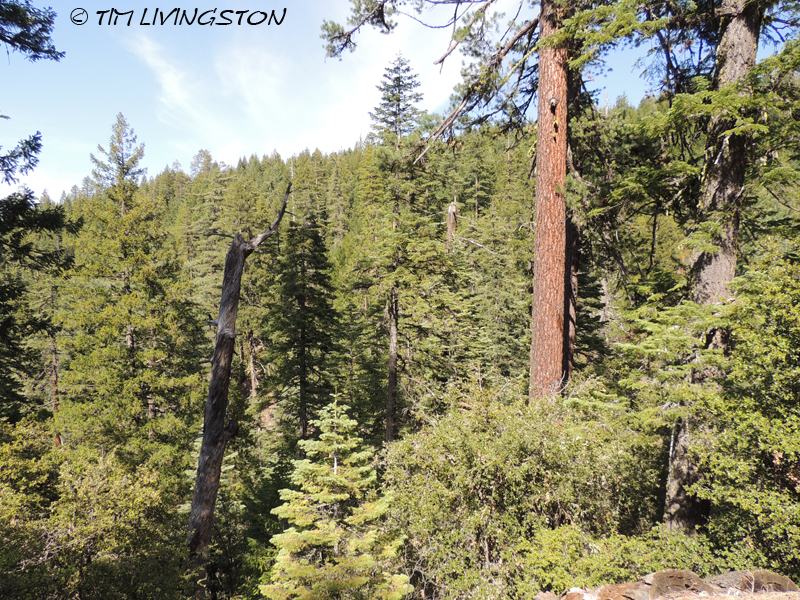
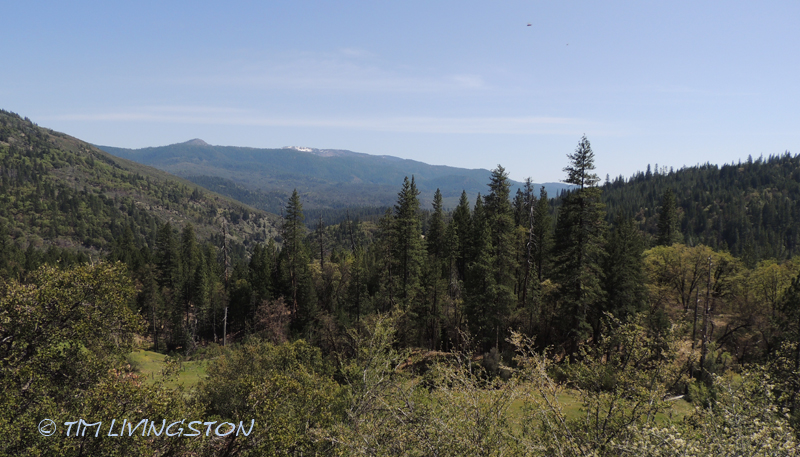
The Mendocino National Forest is one of our beautiful Northern California forests. It’s located in the coastal mountains and is worth a visit.
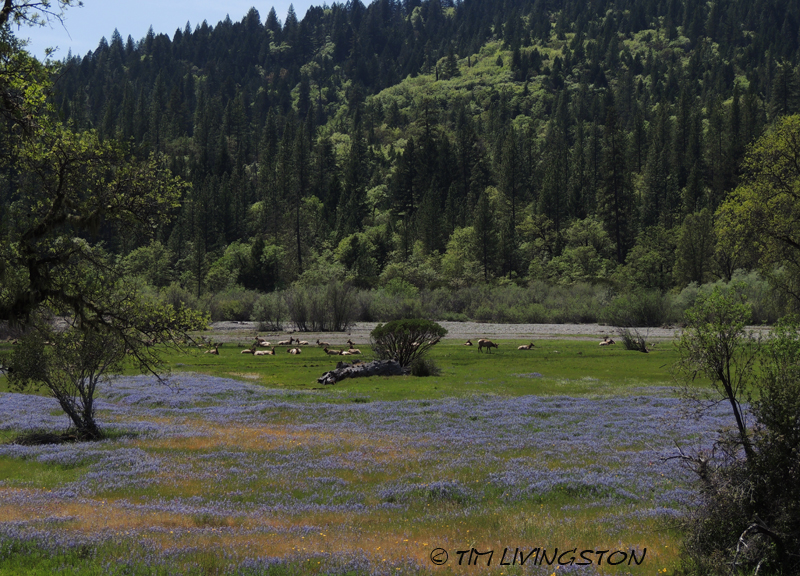
Elk relax near Lake Pillsbury.

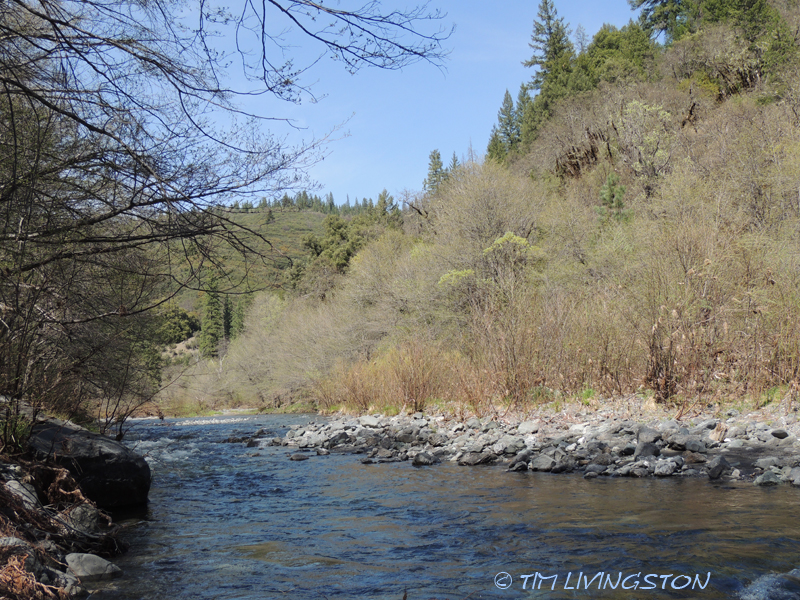

Sugar Pine
 THE FORESTER ARTIST