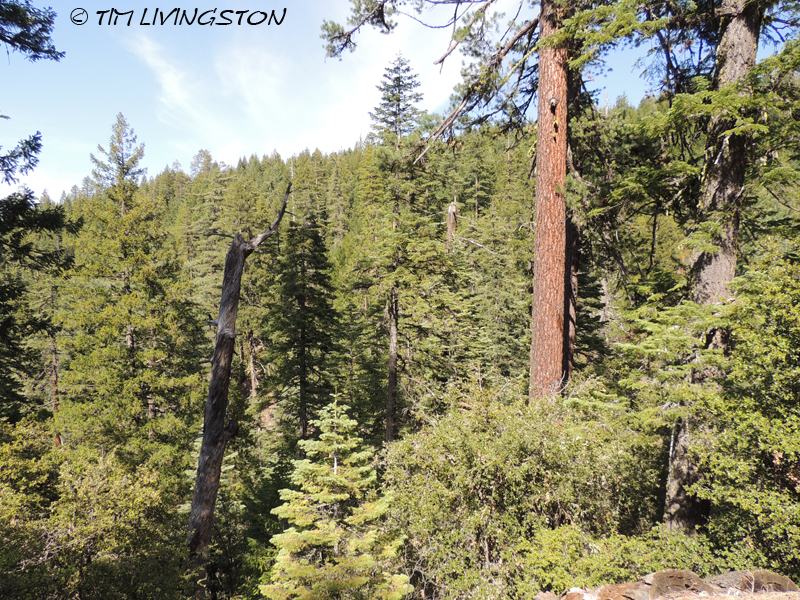
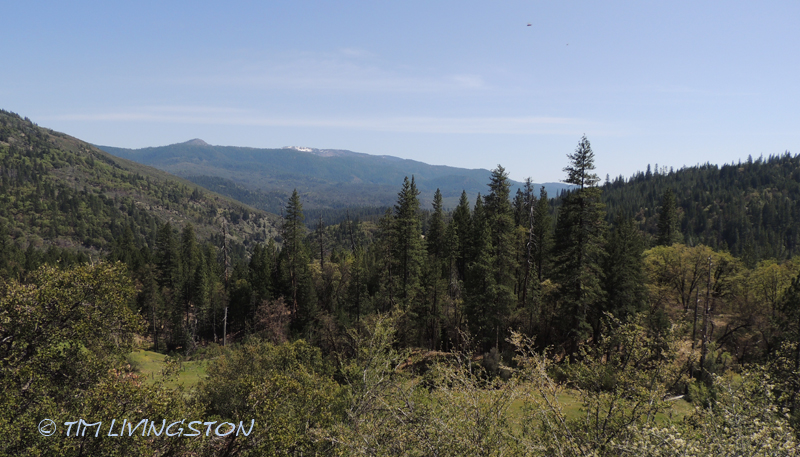
The Mendocino National Forest is one of our beautiful Northern California forests. It’s located in the coastal mountains and is worth a visit.
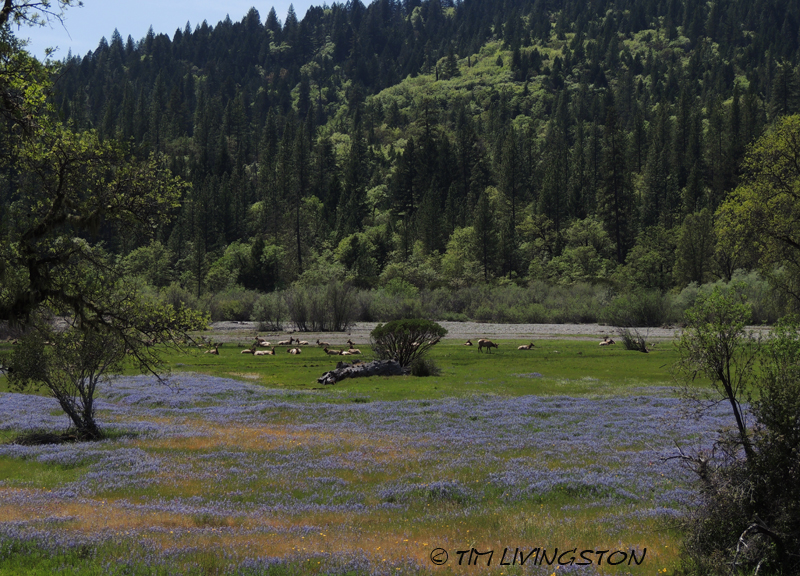
Elk relax near Lake Pillsbury.

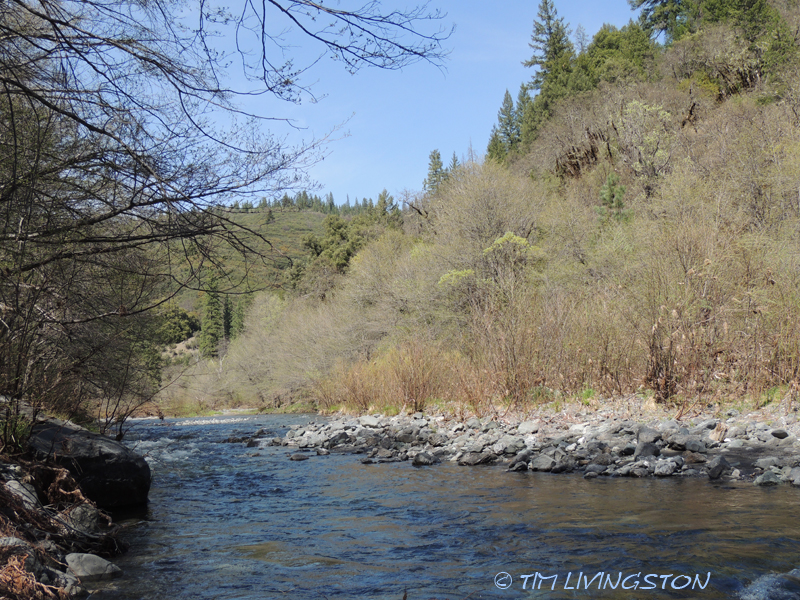

Sugar Pine

The Mendocino National Forest is one of our beautiful Northern California forests. It’s located in the coastal mountains and is worth a visit.
Elk relax near Lake Pillsbury.
Sugar Pine

The scene of the crime!
There is a mystery here that wasn’t reported in the papers. Please say a prayer for the “deerly” departed. 😉
Blitz and I have seen a lot of country in our travels. This shot was taken at Lake Prairie in the Northern California Coast Range where the Douglas-fir forests intertwine with coastal prairies. This little lake has been a nice place to stop on the way home to cool off on a warm summer day.

One of Blitz’s favorite stop off places is Lake Prairie.

I’m so glad that the dogwood are in bloom at this time.
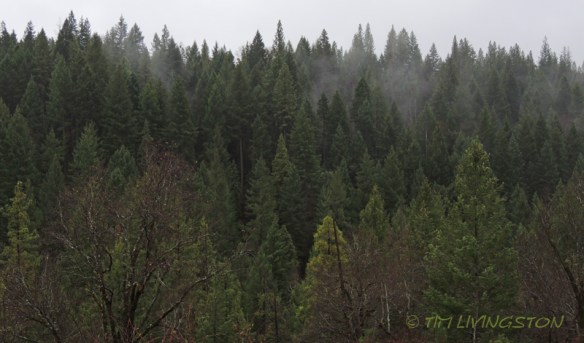
After years of fire suppression efforts, our forest have become very dense.
One of the biggest problems in the western forests of the United States is that we have too many trees. It used to be, frequent fires kept the undergrowth clear without killing the older mature trees. Fuel loads weren’t allowed to get too high. With less fuel built up in the forests, fires burned at low intensity.
Much of our forestland is choked with thickets of trees. Timber stands have grown dense from a century of full fire suppression. These thickets are susceptible to insect attack and drought stress mortality. Fuel loads in the forest are huge. The fires of today burn at such high intensity that it is difficult for firefighters to fight them safely. We are now having larger and more destructive fires, such as the Rim Fire that burned into Yosemite National Park.
Thinning so many small trees was slow and expensive, but with today’s modern logging technology we now have the ability to thin these timber stands efficiently.
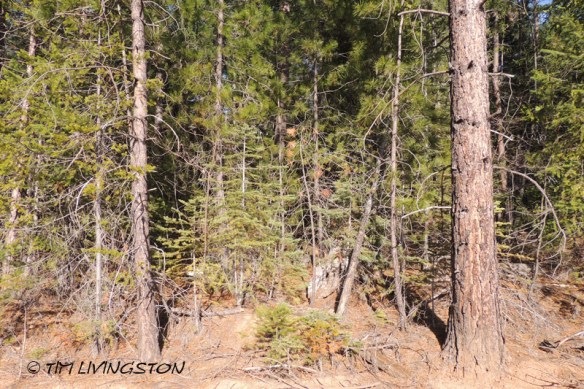
Thickets like this provide ladder fuels that cause crown fires.
First, the sawlogs are harvested for lumber. Next, the biomass is harvested and put into doodles. Biomass are the trees or tops of trees that are too small for products like lumber, poles or veneer. Doodles are harvested bundles of small trees.
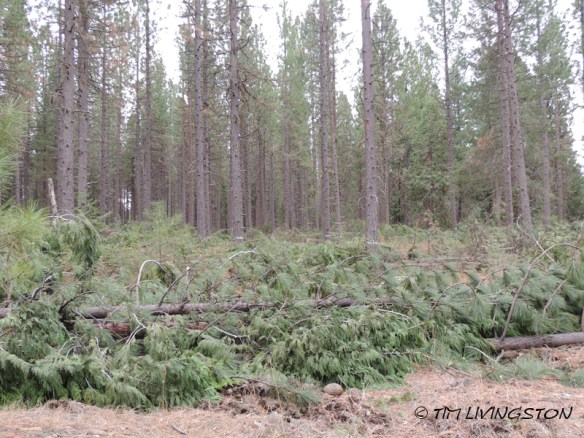
Doodles
The trees marked in white are the “save” trees that won’t be harvested.
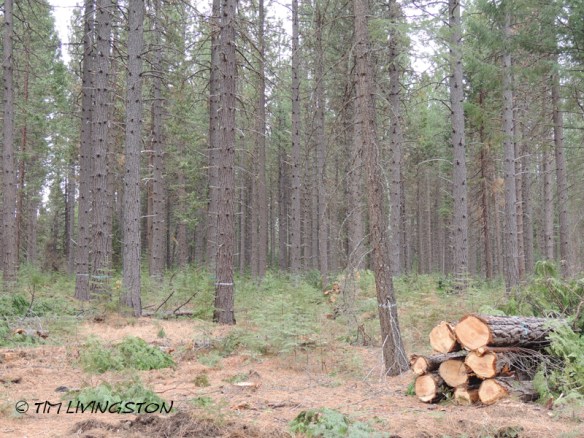
Thinning out the excess trees.
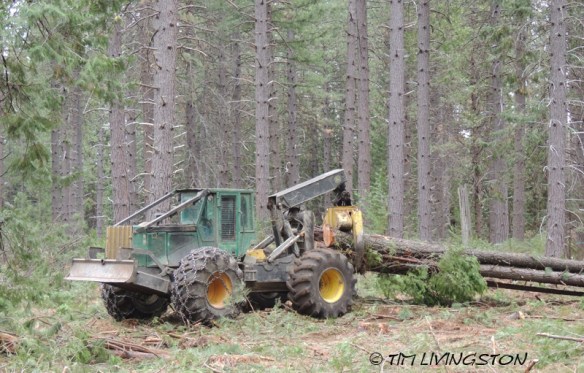
Skidding logs.
Sawlogs being skidded into the landing.
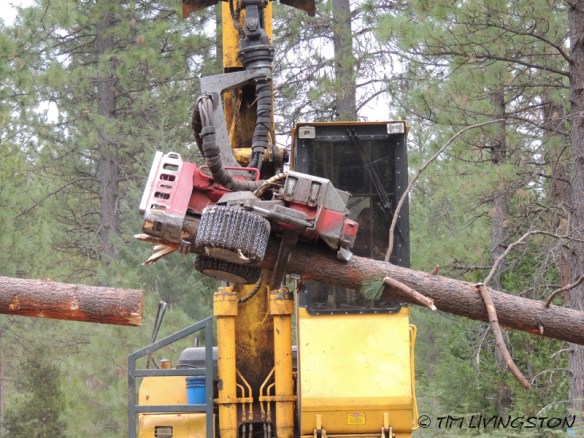
Log processor
The log processor manufactures the trees into logs.
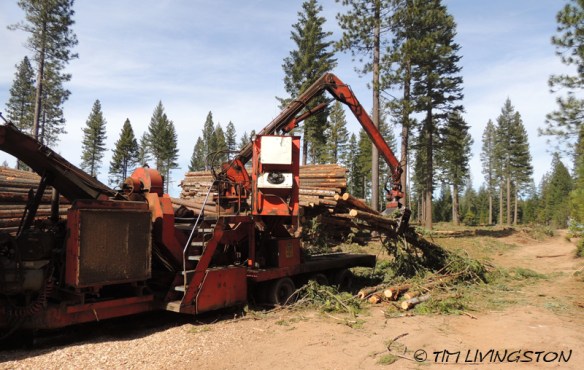
Chipper
The small trees are chipped into a van to be hauled to the co-generation plant and turned into electricity.

Thinned stand
Thinning these timber stands leaves them more resistant to fire and insect attack. A healthy fire is the goal.

Blitz, the canine wood chipper, says, “I’ll chip this doodle myself.”

Blitz in the shade of the Pole Plant log deck.
Nature is fragile or is it? Humans certainly have the ability to wreak havoc on our environment, but given time, it heals. I’m not suggesting careless disregard. I believe it’s our responsibility to be the best stewards of our natural world that we can be. The ospreys don’t mess in their nest and neither should we. My experience as a forester over the years has taught me that Mother Nature is a relentless and tough lady. In the natural environment, disturbance often equals opportunity.
In the top picture of Blitz lying next to the pole log deck, it is treeless except for the stacks of logs waiting their turn in the mill. Now look at the picture below. Blitz is sitting in a lovely pine forest. This place was a log deck too, forty-seven years ago. It wasn’t replanted by people. The surrounding forest took it back. The pines invaded this site with no help at all. I was six years old when this process took hold. Now a pine forest stands where a log deck once sat.

This was the site of the Little Giant Mill log deck.
Today, by replanting and with proper nurturing, we replenish harvest units and the burned areas much faster than just letting nature take its course. We have a better scientific understanding of our environment and more sophisticated technology available today to manage our forests. We’ve come a long way in forest management over the last one hundred years. Trees weren’t replanted back then, but forests have grown back. Our sustainable forestry practices today are resulting in forests that are more healthy and vigorous. I’d love to see these forests a hundred years from now.

I took this picture of Lassen Peak on January 8th, 2013.
In California we’re in another severe drought. I took these two pictures of Lassen Peak in January, one this year and the other last year. You can see the stark difference. Lassen Peak is the southerly most of the major cascade volcanoes and is 10,463 feet (3,189 M) tall. Last year we had over 20 inches of rain at this time, and this year we have less than 4 inches. The snow pack is almost nonexistent. Cattle ranchers are having a hard time. There’s no new grass and the foothills are as brown as July. The price of hay is going to go through the roof forcing many of the ranchers to sell off their cattle. Our ski resorts are having a terrible winter due to the lack of snow. It’ll be a tough year for these folks and the long term forecast is grim. Expect the California water war to once again rear it’s ugly head.

Lassen Peak taken on January 22nd, 2014.
This summer we are expecting our share of challenges in the woods. Drought stress will cause tree die off. This will create prime conditions for bark beetle infestation as the trees become more and more stressed. Worst of all will be the fire danger. I think red flag fire warnings will be the theme of the this summer.

Blitz rolls in the snow while she still can.
Do you have a favorite spot in the woods that you like to get away to and reconnect with nature? Somewhere that you’ve camped with your family or just a quiet place to escape the everyday bustle. The familiarity of that kind of place has a timeless quality about it. That is part of what makes it happy and comforting. We want it to always be there and never change.

This is where we escape. Blitz gives Mary a snuggle.
As a forester, I work with a changing forest every day. Some changes come quickly like a timber harvest. Some come violently as with a wildfire. Mostly, change comes slowly. The different seasons transform the forest each year. This brings about my favorite yearly change, the Spring burst of growth. The fruits of my labor are on full display, as tree buds elongate and spring forth new needles. Each year the trees that we planted are a little bigger than before.

Hunter in 2002.
This photo was taken of my old buddy, Hunter, in 2002. In the background was a newly planted forest. The trees were harvested from the area directly behind him in 2000 and the seedlings were planted in 2001. If you look closely, you can see the small pine trees growing. Lassen Peak is just visible on the horizon in front of Hunter.

Blitz, Hunter’s daughter, sits on the same stump in 2014.
Jump ahead to 2014 and Blitz sits on the same stump. The trees we planted have now grown for twelve seasons. Many of them are over twenty feet tall. The view of Lassen Peak is gone. Blitz was barely able to sit on Hunter’s stump because decay caused it to crumble under her. The yearly change may seem small, but when viewed over a decade, it’s dramatic. Expecting the forest not to change is like expecting your child not to grow up. Forests are dynamic and never static. Our memories and old photographs may not change, but our forests always will.
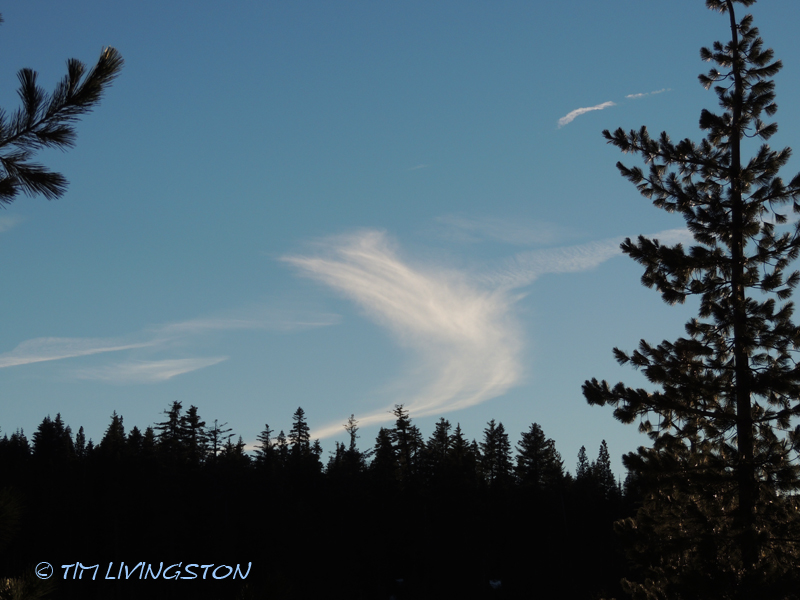
It’s a sign, God’s big paint brush. Christmas trees this way!
Do you love having a fresh-cut Christmas tree? Better yet, do you love going out to the woods and cutting your own tree? Do you worry that getting a real tree is damaging the environment? This is your lucky day, because the Forester Artist is here to absolve you of your sins!

For the best Christmas trees take the road less taken.
Most Christmas trees on the tree lots are grown on Christmas tree farms. Buy them and they will grow more. There is no impact to the forest when buying from a Christmas tree farm.

Which one should I cut. So many choices!
Many of us like to go directly to the source, the forest. Is it wrong to cut a Christmas tree in the woods? Does it damage the environment? No way! Get out there and cut that tree! The reality, in the western United States, is that we actually have too many trees in the forests. Too many trees…how can that be?

There’s a couple of beauties! No, not the big one in the middle. That is a mature sugar pine tree.
For the last 100 years there has been aggressive wildfire suppression in our western forests. This has caused our forests to grow quite dense with more trees per acre than can be healthfully grown. The result is our forests are becoming very susceptible to disease, insect attack and cataclysmic wildfire. I’ll post more about that later.
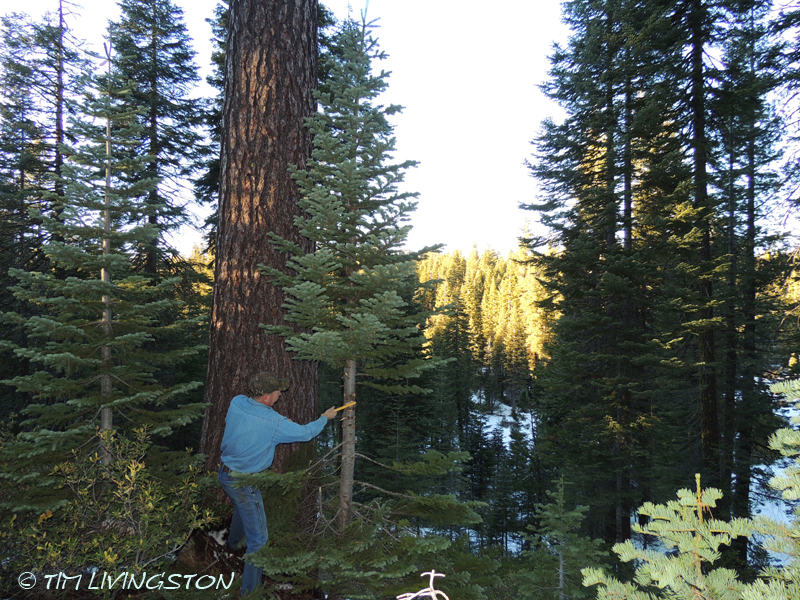
I’ll take this one. I forgot my saw, so this hatchet will have to do.
When we thin our commercial forest, we typically space our trees from 18′ to 26′ apart depending on their age and size. That kind of spacing gives you a lot of latitude when picking a tree. If you are worried about creating a “hole” in the forest, then select one growing close to another tree. You can also pick a tree next to road in the ditch, since these trees get removed for road maintenance. The tree I selected is growing so close to the large sugar pine that a timber faller would have to cut it out of his way in order to fall the large tree. The small tree is a safety issue because it blocks the timber faller’s escape route.
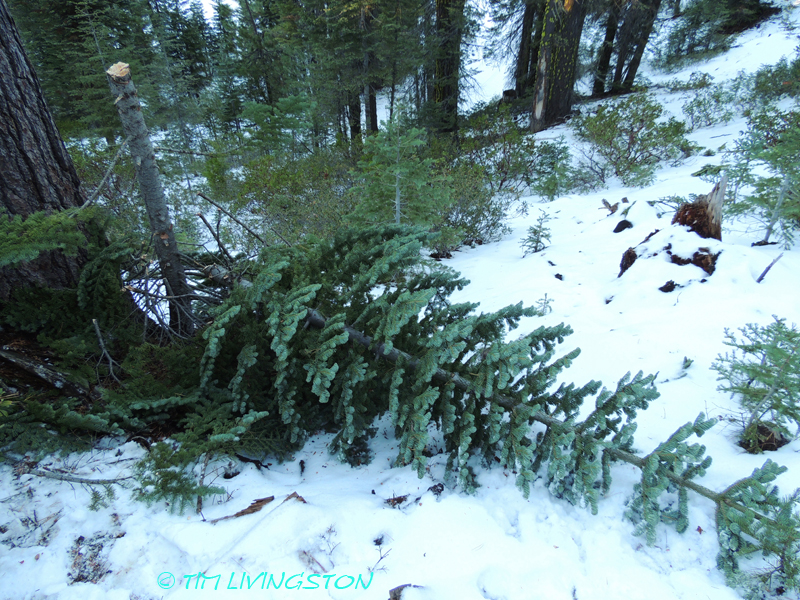
Timber baby! This is a premium silver tip. Silver tips are actually red fir trees.

Three nice silver tips loaded up.
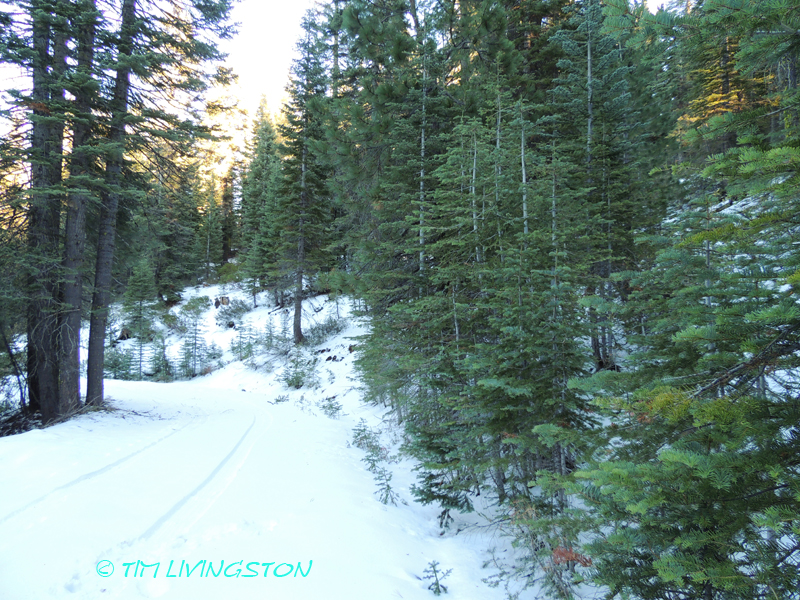
One of those trees was growing in the ditch next to the road.
So, if you want to go and cut your own Christmas tree, then go by your local Forest Service office or other local forest headquarters, and get a Christmas tree permit. Cutting your own is great family fun, but be careful, because it’s easy to get stuck. It’s always better to take two vehicles.
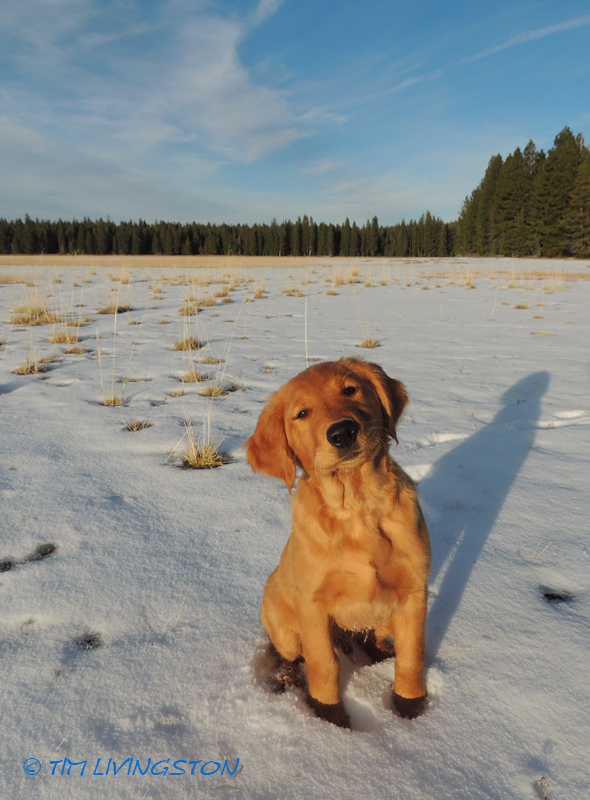
Kinta is the truck dog today, since Blitz had a doctor’s appointment. Uh oh, it looks like Kinta has been into the eggnog!

This gallery contains 8 photos.
We affectionately call them “Nature Nooks”, but the official name is “Habitat Retention Areas” or HRAs. Simply put, they are groups of trees left unharvested inside a logging unit. The purpose is to leave mature tree thickets that provide hiding … Continue reading
This gallery contains 12 photos.
Fall has hit its peak in the high country. We were in the mountains for the weekend. The leaves have turned and were dropping enthusiastically, but Sunday was the day. Sunday was the day that Mother Nature performed her striptease … Continue reading
 THE FORESTER ARTIST